Saturday, March 07, 2009

The shop.

Tho old place is settling into its final 6 weeks. Man and woman sing John Prine, Leonard Cohen, Tom Waite, and blues riffs on guitar. Sun brings in casual visitors for chocolate chip cookies, Topfen Kuchen, old brownie. Snow melts. Once a Tree moves out of their shop space up to main street. Two dogs sniff every inch of the place. In the stairwell wall to outside something has died and reminds us of the fragrance of future days.

A time for watching. With. Whatever takes place.
The worthies of old all had
means of emancipating people.
What I teach people just requires
you not to take on the confusion of others.
If you need to act, then act,
without any further hesitation or doubt.

- Lin Chi (d 867?)
When we dismantle bookshop/bakery we'll find a lot that has gotten lost over the 13 years. So many different opinions: move to this space, that space, how about the boat, how about the bookmobile? I tell folks we haven't thought about it yet. Not really. Too busy with deadlines doing the work that actually brings in some money. We've made no decisions except the fall-back one: pack up, go home, label boxes, trust.
For thus says the Lord, the Holy One of Israel: ‘Your salvation lies in conversion and tranquillity, your strength will come from complete trust.’ The Lord is waiting to be gracious to you, to rise and take pity on you, for the Lord is a just God. Happy are all who hope in him.
(Isaiah 30:15,18, from Noon reading, Sext)
The solitude of a lovely afternoon in an empty shop! I'm pleased for those who call upon God and are satisfied with what they receive in return. Hope is useful.

To live without hope is equally useful. For some there is no need for hope. Each moment is the prize. No looking forward to what will come, or might come, or could come if all is right with the universe, your soul, or God. No, each moment is its own gift. Right now, no pain. Right now, pain. Right now, awareness of pain or no pain. Just that.
Meditation By The Stove
by Linda Paston

I have banked the fires
of my body
into a small but steady blaze
here in the kitchen
where the dough has a life of its own,
breathing under its damp cloth
like a sleeping child;
where the real child plays under the table,
pretending the tablecloth is a tent,
practicing departures; where a dim
brown bird dazzled by light
has flown into the windowpane
and lies stunned on the pavement--
it was never simple, even for birds,
this business of nests.
The innocent eye sees nothing, Auden says,
repeating what the snake told Eve,
what Eve told Adam, tired of gardens,
wanting the fully lived life.
But passion happens like an accident
I could let the dough spill over the rim
of the bowl, neglecting to punch it down,
neglecting the child who waits under the table,
the mild tears already smudging her eyes.
We grow in such haphazard ways.
Today I feel wiser than the bird.
I know the window shuts me in,
that when I open it
the garden smells will make me restless.
And I have banked the fires of my body
into a small domestic flame for others
to warm their hands on for a while.

(Poem, Meditation By The Stove, by Linda Pastan)
Home. Farm gate closed and hooked. Bare stones at edge of road. Melt has been busy.

Ceiling fan circulates wood stove heat. Cat goes out into barn. There's a smell of kerosene the workman must have tipped in deep freeze behind strewn wood now pungent in thaw.

Room is quiet. Turning arms and creaking container for fire as dark pushes against windows.

The clear and obvious fact of things!

As they are.

Is joy.

Enough.

Friday, March 06, 2009

Eleven men in 3 conversations at Maine State Prison this morning. "Do you ever get tired of coming here" one asked. "No." That's because I don't have to. I'm not paid to. I'd get tired of it if I had to come by someone else's will.

There's a difference between wanting something and longing for something. There's no "willing" justice. There's only the longing to be with or near what is just.
The moon, spat from a mountain's broken mouth,
hangs remotely over my firewood gate.
Sudden moonlight ties
unsteady images to whiteness;
in cold dew the earth starts to breathe.
An autumn brook plashes in a still ravine
as blue mist breaks over deep rocks.
Purity flows into my dark dream
while cracked shapes hug the empty peaks.
Standing by my window over the pine river,
drowsy in the morning, I cannot think.

- Wang Wei (699-759)
As my mind breaks down it seems there is trauma in not seeing the way once seen. God or truth has disappeared from any fixed place and roams without fanfare every which way.
For I Have Lived Like a Dusty Angel
by Michael Blumenthal

And the muddy waters have washed over me,
coating my large wings with soot, clouding my eyes,
and the raging blood has coursed through my veins,
flooding the flatlands of virtue and decency,
ravaging the structures, inundating the houses,
shattering the windows, and I have grown heavy
with my deeds, and light with desire,
been betrayer and betrayed, wounder and wounded,
taken my turn at whatever was possible,
bad father good father infidel satyr,
been decent, forgiving, tender, wounding,
whoremonger exile patriot rake.
I have shaken the birches, made love
under the sycamore, wept beneath the willow,
I have trembled with desire
beside the mock orange (What good am I
to anyone, I ask, if I’m not good
to myself? Why pray to an invisible God
if I can’t please the beckoning flesh?)
And what more can a man ask of his body
but that it confess to everything? Sad bird,
this human one, but happy in exile: a confusion
of tongues, a mottle of trembling needs,
the dust still gathering on these broken wings—
the darkness, the hunger, the flickering soot.

(Poem, For I Have Lived Like a Dusty Angel, by Michael Blumenthal, c.1999
Reprinted from Dusty Angel)
If I'm going to love my self, I am going to have to love what is taking place around this table. Because "self" is not a fixed and static thing. Self is the betweening revelation of what has been, is now, ought to be, with who's here. What we call self is the continual arrival and manifestation of what we call God taking place between, within, in the midst of whatever whoever presents their being to the open in the open as the open.

So it is -- a conversation came to be and was and still is and will always invite.

More at acceptance.

More than forgiveness.

The manifesting of what is being talked about.

Like justice. Or holding as true.

What is being unveiled.

Revealing.

Just.

Us.

Thursday, March 05, 2009

Morning. Rekindle fire. Sun takes more northerly angle coming over hills.

In myth class last night folktale about snake and man and fox and death as just reward. Several in class see death as non-ironic just reward. We talk about death of an old consciousness no longer serving us well. The one we have now. Needing transformation. Transmutation.
Heaven or Hell: Your Choice --
A big, burly samurai comes to a Zen master and says, “Tell me the nature of heaven and hell.”

The Zen master looks him in the face and says, “Why should I tell a scruffy, disgusting, miserable slob like you? A worm like you, do you think I should tell you anything?”

Consumed by rage, the samurai draws his sword and raises it to cut off the master’s head.

The Zen master says, “That’s hell.”

Instantly, the samurai understands that he has created his own hell—black and hot, filled with hatred, self-protection, anger, and resentment. He sees that he was so deep in hell that he was ready to kill someone. Tears fill his eyes as he puts his palms together to bow in gratitude for this insight.

The Zen master says, “That’s heaven.”        (--from Comfortable with Uncertainty: 108 Teachings (Shambhala Publications, 2002)
Disorienting to contemplate changes in mind. Consciousness letting go of habit and pattern falling off its seat no floor below. 
"Try making a commitment to getting into the meditation posture at least once a day. You don't have to sit for any particular length of time, just get on the cushion. A lot of times, the hardest part is getting there. Once you're sitting down, you think, 'I might as well sit for a few minutes,' and more often than not, you're getting full sessions in."                                                                                                        ( –Insight Meditation Society co-founder Joseph Goldstein)
Cardinals at feeder. Border Collie at blue nylabone. Coon cat draped over brown chair alongside wood stove. Cereal in box considers change is coming. Yogurt, Kefir, cherries, milk.

I imagine a world where breakfast gives way to sunshine and snow begins to melt.

Where mountain keeps its counsel.

Light from everything.

Wednesday, March 04, 2009

Late.
Whether you are an innocent beginner or seasoned adept, you must show some spirit! Don't vainly memorize other people's sayings: a little bit of reality is better than a lot of illusion. Otherwise you'll just go on deceiving yourself.
- Yunmen (864-949)
Night.

Tuesday, March 03, 2009

Does God look like us?

It's a trick question.
Students of today get nowhere because they base their understanding upon the acknowledgment of names. They inscribe the words of stone dead old guys in a great big notebook, wrap it up in four or five squares of cloth, and won't let anyone look at it. "This is the Mysterious Principle," they aver, and safeguard it with care. That's all wrong. Blind idiots! What kind of juice are you looking for in such dried-up bones!
- Lin-chi (d.866)
I look at the fire in the firebox in the middle of the room. I have no idea, tonight, what people mean when they say "God will answer our prayer."

Is that because what we call God is the answer to whatever question we ask? Not that, "God will answer." Rather that God is answer. Is there a difference? Ask. Answer.
What I Believe
by Michael Blumenthal

I believe there is no justice,
but that cottongrass and bunchberry
grow on the mountain.

I believe that a scorpion's sting
will kill a man, 
but that his wife will remarry.

I believe that, the older we get,
the weaker the body,
but the stronger the soul.

I believe that if you roll over at night
in an empty bed,
the air consoles you.

I believe that no one is spared
the darkness,
and no one gets all of it.

I believe we all drown eventually 
in a sea of our making,
but that the land belongs to someone else.

I believe in destiny.
And I believe in free will.

I believe that, when all
the clocks break,
time goes on without them.

And I believe that whatever 
pulls us under,
will do so gently.

so as not to disturb anyone,
so as not to interfere
with what we believe in. 

(Poem, What I Believe, by Michael Blumenthal, 2005)
Odd to discover no beliefs. Mind doesn't know what to make of it. It tries. But fails.

Something not mind says it is OK. Says beliefs are the last snowstorm -- wild, heavy, consoling, aftermath to clean up, finally will melt and flow away. But for a while -- lovely. On trail in Rockport several trees down. Snapped. Bowed. Like supplicant. Never to straighten. Casualties of last snow. Burden of belief. Will be removed. Cut into sections. Burned for heat.

This emptiness has no perimeter. A solitude of immense stillness. Once I thought it was absence. No containing. Nothing to grasp on to. No longer. Now it is what is looking as itself.

Things move along. We adjust.

Whatever the reason you think you are alive -- look again.

Does God look like us?

Monday, March 02, 2009

Yard full of snow. Perhaps we want a retired bookmobile to make of the bookshop/bakery a moveable feast. We could travel with our book collection always with us. Just as we travel with our whole life hauled behind us.
Follow the truth of the Way.
Reflect on it. Make it your own.
Live it.
It will always sustain you.
Do not turn away what is given you,
Nor reach out for what is given to others,
Lest you disturb your quietness.

- Buddha in the Dhammapada
Listening to a talk on Isaiah Berlin. Freedom means choice and requires diversity.

No need to carry anything. Just this foot on ground. Then this one. Now this.

If God is the way life should be, look at how life is, and be glad to dwell within it all.

No one should be anything else.

God isn't.

Nor you.

Sunday, March 01, 2009

Truth is overrated.

Loving-kindness and loving-service seem better companions.
Not going, not coming,
Rooted, deep and still
Not reaching out, not reaching in
Just resting, at the center
A single jewel, the flawless crystal drop
In the blaze of its brilliance
The way beyond.

- Shih Te (c. 730)
The trouble with truth is the company it keeps. So many want to be right. They cling to truth with one hand and hold a club to smash heads with the other.

If you can do loving-service, do it. If you can practice loving-kindness, practice it. But leave truth alone, let it find its own way.

Detecting lies is too exhausting.

Try loving acts.

Be what truth is.

Handsome is as handsome does.

Saturday, February 28, 2009

Is this dog on or off his cushion?


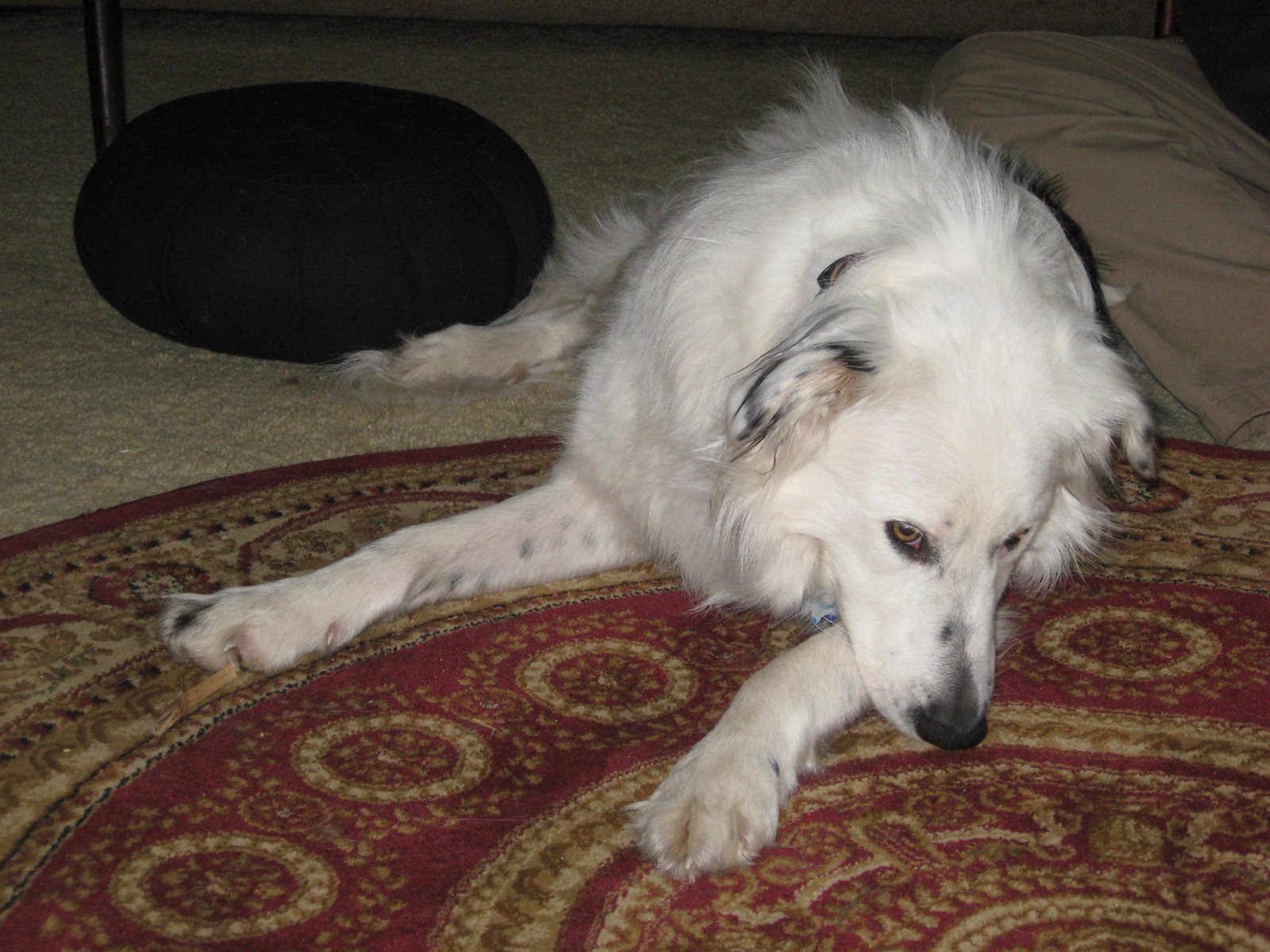
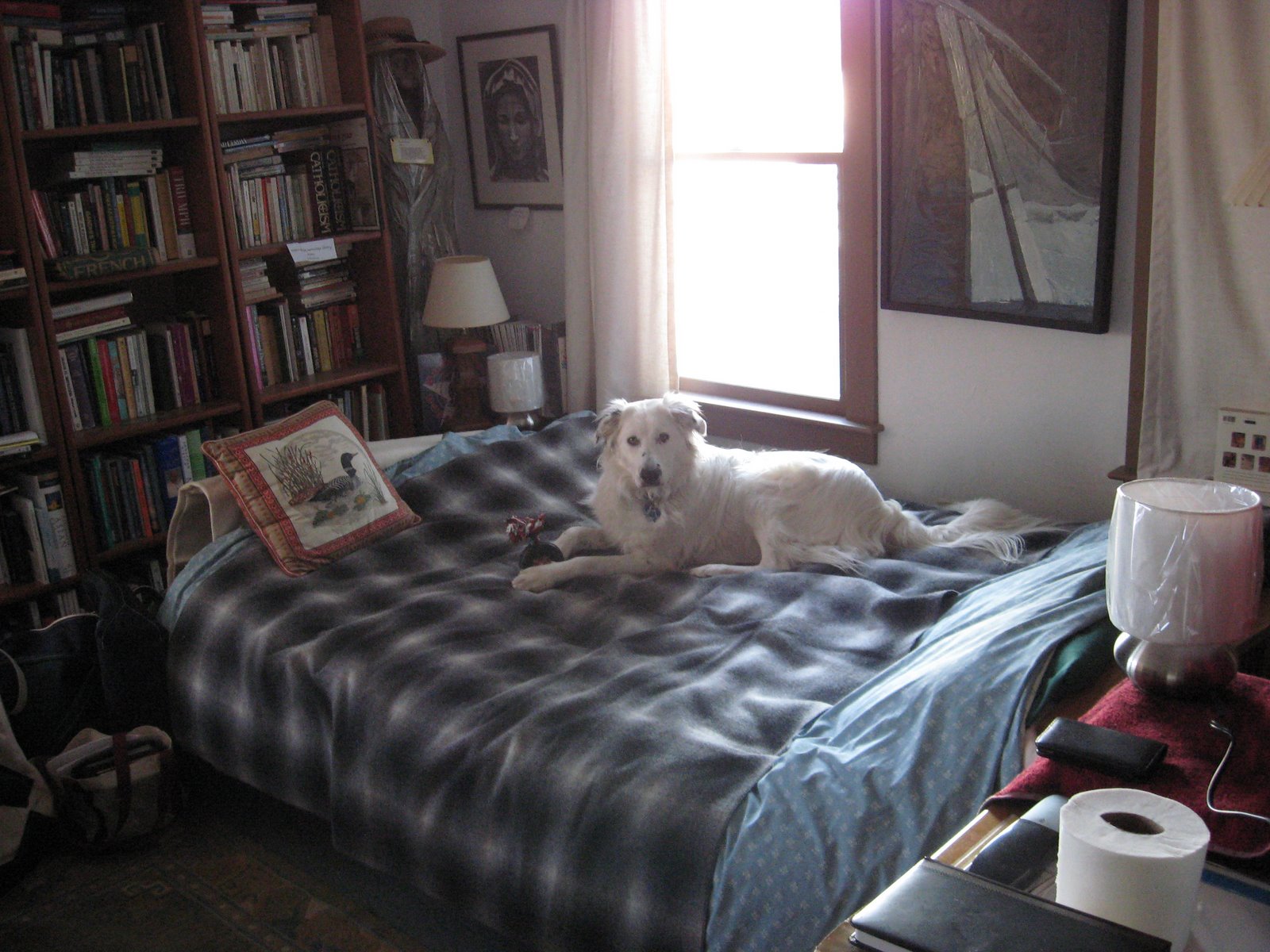
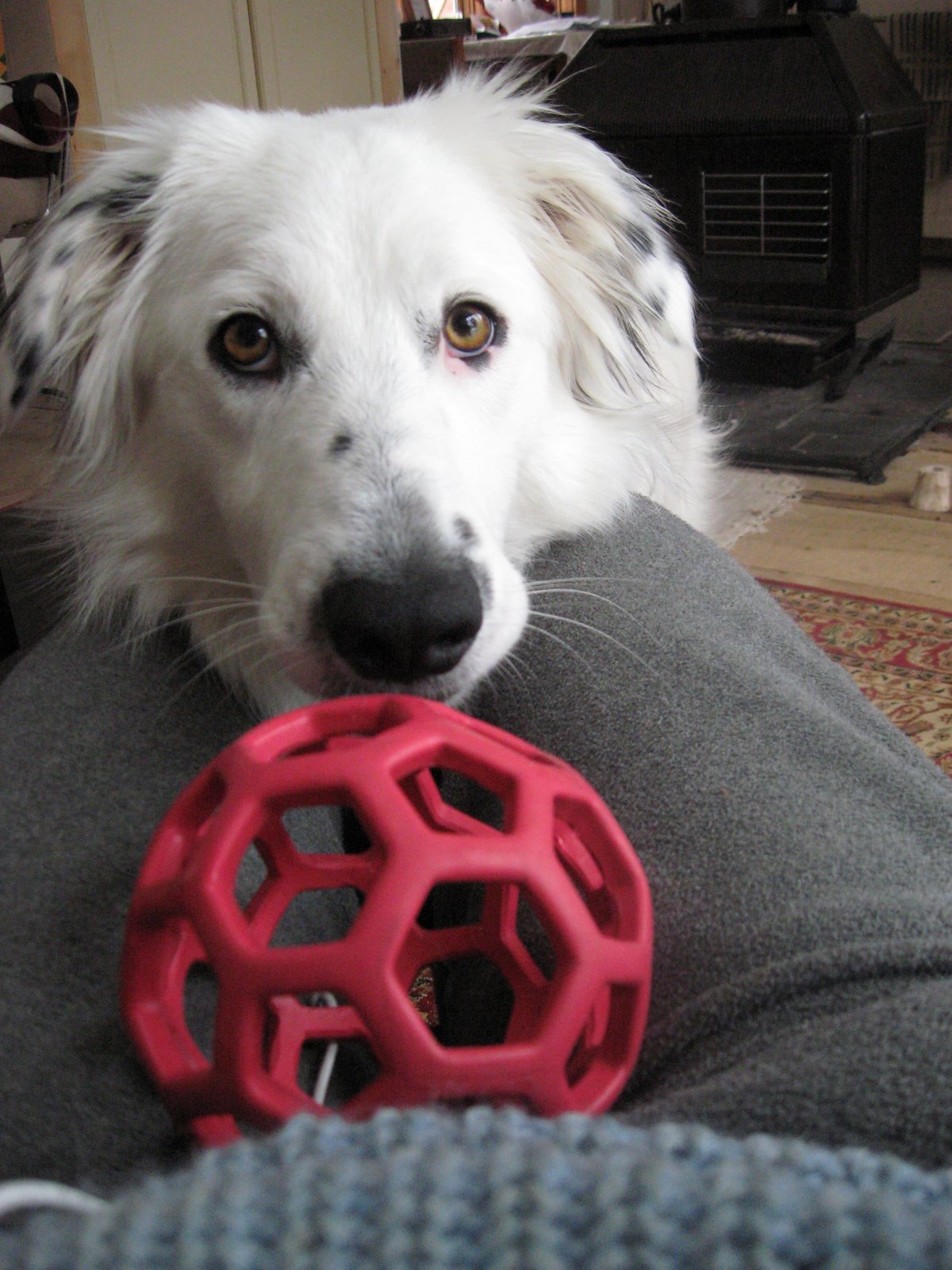
The hermitage pup is one year with us on 1st of March. Rokpa, a Tibetan name which means to help and serve in harmony and continuance, was born on 4Oct2007 and adopted by us on 1Mar2008.


Dear friends, at every moment "the earth is full of the mercy of God," and nature itself is a lesson for all the faithful in the worship of God. The heavens, the sea and all that is in them bear witness to the goodness and omnipotence of their Creator, and the marvellous beauty of the elements as they obey him demands from the intelligent creation a fitting expression of its gratitude.               (from a sermon by St. Leo the Great, Thursday after Ash Wednesday, Office of Readings)
Why is there something rather than nothing?

Who's asking?

The Buddha's Path


Suppose we use a traveling metaphor for the universal spiritual quest. The main map the Buddha offered for the trip to happiness and contentment is called the Eightfold Path, but I have often thought it should be called the Eightfold Circle. A path goes from here to there, and the nearer you are to there, the farther you are from here. A path is progressive... on a genuine path you need to start at the beginning and proceed in a linear way until the end. With a circle, you can join in anywhere, and it's the same circle.


When the Buddha taught his path, he said it had a specific number of constituent parts; people could be sure they were going the right way if they saw any one of eight special markers....The order in which the traveler sees the signs doesn't matter. If we look at any sign closely, it becomes apparent that Right Understanding, the suspicion that it is possible to be contented even if we aren't pleased, arouses Right Aspiration to make a lot of Right Effort to develop more Right Understanding.... It's all connected.

(- Sylvia Boorstein, It's Easier Than You Think)
The weak Anthropic Principle is stated as such:
"The argument can be used to explain why the conditions happen to be just right for the existence of (intelligent) life on the earth at the present time. For if they were not just right, then we should not have found ourselves to be here now, but somewhere else, at some other appropriate time. This principle was used very effectively by Brandon Carter and Robert Dicke to resolve an issue that had puzzled physicists for a good many years. The issue concerned various striking numerical relations that are observed to hold between the physical constants (the gravitational constant, the mass of the proton, the age of the universe, etc.). A puzzling aspect of this was that some of the relations hold only at the present epoch in the earth's history, so we appear, coincidentally, to be living at a very special time (give or take a few million years!). This was later explained, by Carter and Dicke, by the fact that this epoch coincided with the lifetime of what are called main-sequence stars, such as the sun. At any other epoch, so the argument ran, there would be no intelligent life around in order to measure the physical constants in question-so the coincidence had to hold, simply because there would be intelligent life around only at the particular time that the coincidence did hold!"
(—from, The Emperor's New Mind, Chapter 10, by Roger Penrose)
We're so glad Rokpa chose to be with us.

And because he is with us, we're here.

As are you, where you are.

Friday, February 27, 2009

NAACP/Barack Hussein Obama/Martin Luther King celebration in prison this afternoon. Joe, Charlie, Billy, and others give talks and read poems. A good gathering.
The body of Buddha is everywhere,
Does the Goddess of Mercy live in the eastern sea?
Every green mountain is a place of awakening;
Why must you seek Mount Potalaka?

- Paegun (1299-1375)
Why are we here?

Because the question is asked.

Why are organizations that respect and honor individuals necessary?

Because a poet's grandmother occupies the first and last line of Joe J's poem asking her rhetorical question.

I'm glad to have been there with over a hundred responses.

Thursday, February 26, 2009

On and on.
Pantoum of the Great Depression

Our lives avoided tragedy
Simply by going on and on,
Without end and with little apparent meaning.
Oh, there were storms and small catastrophes.

Simply by going on and on
We managed. No need for the heroic.
Oh, there were storms and small catastrophes.
I don't remember all the particulars.

We managed. No need for the heroic.
There were the usual celebrations, the usual sorrows.
I don't remember all the particulars.
Across the fence, the neighbors were our chorus.

There were the usual celebrations, the usual sorrows.
Thank god no one said anything in verse.
The neighbors were our only chorus,
And if we suffered we kept quiet about it.

At no time did anyone say anything in verse.
It was the ordinary pities and fears consumed us,
And if we suffered we kept quiet about it.
No audience would ever know our story.

It was the ordinary pities and fears consumed us.
We gathered on porches; the moon rose; we were poor.
What audience would ever know our story?
Beyond our windows shone the actual world.

We gathered on porches; the moon rose; we were poor.
And time went by, drawn by slow horses.
Somewhere beyond our windows shone the world.
The Great Depression had entered our souls like fog.
And time went by, drawn by slow horses.
We did not ourselves know what the end was.
The Great Depression had entered our souls like fog.
We had our flaws, perhaps a few private virtues.

But we did not ourselves know what the end was.
People like us simply go on.
We have our flaws, perhaps a few private virtues,
But it is by blind chance only that we escape tragedy.

And there is no plot in that; it is devoid of poetry.

(Poem, Pantoum of the Great Depression, by Donald Justice, in New and Selected Poems, 1997)
We do not know what the end is.

It just is.

Wednesday, February 25, 2009

We are of earth. We come from earth.
In Memory of the Unknown Poet, Robert Boardman Vaughn
But the essential advantage for a poet is not, to have a beautiful world with which to deal: it is to be able to see beneath both beauty and ugliness; to see the boredom, and the horror, and the glory.
T. S. ELIOT
It was his story. It would always be his story.
It followed him; it overtook him finally—
The boredom, and the horror, and the glory.

Probably at the end he was not yet sorry,
Even as the boots were brutalizing him in the alley.
It was his story. It would always be his story,

Blown on a blue horn, full of sound and fury,
But signifying, O signifying magnificently
The boredom, and the horror, and the glory.

I picture the snow as falling without hurry
To cover the cobbles and the toppled ashcans completely.
It was his story. It would always be his story.

Lately he had wandered between St. Mark’s Place and the Bowery,
Already half a spirit, mumbling and muttering sadly.
O the boredom, and the horror, and the glory.

All done now. But I remember the fiery
Hypnotic eye and the raised voice blazing with poetry.
It was his story and would always be his story—
The boredom, and the horror, and the glory.

(--Poem, “In Memory of the Unknown Poet, Robert Boardman Vaughn” from New and Selected Poems. © 1995 by Donald Justice. )
Earth is where we'll return.

And let us not be separated from earth.

Tuesday, February 24, 2009

Olin quoted Ranciere.
"Reasonable man knows, therefore, that there is no political science, no politics of truth. Truth settles no conflict in the public place. It speaks to man only in the solitude of his conscience. It withdraws the moment the conflict erupts between two consciences. Whoever hopes to meet up with it must know, in any case, that it travels alone, without any retinue."
(Jacques Ranciere, The Ignorant Schoolmaster, p.90)
Truth alone exists.

The thought occurs.

Monday, February 23, 2009

I don't remember losing God. Not that I ever had God to lose. It's just there were assurances. More like...rituals...sunrise, sunset, night.
GOD'S GRANDEUR

The world is charged with the grandeur of God.
It will flame out, like shining from shook foil;
It gathers to a greatness, like the ooze of oil
Crushed. Why do men not now wreck his rod?
Generations have trod,have trod, have trod;
All is now smeared with trade; bleared, smeared with toil;
And wears man's smudge and shares man's smell: the soil
Is bare now, not can foot feel, being shod.

And for all this, nature is never spent;
There lives the dearest freshness deep down things;
And though the last lights off the black West went
Oh, morning, at the brown brink eastward, springs -
Because the Holy Ghost over the bent world broods
With warm breast and ah! bright wings.

(Poem, God's Grandeur, by Gerard Manley Hopkins)
The rituals seem a way off in the corner of some cavernous underground. And the words of men seem oddly menacing. The maddening thickness of far right thinking.

I've begun to fear some deep sorrow is about to cover the land. Maybe it's my inability to shake this body ache, or the second 12 inches of snow in three days. My mind is on strike. It allows no action before deadline. My life catches up with me as finish line nears. Roof rake pulls down great swaths of snow. Body says it is likely to seize up without advance notice.

We become a nation of expert opinion. Write out a check and someone gives their opinion at the same time as people pay admission to sit and listen to the opinion paid for. Nothing is for free. It is a shame. Free was always a good idea.
And you as well must die, belovèd dust

And you as well must die, belovèd dust,
And all your beauty stand you in no stead;
This flawless, vital hand, this perfect head,
This body of flame and steel, before the gust
Of Death, or under his autumnal frost,
Shall be as any leaf, be no less dead
Than the first leaf that fell, this wonder fled,
Altered, estranged, disintegrated, lost.
Nor shall my love avail you in your hour.
In spite of all my love, you will arise
Upon that day and wander down the air
Obscurely as the unattended flower,
It mattering not how beautiful you were,
Or how belovèd above all else that dies.

(Poem by Edna St Vincent Millay)
Looking at Bald Mountain completely white with bent branches this afternoon so snow replete, I found myself just barely upright as something so recently within me went wandering down the air.

Obscurely.

Absenting.

Sunday, February 22, 2009

I like chanting the Prajna Paramita Sutra. It brings me no closer nor leaves me further away. Just the chanting, even when begun too low in register.
Right Speech
"And what, monks, is Right Speech? Refraining from lying, refraining from slander, refraining from harsh speech, refraining from frivolous speech. This is called Right Speech."

(--Mahasatipatthana Sutta: The Greater Discourse on the Foundations of Mindfulness, in Thus Have I Heard: The Long Discourses of the Buddha, trans. by Maurice Walshe)
Snow again. Wet and heavy. With wind. We axed ice from roof this afternoon. Water flowed from behind the dam. Then it started snowing as we went to cushion and breath.
"Shikan" means nothing but, "Ta" means to hit, "Za" means to sit. SHIKANTAZA, or "just sitting," is alert nonselective attention which neither pursues nor suppresses thoughts, sensations, etc., but, rather, gives alert detached attention to whatever arises in and vanishes from consciousness.
http://www.angelfire.com/electronic/awakening101/shikantaza.ht
There was a time I thought to sit meditation, walk meditation, and breathe meditation was all that was needed.

That time is now.

No big deal. As a failure and as a success there's not much room for failure and success in meditation.

Just meditate.

Leave failure and success to those who like to place things in one box or another.
Night Rain
For no reason it rains,
Whispers of reality.
How lovely it sings,
Drop by drop.
Sitting and lying I listen
With emptied mind.
I don't need ears,
I don't need rain.

- Chin'gak (1178-1234)
What Chin'gak does with rain the passing plow does with snow.

Who needs it?

Any of it?

Hit me.

No reason.

Saturday, February 21, 2009

It's odd. As though some news is coming. The near obsessive checking to find out. What did Volcker say? What did Soros say? And Krugman? Has the car driven off the cliff into economic ravine? Is there a spinning tire amid broken glass?
Poem

This poem is not addressed to you.
You may come into it briefly,
But no one will find you here, no one.
You will have changed before the poem will.

Even while you sit there, unmovable,
You have begun to vanish. And it does not matter.
The poem will go on without you.
It has the spurious glamor of certain voids.

It is not sad, really, only empty.
Once perhaps it was sad, no one knows why.
It prefers to remember nothing.
Nostalgias were peeled from it long ago.

Your type of beauty has no place here.
Night is the sky over this poem.
It is too black for stars.
And do not look for any illumination.

You neither can nor should understand what it means.
Listen, it comes with out guitar,
Neither in rags nor any purple fashion.
And there is nothing in it to comfort you.

Close your eyes, yawn. It will be over soon.
You will forge the poem, but not before
It has forgotten you. And it does not matter.
It has been most beautiful in its erasures.

O bleached mirrors! Oceans of the drowned!
Nor is one silence equal to another.
And it does not matter what you think.
This poem is not addressed to you.
(Poem by Donald Justice)
I don't think the end is near. Nor do I think that prayer has any place in economics. God is in the desolation of numbers to add up to anything. We'd forgotten. We believed the pastors and priests when they said, Be good and everything will work out!

Mary Oliver wrote "You do not have to be good." I'll go with the poet. It's all a silly charade -- this foppery and finagling -- pretending that it's the Democrat's fault, it's the Republican's fault. They're both bankrupt.
Who the Meek Are Not

Not the bristle-bearded Igors bent
under burlap sacks, not peasants knee-deep
in the rice paddy muck,
nor the serfs whose quarter-moon sickles
make the wheat fall in waves
they don't get to eat. My friend the Franciscan
nun says we misread
that word 'meek' in the Bible verse that blesses them.
To understand the meek
(she says) picture a great stallion at full gallop
in a meadow, who —
at his master's voice — seizes up to a stunned
but instant halt.
So with the strain of holding that great power
in check, the muscles
along the arched neck keep eddying,
and only the velvet ears
prick forward, awaiting the next order.

(Poem by Mary Karr)
I love being sick. It suspends everything. You fall into God. You fall into the fallen crumbs of your life. You don't care that water seeps down the new wall in the kitchen the recently exited guy put up but left leaving up the exterior scaffolding causing catch of snow-melt and ice and shove it under new roof and into room.

Aspirin and Umcka -- that herbal balm -- combine to ease the death that comes with every breath.

The next order?

Steady, boy! Good boy! That's a fine lad!

Justice is right. It doesn't matter what I think.
Dog and cat go out through barn at 4:15am. Log comes in from barn. Wood stove shows orange through front windows.
Right Thinking:
"And what, monks, is Right Thought? The thought of renunciation, the thought of non-ill-will, the thought of harmlessness. This, monks is called Right Thought."

--Mahasatipatthana Sutta: The Greater Discourse on the Foundations of Mindfulness, in Thus Have I Heard: The Long Discourses of the Buddha, trans. by Maurice Walshe
From time to time everything leaves. I look around; nothing there. I slowly come to see that whatever I want turns out to be bits of charcoal and ash. Is it possible not to want?
At the Fishhouses
by Elizabeth Bishop

Although it is a cold evening,
down by one of the fishhouses
an old man sits netting,
his net, in the gloaming almost invisible,
a dark purple-brown,
and his shuttle worn and polished.
The air smells so strong of codfish
it makes one's nose run and one's eyes water.
The five fishhouses have steeply peaked roofs
and narrow, cleated gangplanks slant up
to storerooms in the gables
for the wheelbarrows to be pushed up and down on.
All is silver: the heavy surface of the sea,
swelling slowly as if considering spilling over,
is opaque, but the silver of the benches,
the lobster pots, and masts, scattered
among the wild jagged rocks,
is of an apparent translucence
like the small old buildings with an emerald moss
growing on their shoreward walls.
The big fish tubs are completely lined
with layers of beautiful herring scales
and the wheelbarrows are similarly plastered
with creamy iridescent coats of mail,
with small iridescent flies crawling on them.
Up on the little slope behind the houses,
set in the sparse bright sprinkle of grass,
is an ancient wooden capstan,
cracked, with two long bleached handles
and some melancholy stains, like dried blood,
where the ironwork has rusted.
The old man accepts a Lucky Strike.
He was a friend of my grandfather.
We talk of the decline in the population
and of codfish and herring
while he waits for a herring boat to come in.
There are sequins on his vest and on his thumb.
He has scraped the scales, the principal beauty,
from unnumbered fish with that black old knife,
the blade of which is almost worn away.

Down at the water's edge, at the place
where they haul up the boats, up the long ramp
descending into the water, thin silver
tree trunks are laid horizontally
across the gray stones, down and down
at intervals of four or five feet.

Cold dark deep and absolutely clear,
element bearable to no mortal,
to fish and to seals. . . One seal particularly
I have seen here evening after evening.
He was curious about me. He was interested in music;
like me a believer in total immersion,
so I used to sing him Baptist hymns.
I also sang "A Mighty Fortress Is Our God."
He stood up in the water and regarded me
steadily, moving his head a little.
Then he would disappear, then suddenly emerge
almost in the same spot, with a sort of shrug
as if it were against his better judgment.
Cold dark deep and absolutely clear,
the clear gray icy water . . . Back, behind us,
the dignified tall firs begin.
Bluish, associating with their shadows,
a million Christmas trees stand
waiting for Christmas. The water seems suspended
above the rounded gray and blue-gray stones.
I have seen it over and over, the same sea, the same,
slightly, indifferently swinging above the stones,
icily free above the stones,
above the stones and then the world.
If you should dip your hand in,
your wrist would ache immediately,
your bones would begin to ache and your hand would burn
as if the water were a transmutation of fire
that feeds on stones and burns with a dark gray flame.
If you tasted it, it would first taste bitter,
then briny, then surely burn your tongue.
It is like what we imagine knowledge to be:
dark, salt, clear moving, utterly free,
drawn from the cold hard mouth
of the world, derived from the rocky breasts
forever, flowing and drawn, and since
our knowledge is historical, flowing, and flown.

(--Poem: "At the Fishhouses," by Elizabeth Bishop from Complete Poems, Farrar, Straus and Giroux).
There's something quietly comforting about the myth of history. It is a pattern of thought outlining a beginning, a middle, and an end. We say, "I've only just begun." Or, "We're right in the middle of it." Then, "I'm coming to the end." It situates us on rulers. Carpenters and politicians fight for the same inch.

Even Buddhists turn our thoughts to impermanence. If things don't last, they must have begun and soon come to an end, right?

"Non-ill-will" sounds like a good name for an inn. Respite care. Final days of tired life.

Head-shaking disgust at fatuous comments by professional ill-willers.

Rather the narrow window of early pre-dawn silence. Men mending their nets. Wharves where going out and coming in is a ritual of tide -- a different way of wandering through history without measuring progress nor suggesting eternal recurrence. A walking stick named 'just this step, just this step.' We have never been here before. We only arrive now.

On frozen pond last night truck plows snow going from edge of land over ice to fish-house, lights fire inside, goes off to town. Fish in February come to hole in his absence to warm themselves.

When things feel like there's nothing here but holes in ice and open spaces side by side in repaired nets, then there's only what some call 'looking' -- just the gaze at end of silence.

Seeing what is. What is there. What is not.

Seal watching.

Thoughts of renunciation. Of harmlessness.

World without end.

Amen.

Friday, February 20, 2009

One thing about illness -- everything takes second fiddle to it.

Tossing and Turning

by John Updike


The spirit has infinite facets, but the body

confiningly few sides.

   There is the left,

the right, the back, the belly, and tempting

in-betweens, northeasts and northwests,

that tip the heart and soon pinch circulation

in one or another arm.

   Yet we turn each time

with fresh hope, believing that sleep

will visit us here, descending like an angel

down the angle our flesh's sextant sets,

tilted toward that unreachable star

hung in the night between our eyebrows, whence

dreams and good luck flow.

   Uncross

your ankles. Unclench your philosophy.

This bed was invented by others; know we go

to sleep less to rest than to participate

in the twists of another world.

This churning is our journey.

   It ends,

can only end, around a corner

we do not know

we are turning.


(Poem "Tossing and Turning" by John Updike, from Collected Poems 1953-1993.  Alfred A. Knopf, 1993.)

Walking snowy ice pond in stiff wind.


Turning back to coldest gust.


I don't even play fiddle.

Note: Rounding out the week, the bookshop/bakery will be closed Friday. We hope to be back Saturday.

Thursday, February 19, 2009

Snow plow plows construction container.
Turning the wheel of the Dharma
is the beginning and end
of the whole training.
With this aspiration one starts
giving one's whole heart to the training;
with one's heart in it, one does it.
Depending on it, one looks
for the wonder arousing,
mysterious state behind appearances.
That attained, the transformation
of one's life has been completed.

- Torei (1721-1792)
Pizza. Tow truck. Nice visit.
Note: The Bookshop/Bakery is closed today due to (being under) the weather.