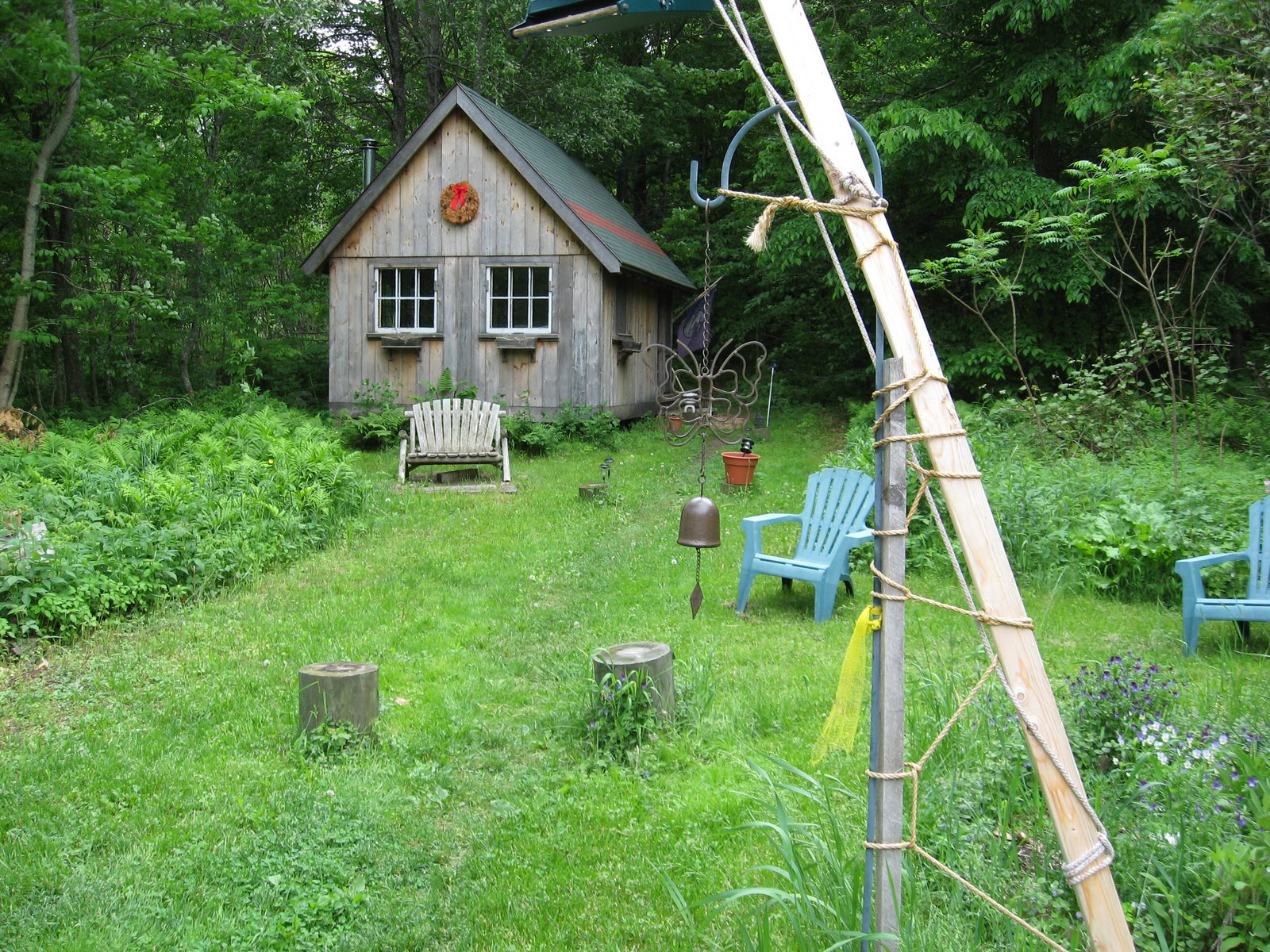
Tuesday, June 24, 2008

The zen saying is: When you sit, sit; when you stand, stand -- whatever you do, don't wobble.

I'm often wobbly. Sunday evening at table during practice we decide the zen saying is another zen trick. "Wobbly," we decide, is a good thing, approached by negative injunction.

Our understanding of "Wobbly" is "Wholeness of being, being love, you."

Then, of course, there's the Canadian version of wobble: "Wholeness of being, being love -- eh?"
She is clarity.
Hearing the truth,
she is like a lake,
pure and tranquil and deep.
Want nothing.
Where there is desire,
say nothing.
Happiness or sorrow,
whatever befalls you,
walk on untouched.

- Buddha in the Dhammapada
Cleaning barn gutters on aluminum ladder in fog and showers yesterday, looking out for periodic skunk visitor. Wobbly ladder. High mass. Rank accumulation of leaves, twig, and water compressed by time and inattention. Things seem covert even as everything grows and flowers. Summer ambivalence sets root in psyche. We are half the year.
The birth of the Precursor was announced in a most striking manner. Zachary and Elizabeth, as we learn from St. Luke, "were both just before God, walking in all the commandments and justifications of the Lord without blame; and they had no son, for that Elizabeth was barren" (i, 6-7). Long they had prayed that their union might be blessed with offspring; but, now that "they were both advanced in years", the reproach of barrenness bore heavily upon them. "And it came to pass, when he executed the priestly function in the order of his course before God, according to the custom of the priestly office, it was his lot to offer incense, going into the temple of the Lord. And all the multitude of the people was praying without, at the hour of incense. And there appeared to him an angel of the Lord, standing on the right side of the altar of incense. And Zachary seeing him, was troubled, and fear fell upon him. But the angel said to him: Fear not, Zachary, for thy prayer is heard; and they wife Elizabeth shall bear thee a son, and thou shalt call his name John: and thou shalt have joy and gladness, and many shall rejoice in his nativity. For he shall be great before the Lord; and shall drink no wine nor strong drink: and he shall be filled with the Holy Ghost, even from his mother's womb. And he shall convert many of the children of Israel to the Lord their God. And he shall go before him in the spirit and power of Elias; that he may turn the hearts of the fathers unto the children, and the incredulous to the wisdom of the just, to prepare unto the Lord a perfect people" (i, 8-17). As Zachary was slow in believing this startling prediction, the angel, making himself known to him, announced that, in punishment of his incredulity, he should be stricken with dumbness until the promise was fulfilled. "And it came to pass, after the days of his office were accomplished, he departed to his own house. And after those days,Elizabeth his wife conceived, and hid herself five months" (i, 23-24).
(--on John the Baptist, from Catholic Encylopedia,
http://www.newadvent.org/cathen/08486b.htm)
The hidden life is like summer ambivalence. Covert service, in metaphor of spiritual life, is life of prayer and kindness -- with this caveat: there is no payoff, no medical benefits, no retirement plan, no Rotary Club "Hi Joe!" nor gold watch to time you into declining sunset. The hidden life is only the hidden life. There is trust, but no trust fund. There's nothing there. No applause. No limo. No press conference.

Bereft.
I like John. He travels the edge of the story of Jesus. From kick-womb to kick-ass commentary about some powerful guy and his wife whose daughter showed sensuous swirl and asked for his head. In prison he wondered: Was his cousin the real thing? A prison visitor told him what he saw. About the sick, healed. About the poor, hearing good things. About how upside-down the world is with injustice and uncaring ruling over justice and kindness. And Jesus? Prison doesn't take away doubt and darkness. John hoped his dreams were not delusions. Don't we all!
Now
by Liam Rector

Now I see it: a few years
To play around while being
Bossed around

By the taller ones, the ones
With the money
And more muscle, however

Tender or indifferent
They might be at being
Parents; then off to school

And the years of struggle
With authority while learning
Violent gobs of things one didn't

Want to know, with a few tender
And tough teachers thrown in
Who taught what one wanted

And needed to know; then time
To go out and make one's own
Money (on the day or in

The night-shift), playing around
A little longer ("Seed-time,"
"Salad days") with some

Young "discretionary income"
Before procreation (which
Brings one quickly, too quickly,

Into play with some variation
Of settling down); then,
Most often for most, the despised

Job (though some work their way
Around this with work of real
Delight, life's work, with the deepest

Pleasures of mastery); then years
Spent, forgotten, in the middle decades
Of repair, creation, money

Gathered and spent making the family
Happen, as one's own children busily
Work their way into and through

The cycle themselves,
Comic and tragic to see, with some
Fine moments playing with them;

Then, through no inherent virtue
Of one's own, but only because
The oldest ones are busy falling

Off the edge of the planet,
The years of governing,
Of being the dreaded authority

One's self; then the recognition
(Often requiring a stiff drink) that it
Will all soon be ending for one's self,

But not before Alzheimer's comes
For some, as Alzheimer's comes
For my father-in-law now (who

Has forgotten not only who
Shakespeare is but that he taught
Shakespeare for thirty years,

And who sings and dances amidst
The forgotten in the place
To which he's been taken); then

An ever-deepening sense of time
And how the end might really happen,
To really submit, bend, and go

(Raging against that night is really
An adolescent's idiot game).
Time soon to take my place

In the long line of my ancestors
(Whose names I mostly never knew
Or have recently forgotten)

Who took their place, spirit poised
In mature humility (or as jackasses
Braying against the inevitable)

Before me, having been moved
By time through time, having done
The time and their times.

"Nearer my god to thee" I sing
On the deck of my personal Titanic,
An agnostic vessel in the mind.

Born alone, die alone—and sad, though
Vastly accompanied, to see
The sadness in the loved ones

To be left behind, and one more
Moment of wondering what,
If anything, comes next. . .

Never to have been completely
Certain what I was doing
Alive, but having stayed aloft

Amidst an almost sinister doubt.
I say to my children
Don't be afraid, be buoyed

—In its void the world is always
Falling apart, entropy its law
—I tell them those who build

And master are the ones invariably
Merry: Give and take quarter,
Create good meals within the slaughter,

A place for repose and laughter
In the consoling beds of being tender,
I tell them now, my son, my daughter.


(--From The Executive Director of the Fallen World by Liam Rector, published by the University of Chicago Press. Copyright 2006 by Liam Rector.)
We'll drive the back roads to Belfast. We'll arrive, no doubt, a smidgen late for mass at St Francis of Assisi. We'll sit and kneel in meditation wondering what it was kept John in touch with what enlivened him. We'll listen to what is offered. We'll present ourselves as nescient affirmation, as this day's radically unknowing body of Christ.

We'll wonder what keeps us in touch with life, with what is enlivening throughout.

The world, on one hand, is full of war, lies, intentional criminality, and arrogant power.

On the other hand, the world is permeated by quiet hope, simple kindnesses, unobtrusive pastoral visiting care, and poet's vision that breaks the heart with loving tears.

What is, then, really, the sound of one hand clapping?

Monday, June 23, 2008

Jasmine incense at altar for Dogen. Moist green leaves. Brook up path. Dog gnawing stick. Drops patter maple leafs with slight breeze. Morning. Cars roll Barnestown Road. Birds busy aerial telegraph. Cat saunters path to cabin.

True spiritual practice is not founded on attainment or on the miraculous, but on seeing life itself as a true miracle. In the words of a Zen master,
My magical power and miraculous gift:
Drawing water and chopping wood
.
(--from Zen Sayings)
At Taize service in St Thomas Church last evening after meditation practice at hermitage -- flute, harp, piano, and cello wove between voices, candles, and icons -- a silence sounding stillness gathering.

Rain reminds -- earth receives, everything.
"Entering the forest he moves not the grass;
Entering the water he makes not a ripple."

--Zenrin Kushû (The Way of Zen 152, 224)
So much effort in this world to be known, get ahead, make a name for oneself. Less frequent the wish to remain unknown, stay put, enter no name.

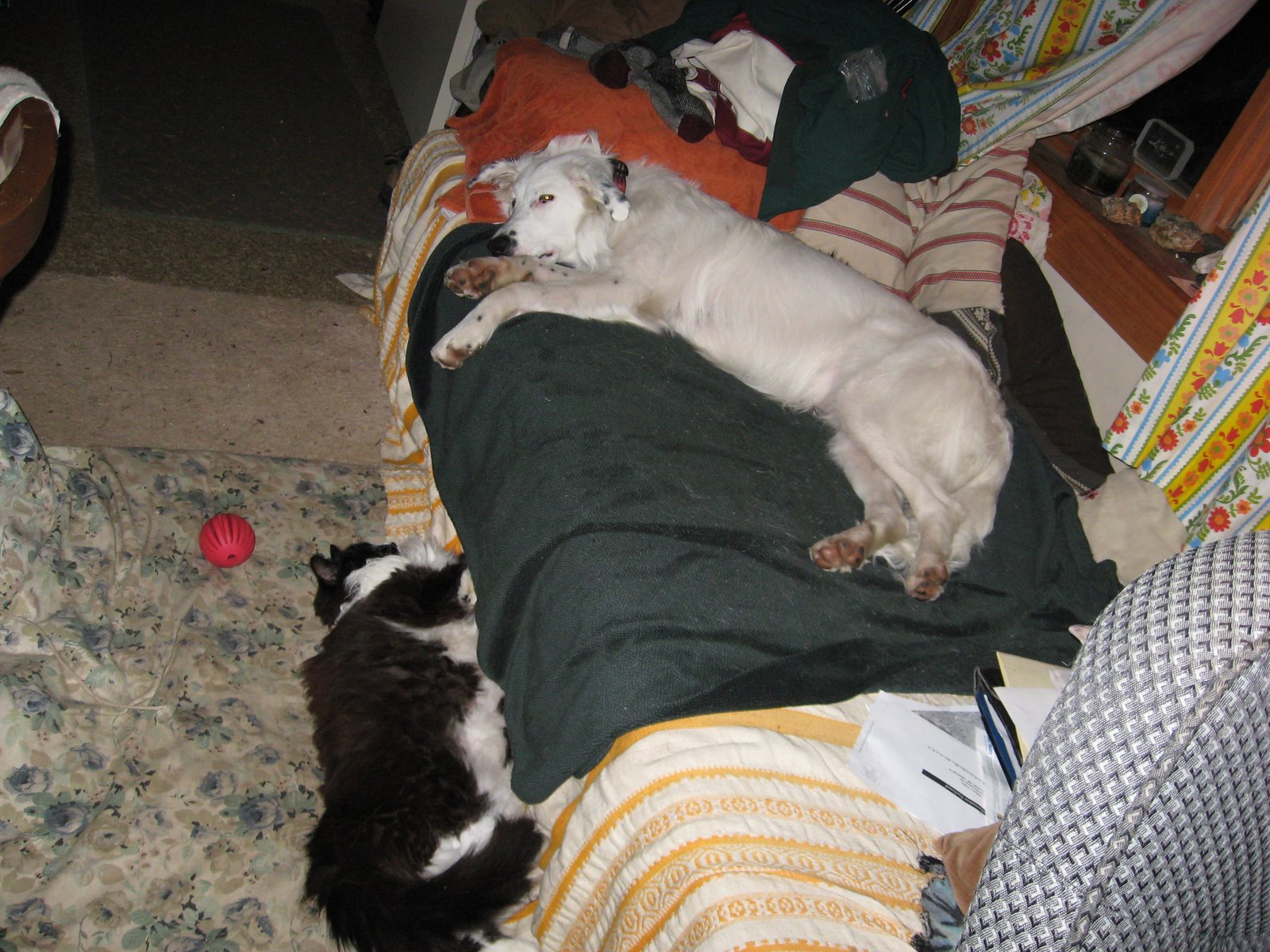
Dog follows cat around meditation hall. Bored.

Only 32 of 800 to this hour have been found from ferry that capsized during typhoon in Philippines. What can you say? Woman off Owl's Head beach flies small plane into ocean; dies. Such a sudden quiet. If we have to say something, and there is nothing to say, how turn the mind?
"Speech is blasphemy, silence a lie. Above speech and silence there is a way out."
(--I-tuan, one of Nan-ch'uan's great disciples (The Golden Age of Zen 250, 322 n.13))
The way out, some point, is through. Through one, through another, no stopping. The Catholic priest in Belfast sometimes pauses the recitation of Nicene or Apostle's Creed after homily. It's his attempt to bring attention to the words and what they point to. When we chant the Heart Sutra Sunday evenings there is no stopping no pausing. Are we what is passing through creed and sutra? No pausing, no stopping, no ending. One thing after another.

Fragments

1. Not on my authority, but on that of truth, it is wise for you to accept the fact that all things are one.
2. This truth, though it always exists, men do not understand, as well before they hear it as when they hear it for the first time. For although all things happen in accordance with this truth, men seem unskilled indeed when they make trial of words and matters such as I am setting forth, in my effort to discriminate each thing according to its nature, and to tell what its state is. But other men fail to notice what they do when awake, in the same manner that they forget what they do when asleep.
3. Those who hear without the power to understand are like deaf men; the proverb holds true of them -- 'Present, they are absent.'
4. Eyes and ears are bad witnesses for men, since their souls lack understanding.
5. Most men do not understand such things as they are wont to meet with; nor by learning do they come to know them, though they think they do.
6. They know not how to listen, nor how to speak.
7. If you do not hope, you will not find that which is not hoped for; since it is difficult to discover and impossible to attain.
8. Seekers for gold dig much earth, and find little gold.
9. Controversy.
10. Nature loves to hide.
11. The lord at Delphi neither speaks nor conceals, but gives a sign.
12. And the Sibyl with raving mouth, uttering words solemn, unadorned, and unsweetened, reaches with her voice a thousand years because of the god in her.
13. What can be seen, heard, and learned, this I prize.
14. (For this is characteristic of the present age, when, inasmuch as all lands and seas may be crossed by man, it would no longer be fitting to depend on the witness of poets and mythographers, as our ancestors generally did), 'bringing forth untrustworthy witnesses to confirm disputed points,' in the words of Herakleitos.
15. Eyes are more exact witnesses than ears.
16. Much learning does not teach one to have understanding;

(--Heraclitus, (ca.500 BCE), Arthur Fairbanks, trans. and ed., The First Philosophers of Greece (Scribner, 1898))
I've neither learning nor understanding.

Dog sits in undergrowth and barfs. Cat watches from wood box on cabin porch. Both keen-eyed watchfulness at any movement.

Tomorrow is midsummer, St. John's Day.

Today is looking this way and that.
If everyone flocks to the world,
who then will be a hermit?
If everyone abandons the world,
who then will manage the world?
There is none like this Great Master
who dwells between the two,
neither defiled, nor pure;
neither Vinaya, nor Ch’an,
there is none like Hai-yueh.

- Su Shih (1073)
So unlike, none like -- just like this.
This is how we are in the world.

Tea, green; oatmeal, with berries!

This morning.

Sunday, June 22, 2008

Fog on Passagassawakeag River on Penobscot Bay. Three kayakers paddle in low tide. French and Webb launch three identically restored sailboats in Belfast Maine this afternoon after two and a half year makeover. Something done well is celebrated. A fourth hull, in disconsolate disrepair, waits down the street away from the nautical flags and new brass pulleys, unrestored, peeling, patronless.
I hear so many disparaging me,
‘“Terror from every side!”
Denounce him! Let us denounce him!’
All those who used to be my friends
watched for my downfall,
‘Perhaps he will be seduced into error.
Then we will master him
and take our revenge!’
But the Lord is at my side, a mighty hero;
my opponents will stumble, mastered,
confounded by their failure;
everlasting, unforgettable disgrace will be theirs.
But you, O Lord of Hosts, you who probe with justice,
who scrutinise the loins and heart,
let me see the vengeance you will take on them,
for I have committed my cause to you.
Sing to the Lord,
praise the Lord,
for he has delivered the soul of the needy
from the hands of evil men.

(--Jeremiah 20:10 - 13, Sunday 22 June 2008, 12th Sunday of the year)
The derelict sailboat is recognizable. She waits off-camara. Passersby look at her and look away. She's not pretty. She's old. And beaten. A reminder of something -- something off hidden, not quite in the forefront of the mind glancing away.

Still, it's a wonderful day!
Jesus said to his disciples, ‘Do not be afraid of them. For everything that is now covered will be uncovered, and everything now hidden will be made clear. What I say to you in the dark, tell in the daylight; what you hear in whispers, proclaim from the housetops.
(--Matthew 10:26 - 33)
It's a strained hope that considers reconstruction and transparency. The metaphor of dilapidation becoming redemptive restoration cast upon the waters is archetypically resonant at the edge of sea in fog muted thought. We're not really talking about pleasure craft here, are we?
The problem of representation, meaning, and memory is also illustrated by the case of a patient who has lost his arm in an accident. As is often the case, the brain creates a "phantom" limb in an apparent attempt to preserve a unified sense of self. For the patient, the phantom limb is painful. The brain knows there is no limb; pain is the consequence of the incoherence between what the brain "sees" (no arm) and the brain's "feeling" the presence of a phantom that it has created in its attempt to maintain a unified sense of self in continuity with the past. Such pain is not created by an external stimulus and cannot be eliminated by painkillers.

One famous case is that of a young man who had lost his hand in a motorcycle accident. In a therapeutic procedure devised by V.S. Ramachandran, and described in his book with Sandra Blakeslee, Phantoms in the Brain, the patient put his intact hand in one side of a box and "inserted" his phantom hand in the other side. As the illustration on this page shows, one section of the box had a vertical mirror, which showed a reflection of his intact hand. The patient observed in the mirror the image of his real hand, and was then asked to make similar movements with both "hands," which suggested to the brain real movement from the lost hand. Suddenly the pain disappeared. Though the young man was perfectly aware of the trick being played on him —the stump of his amputated arm was lying in one section of the box—the visual image overcame his sense of being tricked. Seeing is believing! Pain—the consequence of the incoherence between the brain's creation of a phantom limb and the visual realization that the limb does not exist—disappeared; what was seen (a hand in the mirror) matched what was felt (a phantom).

(--from Volume 55, Number 11 · June 26, 2008,How the Mind Works: Revelations, By Israel Rosenfield, Edward Ziff, in The New York Review of Books. http://www.nybooks.com/articles/21575 )
Lately, phantoms are rife. This one and that one from this uncertainty and that time have crisscrossed deep valleys and high passes in mountaineering imagination. I've lost touch with Sherpa and team. No path shows itself. Every phrase trying to be prayer is brittle, snap-twig dry, and yet without sound underfoot. Curiously -- in solitude -- this is not a problem. When others are conjured, strife.
You ask why I live in the mountain forest,
I smile, and am silent,
and even deep within remain quiet:
the peach trees blossom,
the water flows.

-- Li T’ai-po (701-?)
Lowell is right, "We are poor passing facts." Hugo is right, "What's wrong will always be wrong." So too is Roethke right, "We come to something without knowing why."

At edge of fog, birdsong.

Source, or our father, heavens what cannot be grasped. There is wisdom in not stretching out arm and hand for something not really there. Our phantom mind searches through pain and absence for something, something that will sound like tumblers in a locked safe, clicking to the touch -- Ah, Open! But, there's nothing there. Not even mind.
Caribbean poet and Nobel prizewinner Derek Wallcott says: “For every poet it is always morning in the world; history a forgotten, insomniac night. The fate of poetry is to fall in love with the world in spite of history.”

I believe Walcott names an accomplishment of Thomas’ poetic and mystical side—Thomas calls all of us to fall in love with the world in spite of the folly of human history. Thomas creates a context when he says “ecology is functional cosmology”--a context in which we can recover the zeal that comes from falling in love with the world once again. He puts our own personal and collective histories into context and he puts the context into a sacred context by reminding us that the primary sacrament is the universe itself. Every other sacrament, being and action is derivative of that holy sacrament.
(--from, Some Thoughts on Thomas Berry’s Contributions to the Western Spiritual Tradition, By Rev. Dr. Matthew Fox, http://www.matthewfox.org/sys-tmpl/tberry/)

I raise dregs of coffee in paper cup to the forlorn and functional cosmology resting on stands in boatyard -- merely there.

As we are, here.

However here.

Saturday, June 21, 2008

Summer.

It will be 12 full years at the harbour shop in 8 days since opening on 29June96.
Contemplation is a vision of Totality through discovery of the Center within.
-- Raimon Panikkar
This will be our transition year. We will end Meetingbrook's presence at the cape on Camden Harbour by the end of next spring. Our new landlord wants the upstairs for himself. He's told us that he's buying the building from his brothers and will live upstairs. He's wanted it for a while.

There it is.

We will revert to the hermitage at Ragged Mountain. We will focus on the life of solitude and prayer. There will still be conversations as we've had them the past 12 years at the shop -- only now at the hermitage or on the boat that will serve for retreat, hospitality, and conversation. (We don't have that boat yet, but we might someday.)
When all thoughts

When all thoughts
Are exhausted
I slip into the woods
And gather
A pile of shepherd's purse.

Like the little stream
Making its way
Through the mossy crevices
I, too, quietly
Turn clear and transparent.
(--Poem by Ryokan)
My thoughts return to our original inspiration. That was time ago.

There's a Zen koan: "All things return to the one. Where does the one return?"

I don't know.

You?

Friday, June 20, 2008

Light pauses today. "Oh," it says, "here I am in the balance of human attentiveness. They call me solstice."

Tree drips with rain and fog. Green sits on mountain. Clouds muse. Summer takes the bridge.
The iris pond has flowered
Before the old temple;
I sell tea this evening
By the water’s edge.
It is steeped in the cups
With the moon and stars;
Drink and wake forever
From your worldly sleep.
- Baisao (1675-1763)
Whenever I come to the end of something I never expect any tomorrow. My life ends. I'm surprised to wake to birdsong. Surely I'm no longer here.
Closed Path

I thought that my voyage had come to its end
at the last limit of my power,
---that the path before me was closed,
that provisions were exhausted
and the time come to take shelter in a silent obscurity.

But I find that thy will knows no end in me.
And when old words die out on the tongue,
new melodies break forth from the heart;
and where the old tracks are lost,
new country is revealed with its wonders.

(-- Poem by Rabindranath Tagore)
Spring goes. Night comes. Cat eats. Dog snoozes. I've died. Who says this? This is what makes me wonder about this life -- it is so difficult to figure who is saying what to whom.
Buddha: One who acts on truth is happy, in this world and beyond.

Jesus: You will know the truth and the truth will make you free.

Buddha: Hatred does not ever cease in this world by hating, but by love; this is an eternal truth... Overcome anger by love, Overcome evil by good. overcome the miser by giving, overcome the liar by truth.

Jesus: Love your enemies, do good to those who hate you, bless those who curse you, pray for those who abuse you. From anyone who takes away your coat do not withhold even your shirt. Give to everyone who begs from you; and if anyone takes away your goods, do not ask for them again.

(--from the book, Jesus and Buddha, the Parallel Teachings, by Marcus Borg)
We're not here to profit.

We're here to divest.

St. Benedict wrote -- To prefer nothing to Christ.

Nothing, you say?

Thursday, June 19, 2008

Reception.

It is not perception, accurate or faulty, that is our issue. Rather, it is reception -- the ability to merely receive what presents itself.
Forty-some years I’ve lived in the mountains
Ignorant of the world’s rise and fall
Warmed at night by a stove full of pine needles
Satisfied at noon by a bowl of wild plants
Sitting on rocks watching clouds and empty thoughts
Patching my robe in sunlight practicing silence
Till someone asks why Bodhidharma came east
And I hang out my wash.

- Shih-wu (1252-1352)
It's as though we have an inner transformer that, when prepared and empty of anything but clear light, is able to receive anything, however kindly or gross and vulgar, and transform it into a graced and equanimous reception.

No one can predict or control what comes our way. But belief in the act of transformation helps sort through what becomes of the world when whatever comes through is returned back through.
But my first theoretical article dealt with what I have later seen is called "the dissonance principle", which might be summarized thus: If you don't do what you believe in, you'll end up believing in what you do.
...
I still got enthusiastic later on over another of our thinkers who died very young: Joan Crexells. He taught me that nothing could be "absolved" from its determining factors – psychological, sociological, historical, et cetera – nor really "resolved" either, to give an ad hoc synthesis. For me, the gravest sin of all, now and always, is to postulate that man needs to believe in order to remain consistent. Hence my moral aversion to the application of principles and this formulation of "I never". The morality I stand for doesn't include this "never".
...
Once I was surprised by people who became radical when they got old. But it's happening to me too. I think that if, to cap it all, someone's created man, if there's a God that lets a mother see her child die in her arms in a bombing attack, I don't want to know him.

In Dios entre otros inconvenientes ("God and other inconveniences" – 2000), I focused on the theme of religion, the "myth", as a crystallisation of atavisms that reconstructs – on the symbolic level – instinctive solidarity that has been undermined by the development of "logos" (Bergson has bequeathed us a magnificent description of the process).

(--from: Xavier Rubert de Ventós, Daniel Gamper, Mercè Rius, "If I don't say what I think, what's the point of being mad?" A conversation with Catalan philosopher Xavier Rubert de Ventós)
What we think becomes determinative of the world that emerges with our participation following encounter with the world as we receive it. We didn't create the world that is there with or without us; we only create the world we encounter and transform.
The term atavism is sometimes also applied in the discussion of culture. Some social scientists describe the return of older, "more primitive" tendencies (e.g., warlike attitudes, "clan identity," etc. -- anything suggesting the social and political atmosphere of thousands of years ago) as "atavistic." "Resurgent Atavism" is a common name for the belief that people in the modern era are beginning to revert to ways of thinking and acting that are throwbacks to a former time. This is especially used by sociologists in reference to violence. Marxists refer to pre-capitalist classes (such as the peasantry, the aristocracy and the petit-bourgeoisie) as "atavistic" to indicate that they do not fit into the bipolar class division (bourgeoisie/proletariat) of modern capitalist society. Marxists therefore view them as a reactionary force that will try to stop not only socialism, but also bourgeois progress itself.
http://en.wikipedia.org/wiki/Atavism
There's always a danger of throwback. No bridges (but the metaphoric ones) are ever irretrievably burned. Every drunk knows what a slip is. Anyone who's promised anything remembers what betrayal feels like. It's not that we can't go home again; rather we've never left home. We're only on a sleepover -- temporarily elsewhere.

It is the feastday of Romuald, hermit and monk.

Sit in your cell as in paradise.
Put the whole world behind you and
forget it.
Watch your thoughts like a good fisherman watching for

fish.

The path you must follow is in the Psalms — never leave it.

If you have just come to the monastery, and in spite of your good
will you cannot accomplish what you want, take every opportunity you
can to sing the Psalms in your heart and to understand them with your
mind. And if your mind wanders as you read, do not give up; hurry back
and apply your mind to the words once more.

Realize above all
that you are in God's presence, and stand there
with the attitude of one who stands before the emperor.

Empty yourself completely and sit waiting,
content with the grace of God,
like the chick who tastes nothing and eats nothing
but what his mother brings him.
(--St. Romuald's Brief Rule for Camaldolese Monks and Oblates, 1006 AD)
I'm ignorant of the world's rise and fall.

I wish, though, to practice receiving.

Communion.

Towards transforming the world.

Wednesday, June 18, 2008

I understand the United States is still at war with Iraq.
The Buddha taught that all phenomena are impermanent; there is birth, then there is death. Our civilization is also like that. In the history of the earth, many civilizations have ended. If our modern civilization is destroyed, it also follows the law of impermanence. If our human race continues to live in ignorance and in the bottomless pit of greed as at present, then the destruction of this civilization is not very far away. We have to accept this truth, just like we accept our own death. Once we can accept it, we will not react with anger, denial, and despair anymore. We will have peace. Once we have peace, we will know how to live so that the earth has a future; so that we can come together in the spirit of brotherhood and sisterhood and apply the modern technology available to us, in order to save our beloved green planet. If not, we will die from mental anguish, before our civilization actually terminates.
(-- Letter from Thay {Thich Nhat Hanh} to Spiritual Family on the occasion of Autumn Retreat, Blue Cliff Monastery. October 12, 2007)
It won't last. The American citizenry and the many populations of the world won't let it go on.

It's been over five years.

It won't last. Religious leaders world wide will condemn it and call their congregations to oppose the war with strong action.

Count on it.

This is a just world hungering for justice.

An accounting will soon take place.

Eh?

Tuesday, June 17, 2008

Breaking News 11:54 PM ET: Boston Celtics Win N.B.A. Championship, 131-92
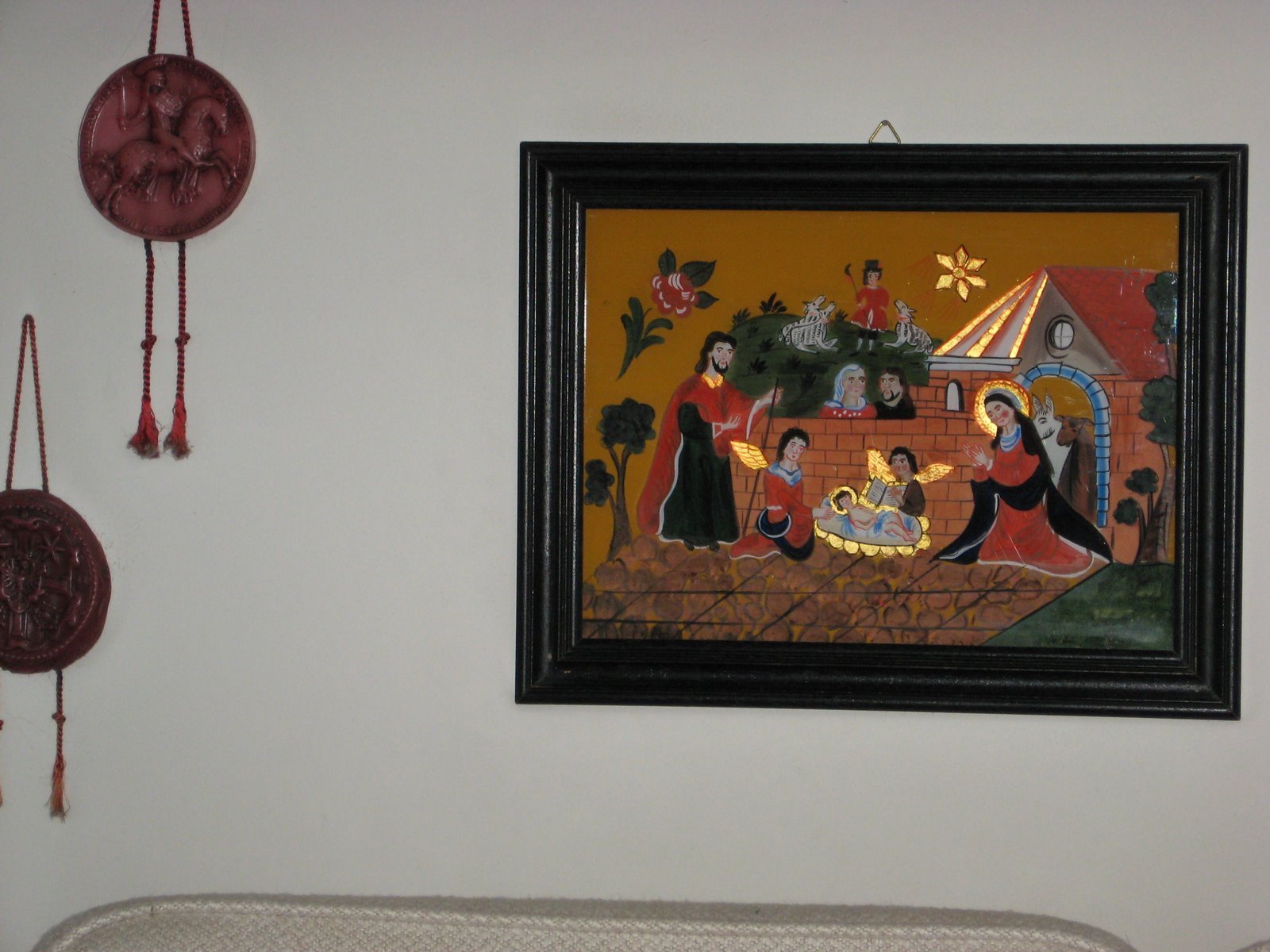
In the night the bells of the mountain temple
Are swung by the wind from the pines.
From my bed of stone by the wintry lamp
I can hear the flowering rain of Buddha.
- Wang Wen-lu
It's just a game, right?

Yea, right!

Pass the umbrella.

Monday, June 16, 2008

"The fool says in his heart, 'There is no God.'"(--Psalm 14:1)

Looking at the world we might conclude that if there is not no God, then, as Abbott and Costello asked, "Who's on first?"

We find "I don't know" is on third, so close to home, but caught in a seeming eternal recurrence of verbal return pointing to a dialogic dilemma. We cannot locate God in words. God is as invariably word as God is invariably silence. To look outside word is useless. To look inside word is muted incomprehension. Word is its own creation, its own sustenance, and its own withdrawal.

And yet, we are happy with this unattainable on-again off-again, appearing disappearing, comforting disconsolation we inexplicably call "God;" "I Am;""Thee."
The Right to Happiness

Whether people are beautiful and friendly or unattractive and disruptive, ultimately they are human beings, just like oneself. Like oneself, they want happiness and do not want suffering. Furthermore, their right to overcome suffering and be happy is equal to one's own.... When you recognize that all beings are equal in both their desire for happiness and their right to obtain it, you automatically feel empathy and closeness for them. Through accustoming your mind to this sense of universal altruism, you develop a feeling of responsibility for others: the wish to help them actively overcome their problems. Nor is this wish selective; it applies equally to all.

(--The Dalai Lama, Compassion and the Individual; From Everyday Mind, a Tricycle book edited by Jean Smith)
Maybe it's not about God. Maybe it's about being a fool. Maybe it's really about the word "there." The word "there" in this sentence is a trickster. We'd like to think it signifies a a conclusion reached, some synthesis of syllogism in the troika of logical argumentation. No, not here.

Actually, ('actually' is a word used when we accidentally stumble upon the right wording, or, maybe when trying to obfuscate something about to be said) , the word "there" in the sentence above means -- "No, not here."

The sentence re-rendered now reads: "The fool says in his heart, 'No, not here is no God.'"

Abstracting convolution, or removing double negative from the pericope, and the phrase reads: "No, here is God." Thus, the fool says in his/her heart: Here is God.

If "Here" is God, then it becomes more obvious why we cannot see the face of God. God is Here. Who sees Here? Not only that, but I recall that in the study of Logic,
The predicate of an affirmative proposition is regarded as having particular quantification, the predicate of a negative proposition, universal.
(--Aristotelian Syllogisms; after Raymond McCall, Basic Logic (Barnes & Noble, 1967) http://www.friesian.com/aristotl.htm )
Is "God" or "Here" absolute or particular?

The words "Here" and "Now" are very big words. They contain all that is, everything, everywhere, with no exceptions. Everything is here; all time is now. It is for this ungraspable truth that I despair my attitude to the current situation of my country and its leaders. It is a religious question I face. Dick the Republican was right -- "Stay away from politics," he'd say. (Then he'd send a contribution to George W. Bush and receive back a signed photograph of the first couple.) He'd say: "Judgment, criticism, and negativity are your enemy -- avoid them." (Then he'd judge, criticize, and conclude "You're wrong!" when we'd talk. This is why I was so fond of my deceased friend.) He'd have excoriated the following:
I'm sure I'll reserve a very small moment in my life when I'll feel sorry for Mr. Bush, when I'll briefly give him the benefit of doubt and consider that he merely was mistaken, misleading, and miserably wrong.

But that will pass. Quickly.

In my six decades in this land I have never seen nor heard a more frustrating and infuriating man who'd been entrusted with public responsibility and service. I, as many, have been ashamed of his presidency, ashamed to be a citizen of a country whose leader invaded, murdered, destroyed, lied, undercut the constitution, mocked and denigrated any idea differing from his take on things, and, finally, a man who posed as some pious evangelical religious prophet doing God's will toward a flirtatious endtime of human history.

Absurd man, absurd administration, absurd political and religious ideology.

There is much to be forgiven as the United States limps home from hated violence with blood dripping behind, as the American people dully begin to realize what fools they've been played, and as buffoonery masquerading as media watchdoggy lechery collapses into some digital landfill to rot away.

I'm not up to the forgiveness. Such recalcitrance is bound to weigh heavy on my soul. It is a burden I'll have to willingly bear.

(--Posted as response to: Sorry, Mr. President, But Your Legacy Is More Awful Than You Think, a piece by Bob Cesca, Huffington Post, Posted June 11, 2008 | 04:57 PM (EST))
And he'd be right. The inability to forgive, even in the context of recent disgrace, is missing the point of Here and Now.

What is most difficult to discern is the possibility that all of it extends anywhere in space or time; the disgrace and the anger, the reluctant prayer and the uncertainty there is any hearing of prayer -- that all of it is of God.

And that God is, whatever not else, poet -- which clarifies everything and nothing.

Some words about Ted Kooser point this out:
Website photos of Kooser typically depict him relaxing in a broad, wooden Adirondack chair or smiling affably in a checkered shirt and jeans. But there’s no mistaking the clear, steady gaze of someone who has spent his life observing the smallest of life’s details—and distilling them for meaning. From a jar of buttons to dishwater, from birthdays to book clubs, Kooser ponders those daily moments many would consider hardly worth writing about. He insists these are the very moments that do matter—small pieces of daily living that define us and connect us as human beings.

"I think a poem is the record of a discovery," he explains. "It can be a discovery in the world or in the process of writing. You record it as poet and the reader participates in that occasion of discovery.

"I do think attention span has been affected by the pace and nature of contemporary life, but you can train people to pay attention to detail. Get in the present moment and quit thinking about what happened yesterday and what’s going to happen tomorrow. Try to notice what’s going on. The detail is what makes your experiences unique."

(--Published September 2006: A Poet for the People, U.S. poet laureate brings his down-to-earth observations to Hawai‘i, by Libby Young, in http://www.hawaii.edu/malamalama/2006/09/f3_poet.html)
I'm pretty much a fool. No experience, and no thinking, serves to clarify this poet we call God, much more all entailed herein. No matter how much I look, I do not see God. That's because God is not "there" to see.

Each.

Detail.

I continue a fool's blind unseeing prayer. Often mistakenly asking for something else or to be somewhere else -- I'll continue to receive the only response prayer has silently given:
"I am here; I am with you; There is no other."
And as though God came from some New York bohemian literary cafe, I hear:
"Stop worrying and stop wanting. Drop the drama! It'll all be fine! Try not to think about it. Now, play the game, pass the cards; whose turn is it to deal? And what's the gig?"
A woman in a talk says the following:
"Happiness, and peace, and love is your nature. But the nature of the mind is acquisition and rejection."
(--Gangaji, Satsang -- the ungraspable offering)
I throw in my hand. There's nothing there. My mind is thrown in as well -- nothing there.

I'll think about what Richard said. I'll think about what Gangaji said. I'll think about what the Psalmist said.

I'll sit, as a fool, with What-Is-Here.

(In the dark, as usual.)

Sunday, June 15, 2008

When solitude asks quarter, it must be given.
In all things be a master
Of what you do and say and think.
Be free.
Are you quiet? Quieten your body.
Quieten your mind.
By your own efforts
Waken yourself, watch,
And live joyfully.
Follow the truth of the way.
Reflect upon it.
Make it your own.
Live it.
It will always sustain you.

(-- Buddha, from the Dhammapada)
When change is requested, give it good sense.
You received without charge, give without charge.
(--Matthew 10:8)
Poverty loosens all resources.

Pay it out.

Saturday, June 14, 2008

Even those who say there's no death are surprised when someone dies. Sometimes, shocked.
Careful! Even moonlit dewdrops,
If you’re lured to watch,
Are a wall before the Truth.
- Sogyo (1667 – 1731)
If it is not death we fear, then fear of death is our fear.

No fear doesn't mean no death. Whatever else death might or might not be, there's usually plenty of clothing that doesn't get worn anymore.

I've too many items of clothing outgrown.

Friday, June 13, 2008

Reading Common Dreams article and readers comments added afterwards.
Published on Thursday, June 12, 2008 by Associated Press
House Waves Off Impeachment Measure Against Bush
by Laurie Kellman
http://www.commondreams.org/archive/2008/06/12/9576/
Reading the submissions here is stark reminder that the political/governmental situation is bleak. What to do?

It is true that everyone, yes everyone, is complicit as actors, enablers, or intellectual tourists watching a film about some despicable corrupting virus eating away what was thought to be a kind and benevolent system of caring service to the populace.

I hate to consider that my fundamentalist brothers and sisters are correct in pointing out that human beings are self-defeating and self-hating sinners who must give either complete submission to Christ or Allah -- or deserve to be blasted off the face of the earth and consigned to hell.

We certainly are at an important cusp. What happens next, in the face of unadulterated criminality on the part of so many sectors in both Middle East and North America, is vital. It is hard to believe that escalating violence, muscle, and carried out threats of diminishing freedoms will not become the orders of the day. A monk recently told me: "Cheer up; things are going to get worse."

These are the times we will look back on and wish were still here -- a time when our best instincts were saying "Uh oh - I'd better extinguish the flames or jump from this burning building while I can. The city won't help me." But the burning building is our character and integrity as citizens of two cities -- that of God and that of what we think of as not-God. In fact there is only one city. We all live in it. And the water is threatened, the waste treatment facility is broken down, and the frightened men and women of the police and populace begin to contemplate shooting each other over issues of security and shortage.

This is not a time of politics as usual. Nor is it a time of prayer as usual. Rather, this is a time for serious and profound public questioning, suspension of the normal workday, school day, and summer vacation plan.

I propose a three day National Sit Down Conversation to occur within 30 days. Everywhere, among all ages, in public places and private living-rooms, a NSDC will ask and consider 3 questions:
1. What really is the purpose of human life in this world and existence?
2. How is it we do not consider every living person, animal, and organism, everything already part of us, to be brother and sister -- and thereby worthy of love, attention, and assistance?
3. Who benefits from the inequities of money, power, and resources -- and how best might we all be brought out of states of mind that make hoarding, scarcity, and separation a seemingly better way of being than sharing, abundance, and interconnectivity?
Admittedly these are awkward and naive questions for a National Sit-Down Conversation -- I'm sure there are better ones. But a conversation must be had. We are impoverished by false debates in political/media theater; we are mislead by experts/pundits telling us their eloquent self-interest opinions; we are humiliated by people in religious/corporate roles of command telling us we are not ready, not worthy, and not holy enough to have a say in matters known best and only by their version of God in sacred sanctums of their control.

Can we talk? Can we listen? Are we willing to stop the juvenile shouting and bomb throwing, bullying intimidation and fear of being punished? Are we willing to accept the premise that we are responsible for our lives, our leaders, our moral conscience, and the present/future of our human race?

I'll suggest July 3rd, 4th, and 5th.

Sit down. Talk with one another. Take notes. Collate responses. Let's find a forum to publish our considerations. Then, we will move to the next step.

The next step might be to embody integrity, incarnate moral/ethical thinking, then communicate pragmatic practical behavior towards people, institutions, and oneself.

Philosophers have spoken about the Good, the Good Life, even the Good News. Let's see what we have to say about any or all of these themes.

It's time. And we're in it. Way deep.

Sink? Or swim?

Thursday, June 12, 2008

Saskia's Continuation Day.
On your birthday, it is advisable that you don't sing, 'Happy Birthday,' but instead you sing, "Happy Continuation Day." You have been here, you don't know since when. You have never been born and you are not going to die, because to die means from someone you suddenly became no one. From something, you suddenly became nothing. Nothing is like that. Even when you burn a piece of cloth, it will not become nothing. It will become the heat that penetrates into the cosmos. It will become smoke that rises into the sky to become part of a cloud. it will become some ash that falls to the ground that may manifest tomorrow as a leaf, a blade of grass, or a flower. So there is only continuation.
(--From, "Going Home," by Thich Nhat Hanh)
She shares this anniversary with Anne Frank. Does each person born on the same date share in the selfsame reality with one another? No doubt. We are more profoundly interconnected than we can even imagine. But don't despair or turn up your preferential nose -- just because we are not separate from one another doesn't mean we can't continue to have our own toothbrushes and drivers licenses. Still, we are appositions of one another. Friend co-monastic. This, in itself, conjoins refreshing view.
"Everyone has inside of him a piece of good news. The good news is that you don't know how great you can be! How much you can love!"
(--Anne Frank)
Yesterday shoveling ten yards of limestone gravel along dooryard drive made glass backs ready to splinter. This morning at 4:30am sitting in chapel'zendo with Rokpa the (learning-obedience-we-hope) Border Collie showing white with black spot on back and black flecks on ears. He snoozed on circles-within-circles center rug placed in meditation space the other day and awaiting final approval from all sectors. Dawn is prayer, a subtle quiescence.
Wholehearted Commitment

Few people are capable of wholehearted commitment, and that is why so few people experience a real transformation through their spiritual practice. It is a matter of giving up our own viewpoints, of letting go of opinions and preconceived ideas, and instead following the Buddha's guidelines. Although this sounds simple, in practice most people find it extremely difficult. Their ingrained viewpoints, based on deductions derived from cultural and social norms, are in the way.

We must also remember that heart and mind need to work together. If we understand something rationally but don't love it, there is no completeness for us, no fulfillment. If we love something but don't understand it, the same applies. If we have a relationship with another p
erson, and we love the person but don't understand him or her, the relationship is incomplete; if we understand the person but don't love him or her, it is equally unfulfilling. How much more so on our spiritual path. We have to understand the meaning of the teaching and also love it. In the beginning our understanding will only be partial, so our love has to be even greater.
(-- Aya Khema, When the Iron Eagle Flies, from Everyday Mind, a Tricycle book edited by Jean Smith)
"Send me," is quintessence of commitment.

"Where?" you ask.

"Here!" breeze responds.
Song

I don't know any more what it used to be
Before I saw you at table sitting across from me
All I can remember is I saw you look at me
And I couldn't breathe and I hurt so bad I couldn't see.

I couldn't see but just your looking eyes
And my ears was buzzing with a thumping noise
And I was scared the way everything went rushing around
Like I was all alone, like I was going to drown.

There wasn't nothing left except the light of your face,
There might have been no people, there might have been no place,
Like as if a dream were to be stronger than thought
And could walk into the sun and be stronger than aught.

Then someone says something and then you spoke
And I couldn't hardly answer up, but it sounded like a croak
So I just sat still and nobody knew
That since that happened all of everything is you.

(--"Song" by Edwin Denby from The Complete Poems, Random House, New York, 1986.)
Saskia is here.

We continue to ponder and circle the mysteries of being-incarnation and being-beyond.
IV. How does the Sayings Gospel Handle Jesus' Death?
Although the Sayings Gospel has no passion narrative or resurrection stories, this omission does not necessarily lead to the conclusion that the Q people knew nothing of Jesus' fate or had never thought about where it left them. It is hardly probable that his death was not quickly rumored among his followers, even into the most obscure corners of Galilee. But then, after his death, was not the only sensible thing to do, to give up the whole thing as some tragic miscalculation, a terrible failure? Jesus had assured them, "the Father from heaven gives good things to those who ask him," and yet his last word according to Mark was "My God, My God, why have you left me in the lurch?" (Mark 15:34). What was there left to proclaim?

The emergence of the Sayings Gospel was, to put it quite pointedly, itself the miracle at Easter! Rudolf Bultmann formulated a famous, or infamous saying to the effect that Jesus rose into the kerygma. But perhaps we would do better to say: Jesus rose into his own word. The resurrection was attested, in substance at least, in the Q community, in that his word was again to be heard, not as a melancholy recollection of the failed dream of a noble, but terribly naive, person, but rather as the still valid, and constantly renewed, trust in the heavenly Father, who, as in heaven, will rule also on earth.

(--from The Real Jesus of the Sayings "Q" Gospel, by James M. Robinson, http://www.religion-online.org/showarticle.asp?title=542)
I have constantly renewed trust in the gift given. Word. Word in words. Word as individual person.

In the lurch of ordinary loving life.

It is Saskia's Continuation Day.

These words cheer.

With ordinary joy.

This someone.

Nearby.

Wednesday, June 11, 2008

Those 18 years in the life of Jesus, from age 12 until 30 -- how is it there is nothing written, nothing known?

If the metaphor of the Christ-experience were to be chosen today, what would it be? Back then it was Messiah. And today?
Be angry if you must, but do not sin: do not let your anger outlast the sunset: do not give the Devil his chance.
(--Ephesians 4:26-27, from Compline)
Something with cosmology, having to do with physics, multi-dimensional, and including consciousness as template.

Maybe Christ would be emergence, as a friend once suggested.

Maybe Devil would be concealment.

Someday my anger will just be anger. No sin; no separation.

Something to do with not attempting to break through the obstacles, but working with them with small steps toward realizing and accomplishing the task -- in whatever diaphanous appearance shows itself.

Tuesday, June 10, 2008

At first light, birds sing. They chant. And call out. Mountain valley wakes with bird prayer. To sing is to pray with abandon.

We are an abandoning people.
Emptiness is a name for nothingness,
A name for ungraspibility,
A name for mountains, rivers, the whole earth.
It is also called the real form.
In the green of the pines,
The twist of the brambles,
There is no going and coming;
In the red of the flowers
And the white of the snow,
There is no birth and no death.

- Ryusai
Giving over, I abandon.
abandon
Main Entry: aban·don
Function: transitive verb
Etymology: Middle English abandounen, from Anglo-French abanduner, from (mettre) a bandun to hand over, put in someone's control
Date: 14th century

1 a: to give up to the control or influence of another person or agent b: to give up with the intent of never again claiming a right or interest in
2: to withdraw from often in the face of danger or encroachment
3: to withdraw protection, support, or help from
4: to give (oneself) over unrestrainedly
5 a: to cease from maintaining, practicing, or using b: to cease intending or attempting to perform
(--Merriam-Webster Online Dictionary)
Even so, we prefer to think we are not abandoned. We prefer to hold we are held. Beheld. That we are beholden.

Emptiness abandons being beholden. We are not indebted, not being under obligation for a favor or gift.

Does this worry? 'Not being' is under obligation. 'Not being' loses itself as it is. But, some hold, we are being. We are being born. We are under no obligation. We are free. (Sartre said we are condemned to being free. Silly existentialist philosophy!)
First Marriage
by Liam Rector

I made it cross country
In a little under three days.
The engine blew out

About a hundred miles north
Of San Francisco, where I'd
Hoped to start living again

With a woman I'd abandoned
Only a few months before.
The reasons I'd left her were

Wincingly obvious
Soon as I got back
To her, and it didn't take long

Before I again left her.
In a few weeks I'd meet
The woman who became

My first wife, the one
With whom I spent
Almost the entirety

Of my twenties. It took
About twenty years
Getting over her, after

We divorced at thirty.
Broke then, I took
A bus cross-country

And was back in the East
By Christmas, thinking it
Would take three years maybe

To put this one behind me.
But getting over her
Happened as we were

Both in our third marriages,
Both then with children,
Heading for our fifties.

She came cross-country
To tend to me when I had
Cancer, with a 20% chance

Of recovery. The recovery
From all she had been to me,
Me abiding with her as long

As I did, took place finally
When we, her sitting on my bed
And me lying in it, held hands

And watched ourselves watching
TV, something we'd never quite
Been able to do comfortably

All those years ago. So many
Things turn this way over time,
So much tenderness and memory,

Problems not to be solved
But lived, and I resolved
Right then to start living

Only in this kind of time.
Cancer gave this to me: being
Able to sit, comfortably, to get

Over her finally, and to
Get on with the fight to live while
Staying ready to die daily.

(--Poem "First Marriage" by Liam Rector, from The Executive Director of The Fallen World. The University of Chicago Press, 2006.)
In my poem, 37yrs draft, it takes until now to traverse Texas with headwind holding 1963 VW bug, muffler akimbo, to 34mph -- that long, empty stretch -- as good a metaphor for Texas, honeymoon, and youth.

It is as it was still difficult to accept the abandonment requisite to arrive where we always and only are -- just here, just now -- as we are disposed to living in places nonexistent: 'not being,' 'past,' and 'future.'

The birds have left the cathedral of Lauds for workplace of morning food.
The Remarkable Objectivity of Your Old Friends
by Liam Rector

We did right by your death and went out,
Right away, to a public place to drink,
To be with each other, to face it.

We called other friends—the ones
Your mother hadn't called—and told them
What you had decided, and some said

What you did was right; it was the thing
You wanted and we'd just have to live
With that, that your life had been one

Long misery and they could see why you
Had chosen that, no matter what any of us
Thought about it, and anyway, one said,

Most of us abandoned each other a long
Time ago and we'd have to face that
If we had any hope of getting it right.

(From American Prodigal by Liam Rector, published by Story Line Press. Copyright 1994 by Liam Rector.)
Abandoning not-being, I arrive at morning with nothing to show for the journey.

For Liam, his wives and friends, there is the poem. For all of us, the poem is being written. The maybe good, so-so bad, and mitigated ugly.

Maybe why there's such hesitancy about poetry is its insistence nothing be abandoned, nothing left out.

Sylvia loved poetry. As did Janet psalms. Dick rewrote Mary Oliver when he felt like it.

Cars roll unrhymed down valley between Bald and Ragged. Off in distance late-rising bird chatter echoes green stillness of cusp season.

WIE: You said very poetically that we have “a God-shaped hole” in our heart. Do you feel that the shape of that hole is changing or evolving? In other words, do you feel that our sense of God is evolving?

Haught: Oh yes. Just by virtue of the emergence of science, it gives us a different understanding of the universe and of ourselves. For example, Darwinian evolution gives us a deeper understanding of ourselves, which changes this sense of restlessness that I’ve been speaking about. The idea of a God-shaped hole is not my idea—it’s been talked about a lot. The restlessness itself is a constant. What changes are its symbolic expressions. Our theological and philosophical ideas, as well as scientific and cultural ideas, influence what fills that hole. Each generation looks at it differently.

For example, the French priest and paleontologist Pierre Teilhard de Chardin argues that there are three different ways of being religious today. One is what he calls communion with God, which is the traditional idea that our best way of living is to detach ourselves from this world and try to put ourselves in touch with another world beyond this one.

The second understanding of religion is what he calls communion with the earth. He’s referring to scientific naturalism or to religious naturalism, which is the view that nature itself is enough to fill our hearts. Many people feel that the physical universe has been made so expansive and so interesting by developments in evolutionary biology and geology and cosmology and astrophysics that nature is enough to fill that hole. This is quite different content from that of traditional religion.

Teilhard himself proposed a third way of being religious that he calls communion with God through the earth, meaning that we want to keep alive our sense of the infinite, our sense of the eternal, our sense of the divine, even as we remember that the way in which we come in contact with that divine reality is only by way of natural reality or by way of things immediate to our experience. We can’t have a naked experience of the divine; it’s always mediated or expressed through creation, through nature, culture, history, and so forth. The advantage of this approach is that it allows us to become involved in earthly matters but in such a way as to realize that there’s always something more—that no matter how much we love nature, how much nature fills us up, there’s a horizon of infinity beyond nature, deeper than nature, that gives us a future and, in a sense, gives us a guarantee that nature, too, has a meaningful outcome.

In fact, the problem with pure naturalism, which is the second approach, is that it does not guarantee that there is any ultimate victory over meaninglessness. If nature is all there is, since we know scientifically that nature is going to someday reach an energetic death by entropy, then there’s no getting around the idea that ultimately everything goes down into a pit of nothingness. Teilhard’s third alternative is not that we try to escape from nature but that we actually travel with nature into the infinite. You might say that nature is a fellow traveler rather than the ultimate context of our existence. The root of our restlessness is the whole evolution of the cosmos itself. Thus when we think about ourselves and our destiny, we can’t dissociate them from the destiny of the whole universe. It’s a much wider and deeper approach for religiously sensitive people than either of the first two.
(--from "A God-Shaped Hole at the Heart of Our Being," An interview with evolutionary theologian John F. Haught, by Amy Edelstein, in What is Enlightenment Magazine, http://www.wie.org/j35/haught.asp)
I'm happy to be here.

Monday, June 09, 2008

Boston up two zero over LA. Just sayin'.

Breeze kicks up after warm night.
For food pure air,
For house white clouds,
For carriage clear winds,
For lantern a bright moon.
Honors, wealth and mundane things
Valued by most people
To the wise monk or nun
Are not worth a glance.

(- Hua-shan chih)
What is one life amid so many? One life is everyone's life. When we return home to awareness everything reveals itself. What is the revelation?
Kisagotami was a poor widow who had suffered many cruel reversals in life. Then, a final twist of the knife, the beloved baby that was all she had in the world died. She was inconsolable and would not have the child's body cremated. Despairing, some of her fellow villagers suggested she go to see the Buddha. She arrived before him, still clutching the child's corpse in her arms. "Give me some special medicine that will cure my child," she begged.

The Buddha knew at once that the woman could not take the bald truth, so he thought for a while. Then he said, "Yes, I can help you. Go and get me three grains of mustard seed. But they have to come from a house in which no death has ever occurred."

Kisagotami set off with new hope in her heart. But as she went from door to door, she heard one heart-rending tale of bereavement after another. That evening, when she returned to the Buddha, she had learned that bereavement was not her own personal tragedy but a feature of the human condition—and she had accepted the fact.

Sadly, she laid down her dead child's body and bowed to the Buddha.

(--John Snelling, in Elements of Buddhism)
Poetry, like reverence, is respect in the presence of mystery.
June 8, 2008
Editorial
The Best Way Out Is Through

For years, Jay Parini, the Robert Frost biographer and literature professor, had been writing — wrestling with, he says — a book titled “Why Poetry Matters.” No sooner was it published than the writer was confronted with a slice-of-life demand to demonstrate his thesis.

The criminal justice system in Ripton, Vt., prescribed poetry, of all things, as punishment — and we hope rehabilitation — for 25 teenagers (townies all) who broke into Frost’s old summer house in the woods last December. They trashed it during a snowy night’s bout of drinking and partying.

Skeptical at first, Mr. Parini, who teaches at nearby Middlebury College, accepted the invitation to teach the wayward teens. He did not pull any iambic punches in class last week.

One lesson was built around “The Road Not Taken,” Frost’s caution on the fateful choices that crop up in the dense woods of life. Harsher still was the choice of “Out, Out,” Frost’s account of a youth’s precious life spilling away in a sawmill accident amid the heedless glories of Vermont.

“They seemed shaken to their foundations,” said Mr. Parini, not that surprised. “A wake-up call: don’t waste your life.”

The young perpetrators must also do hours of community service, but the professor knows Frost’s words struck home best. “Poetry is about life and death and who you are as a person,” Mr. Parini explained, quoting the prose line from Frost “that really drove me towards these kids.” It’s from the essay “Education by Poetry,” in which the poet warned, “Unless you are educated in metaphor, you are not safe to be let loose in the world.”

(--The New York Times)
It is high time dogs and cats, lions and lambs, perpetrators of violence and pacifists of peace, West and East, as well as the powerful and the weak, the grabbers of money and the penuriously penniless -- to all arrive at a resting place between instinct, thought, and words where pause is prelude to breathing the same air together with awareness of one another's being and reality revering and respecting the mystery.

As a poet, however, I am more than anything else drawn to not only these poets’ mastery of language – the lyricism, images and meanings of their poems – but also to their almost post-modernist desire to disturb and disrupt what the words and compositions of language signify. In the greatest of Sufi poetry the words do not ‘mean’ what they ‘represent’. The most famous example of this anti-mimetic phenomenon, perhaps, can be found in the 12th century Sufi master Attar’s allegorical epic poem Manteq al-Tair. While the poem purports to be about a search for the 'simorq' (a mythological giant of Chinese origins, possibly a phoenix), the participants in this parabolical quest are thirty birds, and the Persian words for ‘thirty’ and ‘bird’ are 'si' and 'morq.' In other words, the poem is actually about the individual birds’ journeys to find themselves, and not at all a search for the supernatural simorq.

Such use of double-entendres, very common in all Sufi verse, may strike the contemporary reader as ‘word play’ and ‘clever’. But for the Sufi poets, who lived in a Persia ravaged by religious extremism, feudal dictatorships and the extraordinarily brutal Mongolian invasion, there existed a crucial need to oppose these calamities and horrors through the medium of poetry and the powers of language and imagination. As such, Sufi poetry can be seen as a political struggle against the people’s belligerent and tyrannical rulers, as well as an equally politicised artistic movement against the ignorance and dogmatic perceptions common among most Persians and Muslims during the poets’ lives. It should come as no surprise, then, that the first ‘official’ Sufi master Al Hallaj was hanged by the Islamic authorities for heresy in about 922 AD.

Sufi poetry can be best understood as an heretical and dissident spiritual movement that challenged, and was in many instances suppressed by, mainstream religion. Among the most controversial aspects of the poets’ works one may list their perception of the relationship between an individual and the creator as an erotic love-affair between an 'asheq' and a 'maeshuq' (‘Lover’ and ‘Beloved’); the blatantly anti-Islamic, quasi Christian, depiction of the Union between the Lover and the Beloved in the metaphors of 'mey' (Wine) and 'jam' (Chalice); and the poets’ at times vitriolic critiques of their society’s religious institutions and rituals. This said, Sufi poetry is ostensibly an Islamic discourse – albeit a deeply individualistic and even, a contemporary reader may note, a Romantic one – since the poets are still ‘submissive’ in their relationship with the creator ('Islam' meaning ‘submission’ in Arabic) and their verse contains many quotations from, and references to, the verses of the Koran.

(--from Confused About Sufi Poetry?, by Ali Alizadeh; Ali Alizadeh is a Melbourne-based writer of poetry, narrative and criticism. http://www.innersense.com.au/salonim/articles/sufi.html.)

Every prison visit is accompanied by poetry.

Poetry is Being written.

Heidegger warned we have forgotten Being.

Today's a good place to begin again.

With awareness.

Of what is...being revealed.
Can we respect this?

Breathe!

Sunday, June 08, 2008

Peripatetic threesome, eight legs, Saturday Morning Practice walking meditation along Ragged Mountain after zazen in lightly fired stove meditation cabin.

We discuss the circumference of Christ in the many minds the last few days at prison, in shop, within own thoughts. So many perceptions and projections, opinions and perambulations of curiosity. Who or what was this Christ? Do the "personal Lord and savior" articulators mean the same thing as the "Christ consciousness" folks? Was, as some hold, Jesus not human but God in human form? Or was he fully human fully divine in an integrity refusing to be separated out? And is Jesus unique beyond all beings , or, is he one lovely manifestation of all that is held good and sacred -- there being others who attain same or near-same realization? Finally, is Jesus the only way, truth, and life? Or, are there myriad paths to the graced liberation of holy realization that we call God, Truth, Love, Salvation, Redemption, Nirvana, Satori, Clear Light, Great Spirit, Heaven, Awakening?
Religious Consolation

One size fits all. The shape or coloration
of the god or high heaven matters less
than that there is one, somehow, somewhere, hearing
the hasty prayer and chalking up the mite
the widow brings to the temple. A child
alone with horrid verities cries out
for there to be a limit, a warm wall
whose stones give back an answer, however faint.

Strange, the extravagance of it—who needs
those eighteen-armed black Kalis, those musty saints
whose bones and bleeding wounds appall good taste,
those joss sticks, houris, gilded Buddhas, books
Moroni etched in tedious detail?
We do; we need more worlds. This one will fail.

(--Poem "Religious Consolation" by John Updike from Americana and Other Poems. Alfred A. Knopf, 2001.)
Women and men we meet hold tight or cast away one or the other of set beliefs as to how the world of spiritual/religious truth is constituted. The daring or darling factor of personal preference often is a tripwire setting off a gotcha or get-thee-behind-me or God-bless-thee response. Of course we are diverse. Off course we don't know for sure. Still in all, it is the quality of our perceptions and preferences that influence or determine the way we conduct
ourselves in the presence of anyone and everyone -- whether we are gracious and kind, or judgmental and alienating.

As Mr. McKenzie wrote from California thirty six years ago, "This is the way we are." Or the poet Hugo, "We're seldom better than weather." Our dissatisfactions are innumerable.
Note that "suffering" is an inadequate translation of the word "Dukkha", but it is the one most commonly found, lacking a better word in English. "Dukkha" means "intolerable", "unsustainable", "difficult to endure", and can also mean "imperfect", "unsatisfying", or "incapable of providing perfect happiness". Interestingly enough, some people actually translate it as "stress".

Suffering is a big word in Buddhist thought. It is a key term and it should be thoroughly understood. The Pali word is dukkha, and it does not just mean the agony of the body. It means that deep, subtle sense of unsatisfactoriness which is a part of every mind moment and which results directly from the mental treadmill.

The essence of life is suffering, said the Buddha. At first glance this seems exceedingly morbid and pessimistic. It even seems untrue. After all, there are plenty of times when we are happy. Aren't there? No, there are not. It just seems that way. Take any moment when you feel really fulfilled and examine it closely. Down under the joy, you will find that subtle, all-pervasive undercurrent of tension, that no matter how great this moment is, it is going to end. No matter how much you just gained, you are either going to lose some of it or spend the rest of your days guarding what you have got and scheming how to get more. And in the end, you are going to die. In the end, you lose everything. It is all transitory.

(--Henepola Gunaratana, in Mindfulness in Plain English, from A View of Buddhism, The Four Noble Truths, /buddhism.kalachakranet.org/4_noble_truths.html)
Knowing the transitoriness of the present, we try to fasten a future that is set in conceptual concrete. "This is the way it will be," we say about our square inch of control in our earthly households as well as in our heavenly speculative geography. Immigrants from other square inches or speculative real estate not welcome -- unless, or course, your investment portfolio is given over to our holdings.
The Buddha explained that we can use the Four Yardsticks to assess if we are practicing the correct way: one should feel happiness, compassion, love and joyous effort when practicing.
(--from A View of Buddhism, op cit)
Practice, it is said, makes perfect. Dogen Zenji said that practice is enlightenment, enlightenment is practice. Nothing hard and fast; everything moving and quiet.
‘Why does your master eat with tax collectors and sinners?’ When he heard this he replied, ‘It is not the healthy who need the doctor, but the sick. Go and learn the meaning of the words: What I want is mercy, not sacrifice. And indeed I did not come to call the virtuous, but sinners.’
(--from Matthew 9:9-13)
Jesus must have wearied his listeners with his new mind. Nothing of the old mind was let alone. Stop killing and devastating for the pleasing or appeasement of God, he said. Will you please just be forgiving and merciful? Will you, for the sake of God, be loving and kind -- to everything and everyone?
ALDONZA
Why does he do the things he does?
Why does he do these things?
Why does he march
Through that dream that he's in,
Covered with glory and rusty old tin?
Why does he live in a world that can't be,
And what does he want of me...
What does he want of me?

Why does he say the things he says?
Why does he say these things?
"Sweet Dulcinea" and "missive" and such,
"Nethermost hem of thy garment I touch,"
No one can be what he wants me to be,
Oh, what does he want of me...
What does he want of me?

Doesn't he know
He'll be laughed at wherever he'll go?
And why I'm not laughing myself...
I don't know.

Why does he want the things he wants?
Why does he want these things?
Why does he batter at walls that won't break?
Why does he give when it's natural to take?
Where does he see all the good he can see,
And what does he want of me?
What does he want of me?
(--lyrics of What Does He Want From Me, from musical Man of La Mancha)
To add a measure of grace to the world. That's what Don Quixote de La Mancha, responded to Aldonza, his Dulcinea. Just a smidgen. Only a speck and fleck. An insy winsy tinsy offering of holy spirit. Just this. Here. And now. No matter how absurd. Til death we do part.
ALDONZA
To dream the impossible dream,
To fight the unbeatable foe,

PADRE
To bear with unbearable sorrow
To run where the brave dare not go...

ANTONIA
To run where the brave dare not go,
Though the goal be forever too far.

SANCHO, ANTONIA
To try, though you're wayworn and weary,

PADRE, ANTONIA, SANCHO, BARBER
To reach the unreachable star.

ALL
To reach the unreachable star,
Though you know it's impossibly high,
To live with your heart striving upward
To a far, unattainable sky!
(--"Finale" from Man of La Mancha)
How do we part death?

Death itself splits apart to make way for love.

The dying delusion marches into hell with a heavenly cause.

Entering heaven through it all. Spelling hell with love.

To part death see life through loving sight.

But that's only one way to see it.

How do you?

This.

Saturday, June 07, 2008

She said her name was Sarah. She said she'd had a rough year. I said we'd keep her in our prayers. She said she was grateful. She went back out to the patio.

Walking to close gate to hermitage I remember to pray for her.
Lu-men moonlight spills through misty trees
and I come again to the old hermitage.
The path leads through pines,
to the brushwork door
back again to solitude and silence.
Where a hermit lives,
there’s no need for companions.

--Meng Hao-jan (689-740)
Maybe there's only one teaching -- to remember one another in prayer -- in words, in silence, in stillness, and in act.

Prayer is the turning of heart and mind to that which creates and sustains us in this existence. "That which" is sometimes spelled "G-o-d", and at other times it is spelled "c-l-e-a-r l-i-g-h-t" There are times when those who prefer it be spelled "A-l-l-a-h" or "J-e-s-u-s" cannot help themselves when the spelling and pronunciation do not fit their preferences, and become angry or dismissive. Not always. Just sometimes.
The time is sure to come when, far from being content with sound teaching, people will be avid for the latest novelty and collect themselves a whole series of teachers according to their own tastes; and then, instead of listening to the truth, they will turn to myths. Be careful always to choose the right course; be brave under trials; make the preaching of the Good News your life’s work, in thoroughgoing service.
(--from 2 Timothy 4:1 - 8)
Timothy doesn't want us to stop thinking new ways of understanding primordial verities, but he is interested in not substituting neologisms for sound action that physically and concretely helps people who are in need of help. Explanation of belief takes backseat to loving and compassionate action. This engaged service is the essence of the spiritual path.
There are two rules on the spiritual path - begin and continue.
(--Sufi saying)
Someone once sa
id it and it applies to me: Up until now I have done nothing.

Let's begin.

And continue.

Alone together.

This path.