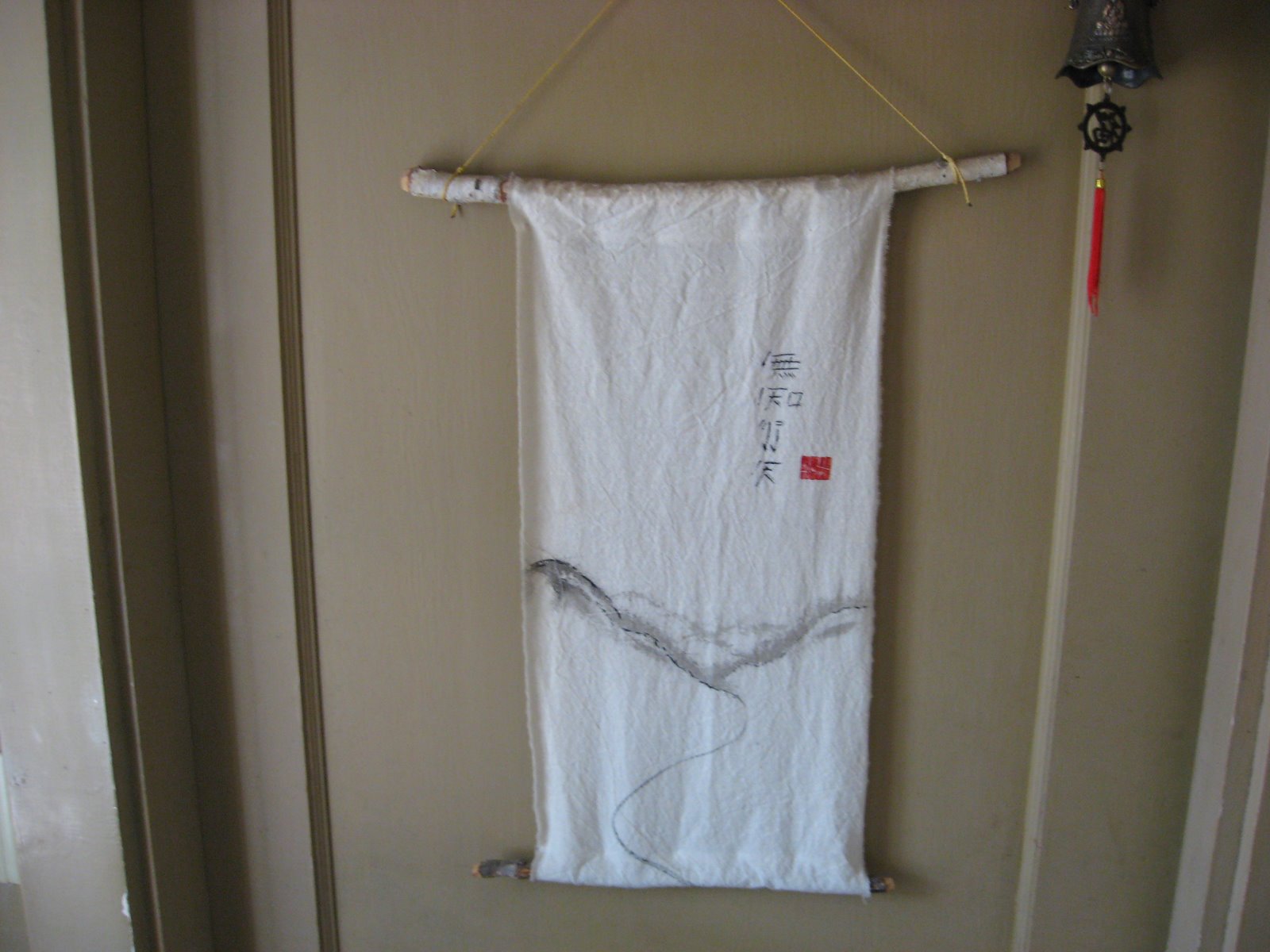
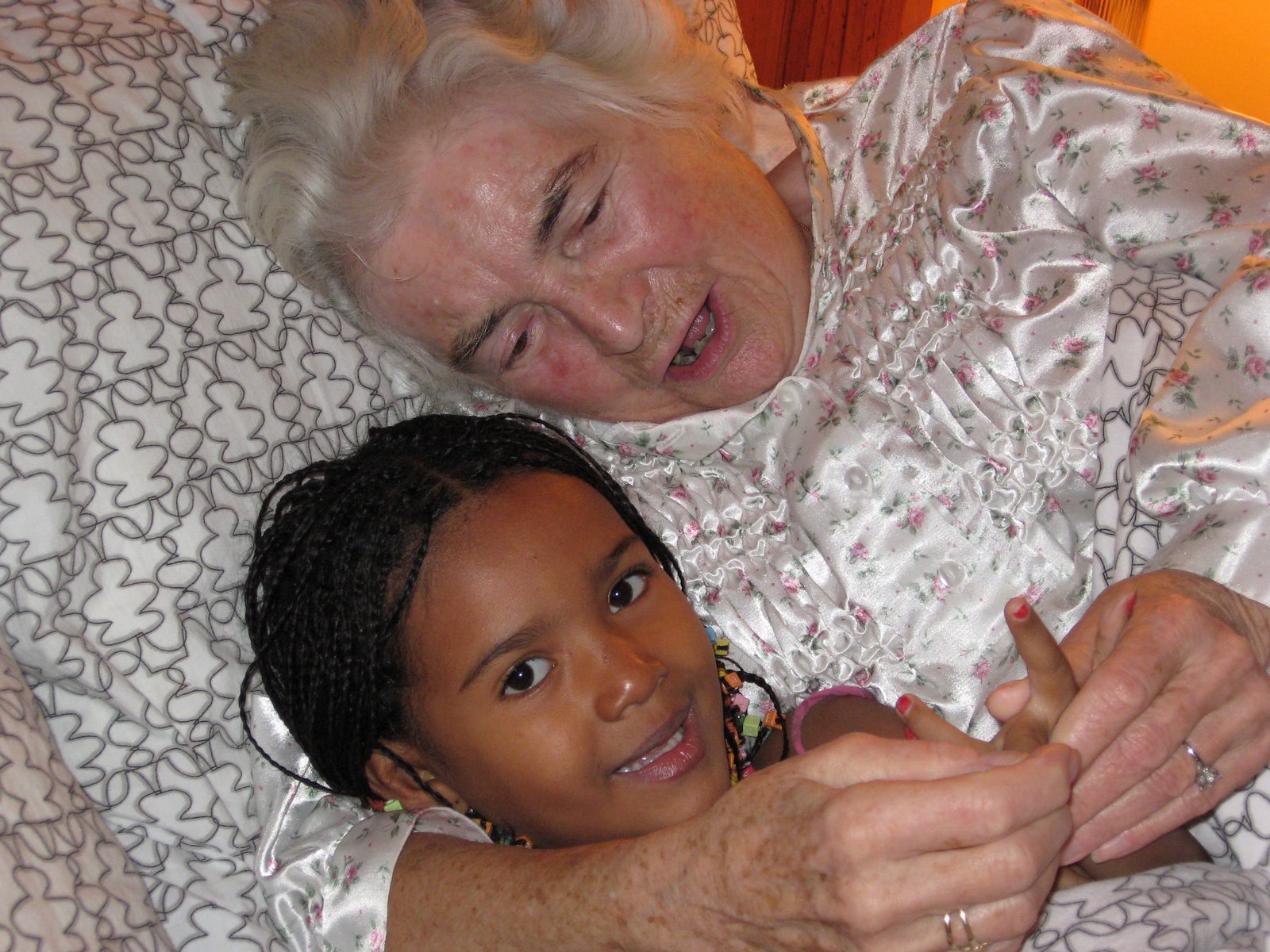
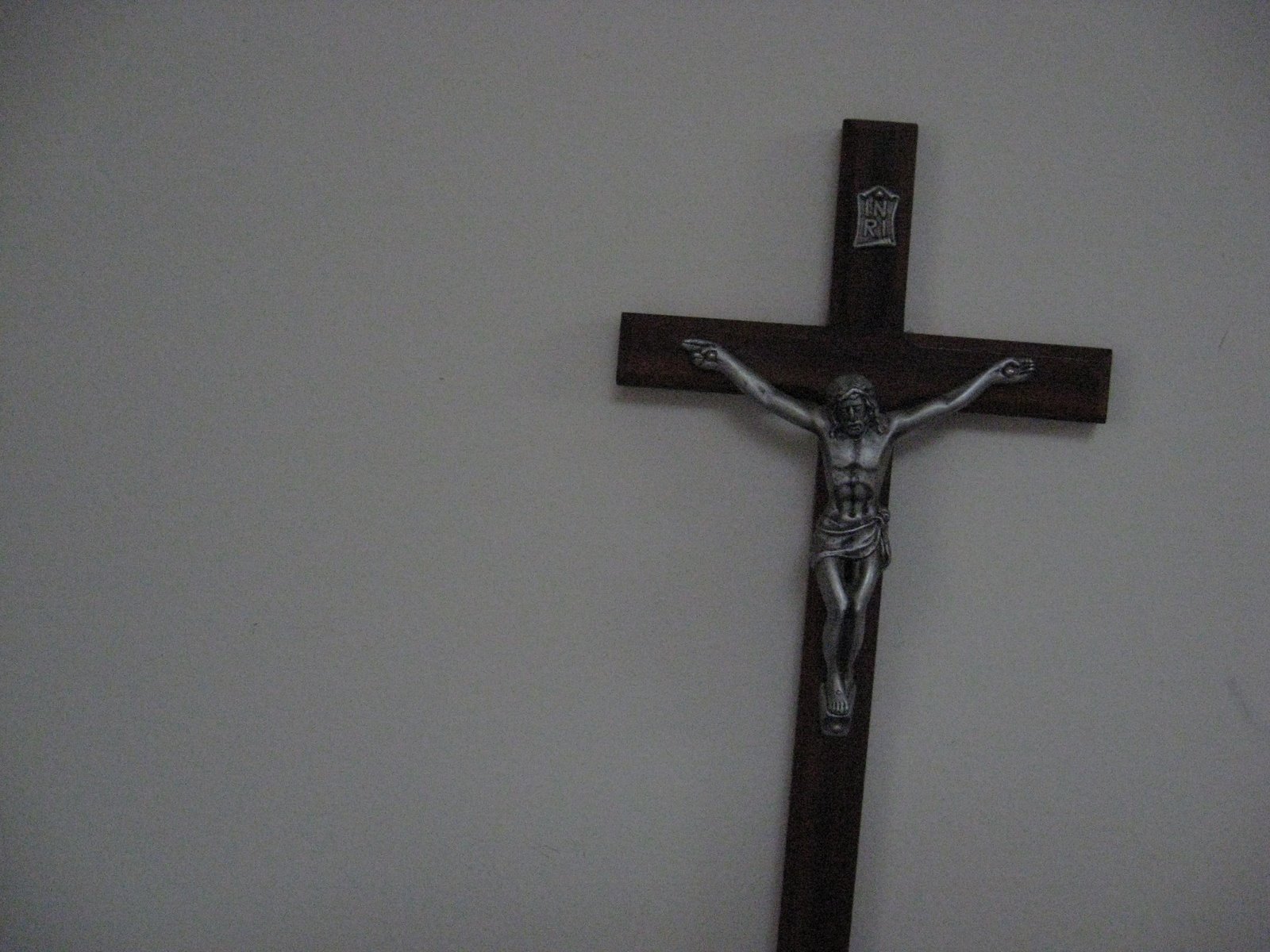
It doesn't matter what you believe, can you behave differently each time truth appears?
For many springs I’ve come here to meet And unite my mind With the opening blossoms, so I’m made of many recollections. - Saigyo (1118-1190)
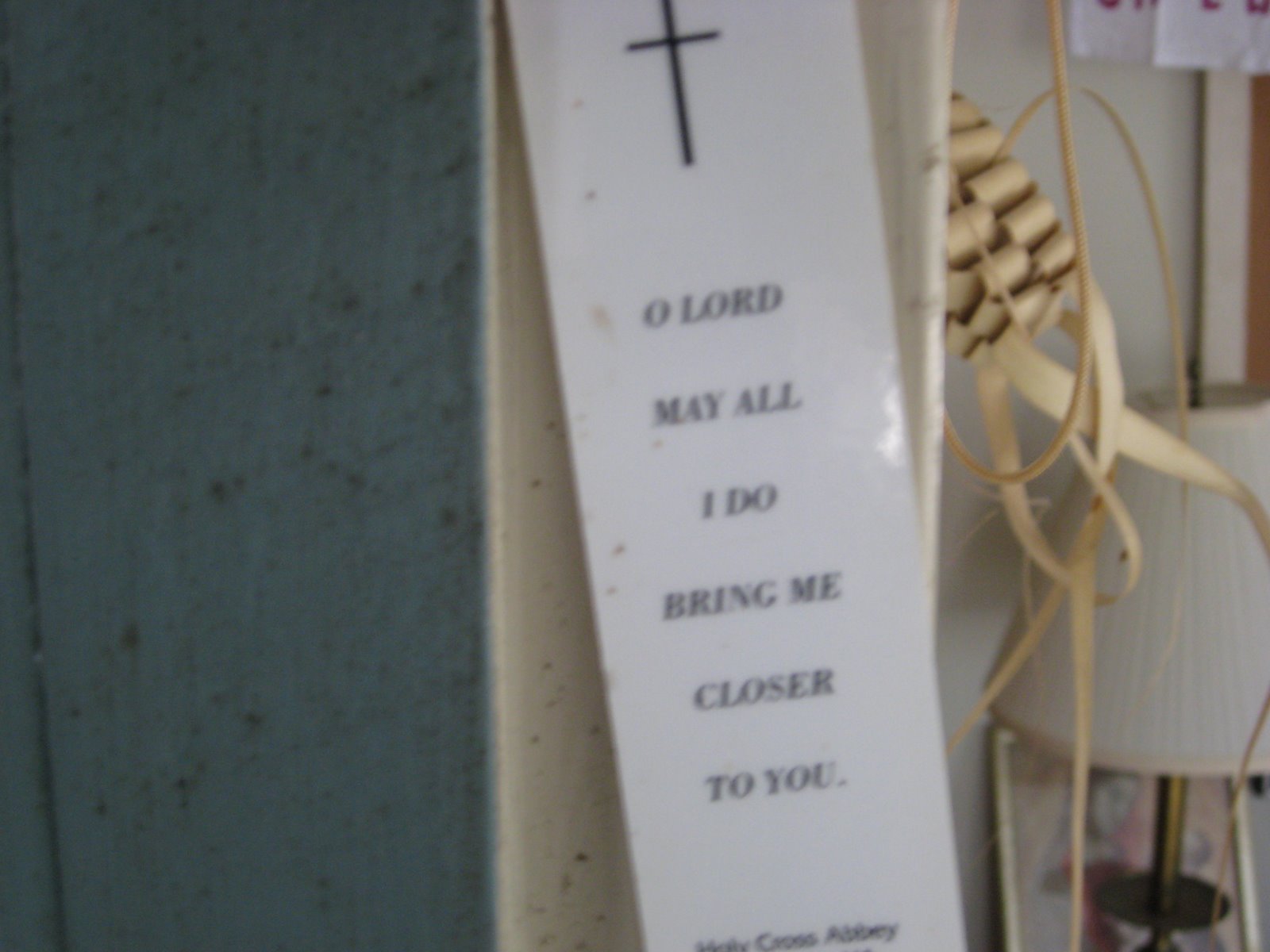
I'm agnostic to belief systems. I want to know if the inquiry is open and active.
Followed closely by compassionate, joyful, grateful action.
Friday, April 11, 2008
When you have nothing to say...
Being in tremendous turmoil, the unoriented do not know that their own mind is Buddha. They search about, outside of themselves, spending the whole day contemplating the Buddha and paying homage. But where is the Buddha? Do not entertain any such false views. Awaken to your own mind: outside the mind there can be no Buddha. - Bodhidharma
...say it.
Thursday, April 10, 2008
Kristin said it tonight: "War asks us to be other than love."
That's the shame of it.
Though it has no bridge, The cloud climbs up to heaven; It does not seek the aid Of Gautama’s sutras. - Ikkyu (1394-1481)
We wish to be what God is. Not other than.
Love.
Wednesday, April 09, 2008
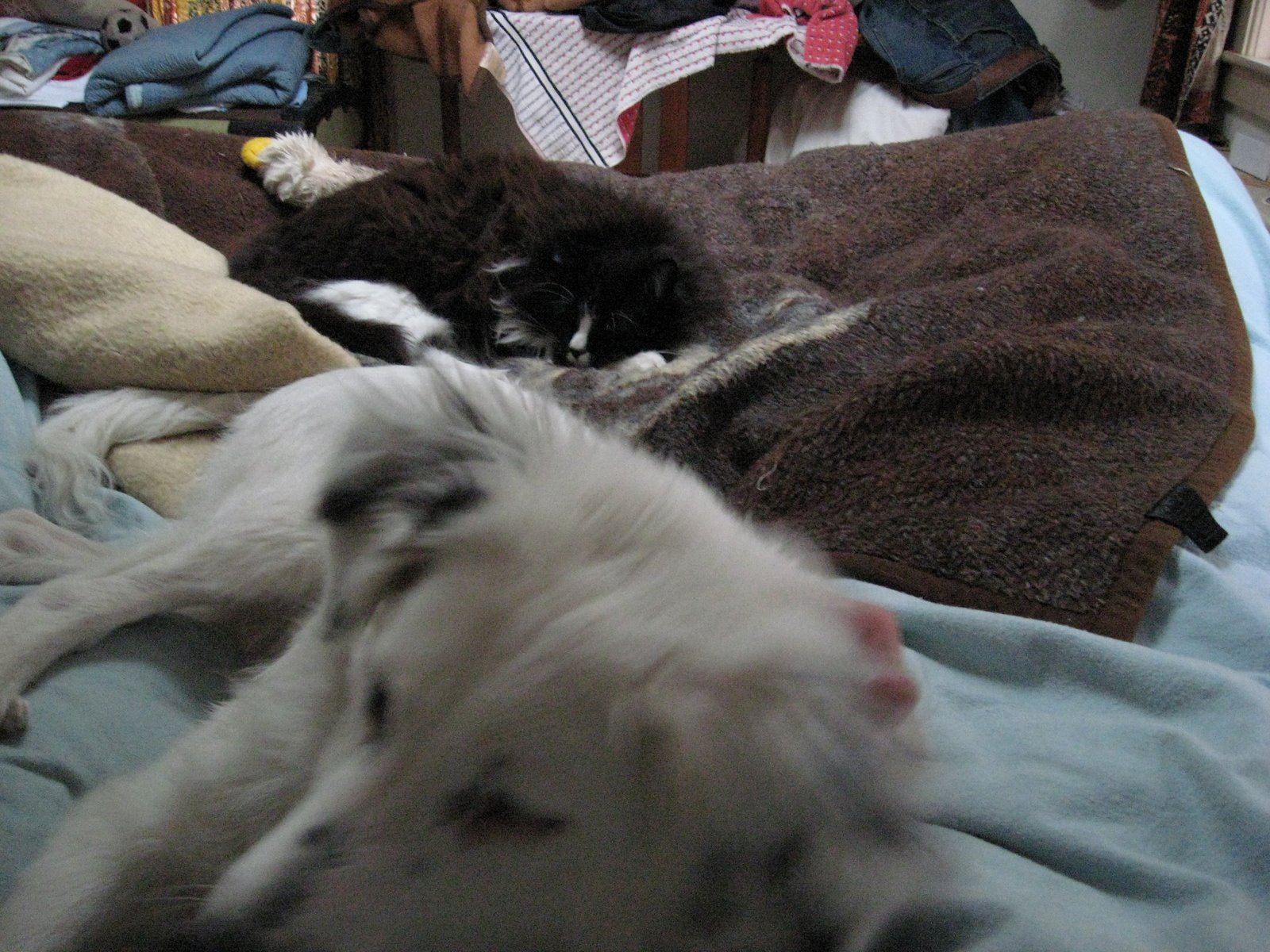
Dog laps water. Cat chews kibbles. Night.
Nowhere is there place To stop and live, so only Everywhere will do: Each and every grass-made hut soon leaves Its place within this withering world. - Saigyo (1118-1190)
The General and the Ambassador regale Congress with Arabian stories that are not good enough to placate worries. The champagne has been pushed to the back of the fridge.
It is frightening to witness this hate-torn world suddenly united for one brief hour, against Jesus. And what does he do? Every trial is in reality a struggle -- but not this one. Jesus refuses to fight. He proves nothing. He denies nothing. He attacks nothing. Instead he stands by and lets events run their course -- more, at the proper moment, he says precisely what is necessary for his conviction. His words and attitude have nothing to do with the logic or demands of a defence. Their source lies elsewhere. The accused makes no attempt to hinder whatever is to come; but his silence is neither that of weakness nor of desperation. It is divine reality; full, holy consciousness of the approaching "hour"; perfect readiness. His silence brings into being what is to be. (--Romano Guardini, in Jesus Christ, Meditations, c.1959)
The silence of the American people allows the two messengers to reprise and resound their winning tales to investors in the war. The dividends are trickling out into the halls where once honest brokers did not try to parse democracy and decency.
Transcending Everyday Consciousness When we sit down to meditate, we are trying to transcend our everyday consciousness: the one with which we transact our ordinary business, the one used in the worlds market-place as we go shopping, bring up our children, work in an office or in our business, clean the house, check our bank statements, and all the rest of daily living. That kind of consciousness is known to everyone and without it we can't function. It is our survival consciousness and we need it for that. It cannot reach far enough or deep enough into the Buddha's teachings, because these are unique and profound; our everyday consciousness is neither unique or profound, it's just utilitarian. In order to attain the kind of consciousness that is capable of going deeply enough into the teachings to make them our own and thereby change our whole inner view, we need a mind with the ability to remove itself from the ordinary thinking process. That is only possible through meditation. There is no other way. Meditation is therefore a means and not an end in itself. It is a means to change the mind's capacity in such a way that we can see entirely different realities from the ones we are used to. (- AyyaKhema, from When the Iron Eagle Flies, from Everyday Mind, a Tricycle book edited by Jean Smith)
Entirely different realities would fit about now.
I've got to get back on my cushion.
Make the time right.
A new country.
A new seat.
Breathe!
Light.
Tuesday, April 08, 2008
Tonight I think of the men and women in jail and prison. Their families living in questions about guilt, innocence, bad breaks, and hard time.
I think about prisons of ego in which so many of us do a bid.
If you break open The cherry tree, There is not a single flower. But the skies of spring Bring forth the blossoms! - Ikkyu (1394-1481)
Then I think about surrender. I think about the hard acceptance that precedes freedom, a freedom even in prison, or in the shadow of an ego no longer completely in charge.
Eckhart Tolle with Oprah said one could be whole without being perfect. I like that.
We are whole. We don't perhaps realize it yet, but we are.
The mother cries for her son, for herself, for her recently deceased husband.
And when I talk to her I am humbled by the wholeness one and one reveals.
In sorrow, no separation. In solitude, no loneliness.
In a moment of words moving through stillness, nothing is said.
But this.
Awareness.
Monday, April 07, 2008
Our neighbor's 9 month old cat has wandered off. We check our barn. The squirrels aren't giving away anything.
"To lose our selves and to become totally absorbed in God," says John Main, "through the human consciousness of Jesus -- is the precise purpose of all meditation -- to lose our lives."
At center, God. No need to go anywhere. Except perhaps to drop through illusory self into true center. Whether nature, humankind, acts, thoughts, feelings, or noise. We fall into silence.
In Pali, heart and mind are one word (citta), but in English we have to differentiate between the two to make the meaning clear. When we attend to the mind, we are concerned with the thinking process and the intellectual understanding that derives from knowledge, and with our ability to retain knowledge and make use of it. When we speak of heart we think of feelings and emotions, our ability to respond with our fundamental being. Although we may believe that we are leading our lives according to our thinking process, that is not the case. If we examine this more closely, we will find that we are leading our lives according to our feelings and that our thinking is dependent upon our feelings. The emotional aspect of ourselves is of such great importance that its purification is the basis for a harmonious and peaceful life, and also for good meditation. - Ayya Khema, When the Iron Eagle Flies from Everyday Mind, a Tricycle book edited by Jean Smith
I write to a man in jail pending court date on charges of child sexual abuse.
I write you just to write you. I’m pretty sure your situation sucks. You’ve probably come up against the strong and violent dislike on the part of both inmates and guards for the category of person who wears the charges you’ve got on your name. It’s a hard fact that many feel that vengeance and punishment are a sworn duty to be carried out even by some whose own situations are barely different than yours. But you know this already.
I write to tell you that you’ve found yourself a rough spiritual path. But a spiritual path it is. These words might sound silly, and I apologize if they are impertinent to you -- but, nevertheless, this is where you are for now. And, as you know, there is only now. You’ve come to a point in your life where you might not want to be, but there you are. We all are.
Child sexual abuse is a frightening crime. So many suffer. So little rehabilitation.
We Bring Democracy To The Fish
It is unacceptable that fish prey on each other. For their comfort and safety, we will liberate them into fishfarms with secure, durable boundaries that exclude predators. Our care will provide for their liberty, health, happiness, and nutrition. Of course all creatures need to feel useful. At maturity the fish will discover their purposes. Poem: "We Bring Democracy To The Fish" by Donald Hall, from White Apples and the Taste of Stone. Houghton Mifflin Company, 2007.
I must rehabilitate my heart/mind.
I must not remain criminal.
I must fall into the center.
God help us!
Sunday, April 06, 2008
We might learn, as she writes, the grand conspiracy of life.
What is the hearth of the heart if not the good earth: the soil, the life-blood of rivers, the throbbing life-force in the intimate depths of every green thing, every flowering form, every singing, winging bird? And what is the heart if not this resonance, this inner knowing through which we love and, in turn, know anew and love again? We breathe in and we inhale the exhalation of forests, plankton, desert sage and the fragrance of spreading spring violets. We breathe out and the trees inhale us, take us into themselves in this grand conspiracy of life, this godly inspiration, this earthly distillation, this human intersection of all that is. (--Return to Earth, in Earthlines, By Diane Pendola, http://www.ecocontemplative.org/elspring08.html)
I'd be willing to be taken in.
With all.
That is.
Saturday, April 05, 2008
The nice elderly Catholic lady from Union wouldn't touch the dog because she was going to receive holy communion in an hour.
The dog didn't mind. He was looking up at her and wagging his tail at a holy communion.
It often escapes me when exactly it happened that Americans began fearing their leaders and hating their country.
An illusion of participatory governance has been shattered.
Only God feels the disappointment of it.
Forget the resurrection. Christians have never understood the incarnation.
Becoming human has never been of interest to the betters among us.
There's no one to lead. Don't follow.
Friday, April 04, 2008
Brian, visiting the prison conversation for the first time, said in final circle: "I am just here listening." Not that I heard this. Ryan did. He listened.
Sentient beings are really Buddha. Like water and ice; Apart from water, no ice; Outside of sentient beings, no Buddha. Not knowing it is near They seek for it afar! Just like being in water, But crying for thirst! - Hakuin
In Buddhist group a bowl of donuts, m&m's, chips, and cookies to celebrate H's release next week. Time magazine has the Dalai Lama on cover.
I rejoiced when the Lord listened to the voice of my pleading; I rejoiced for he turned his ear to me, as I called to him day after day.
The ropes of death were around me, the agonies of the underworld were upon me. I came upon trouble and anguish, and I called on the name of the Lord: “Lord, free my soul”.
The Lord is kind and just, our God takes pity on us. The Lord guards the weak; I am cast down, but he will save me.
Turn, my soul, to your rest, for the Lord is kind to you. He has torn my soul away from death, my eyes from tears, my feet from falling.
I shall walk before the Lord in the land of the living. --Psalm 114 (116A)
In Protective Custody a new drop-in to the table is making sure we understand what he understands about Romans. We tell him it's meant to be a conversation, no matter how good the words he persistently reads at us. We get into a little Marcos Borg and Dominic Crosson. I see a man I used to see in seg. He's walking wide circles around the pod. I greet him. He wondered why I stopped visiting him. I was only a temporary chaplain, I'm a volunteer now, I say. He figured I'd catch him up.
Two men reading Tolle provide the 3rd conversation with something from chapter 3. Ego says we're bad; ego says we're good. Forget both. We're just who we are.
We leave the sliding heavy clanking doors behind and introduce Diane to Rokpa. He is waggy tail and puppy cute. His fiddle hangs (only sometimes) outside the door to the house.
The fresh baked bread in Rockland's Atlantic Baking Company smells just right.
Thursday, April 03, 2008
People continue to talk about some bad times still to come.
April 4, 2008 81% in Poll Say Nation Is Headed on the Wrong Track By DAVID LEONHARDT and MARJORIE CONNELLY
Americans are more dissatisfied with the country’s direction than at any time since the New York Times/CBS News poll began asking about the subject in the early 1990s, according to the latest poll.
In the poll, 81 percent of respondents said they believed “things have pretty seriously gotten off on the wrong track,” up from 69 percent a year ago and 35 percent in early 2002.
Although the public mood has been darkening since the early days of the war in Iraq, it has taken a new turn for the worse in the last few months, as the economy has seemed to slip into recession. There is now nearly a national consensus that the country faces significant problems.
A majority of nearly every demographic and political group — Democrats and Republicans, men and women, residents of cities and rural areas, college graduates and those who finished only high school — say the United States is headed in the wrong direction. Seventy-eight percent of respondents said the country was worse off than five years ago; just 4 percent said it was better off. http://www.nytimes.com/2008/04/04/us/04poll.html?_r=1&hp=&oref=slogin&pagewanted=print
Robert the Trappist monk said again this year: "Cheer up! Things are going to get worse."
No doubt.
Cheers!
Wednesday, April 02, 2008
They say a bicycle is best balanced by moving forward.
Kuei-shan asked Yun-yen, “What is the seat of enlightenment?” Yun-yen said, “Freedom from artificiality.” - Kuei-shan (771-854)
There's tires needing air.
Tuesday, April 01, 2008
It's not easy being a fool. It's easy fooling myself.
If people are quiet, They can be quiet anywhere. If people aren’t quiet They won’t be quiet in the mountains. Everything depends on you. Life is transient, Like a flash of lightning in a dream. Before we receive this form, We had another face, Our original face. We can’t see it with our eyes. We can only know it with wisdom. - Chi-ch’eng
I'll try to make light of it -- my foolishness.
When it is dark enough, you can see the stars. (-Charles A. Beard)
There must be a lot of darkness tonight; there are (at least) a hundred billion stars in our galaxy alone.
This is our original face.
Wise up!
Monday, March 31, 2008
Watching Beyond Belief a documentary about two 9/11 widows who work to help widows in Afghanistan.
The very fact of life in Afghanistan for women.
The Tables Turned
Up! up! my Friend, and quit your books; Or surely you'll grow double: Up! up! my Friend, and clear your looks; Why all this toil and trouble?
The sun above the mountain's head, A freshening lustre mellow Through all the long green fields has spread, His first sweet evening yellow.
Books! 'tis a dull and endless strife: Come, hear the woodland linnet, How sweet his music! on my life, There's more of wisdom in it.
And hark! how blithe the throstle sings! He, too, is no mean preacher: Come forth into the light of things, Let Nature be your teacher.
She has a world of ready wealth, Our minds and hearts to bless-- Spontaneous wisdom breathed by health, Truth breathed by cheerfulness.
One impulse from a vernal wood May teach you more of man, Of moral evil and of good, Than all the sages can.
Sweet is the lore which Nature brings; Our meddling intellect Mis-shapes the beauteous forms of things:-- We murder to dissect.
Enough of Science and of Art; Close up those barren leaves; Come forth, and bring with you a heart That watches and receives. (- Poem by William Wordsworth)
There is much for us to watch and receive. All that is required is that we watch, and receive.
There's a way in which each us makes small choices every day. And after a period of time those choices develop into a pattern, and we might be thought of as choosing ourselves. ...It's like any one of us -- we choose our way to being ourselves." (Spoken by brother of one of the American women).
Who do we choose to be?
In our life?
Lets.
Choose life.
Sunday, March 30, 2008
To be desolate it is not necessary to despair. We might feel abandoned and alone; we might be abandoned and alone -- but if that is where we are, then that is what we have to work with.
If ye wonder whether evil karma can be neutralized or not, Then know that it is neutralized by desire for goodness. But they who knowingly do evil deeds, Exchange a mouthful of food for infamy. They who knowing not whither they themselves are bound, Yet presume to pose as guides for others, Do injury both to themselves and others. If pain and sorrow ye desire sincerely to avoid, Avoid, then, doing harm to others. (- W.Y. Evans-Wentz, Tibets Great Yogi Milarepa , from Everyday Mind, a Tricycle book edited by Jean Smith)
Anyone doing anything affects everyone. Thus, Dunn's "we" and "our" in his final sentence refers to all of us. In a desolate time the prayer for good harvest is heartfelt.
Economic scarcity, war's expanding cancer, the isolation of so many brothers and sisters, and the worry that any refreshing light will itself be extinguished -- these are contributors to what increasingly seems like a dark time. More difficult still is the perception that some revel in the desolation visited upon others.
Theodore Roethke wrote in this poem for us:
In a Dark Time
In a dark time, the eye begins to see, I meet my shadow in the deepening shade; I hear my echo in the echoing wood-- A lord of nature weeping to a tree, I live between the heron and the wren, Beasts of the hill and serpents of the den.
What's madness but nobility of soul At odds with circumstance? The day's on fire! I know the purity of pure despair, My shadow pinned against a sweating wall, That place among the rocks--is it a cave, Or winding path? The edge is what I have.
A steady storm of correspondences! A night flowing with birds, a ragged moon, And in broad day the midnight come again! A man goes far to find out what he is-- Death of the self in a long, tearless night, All natural shapes blazing unnatural light.
Dark, dark my light, and darker my desire. My soul, like some heat-maddened summer fly, Keeps buzzing at the sill. Which I is I? A fallen man, I climb out of my fear. The mind enters itself, and God the mind, And one is One, free in the tearing wind. (--Poem by Theodore Roethke)
It's time.
To give our self.
A Way.
Grussgott!
(Greet God!)
Saturday, March 29, 2008
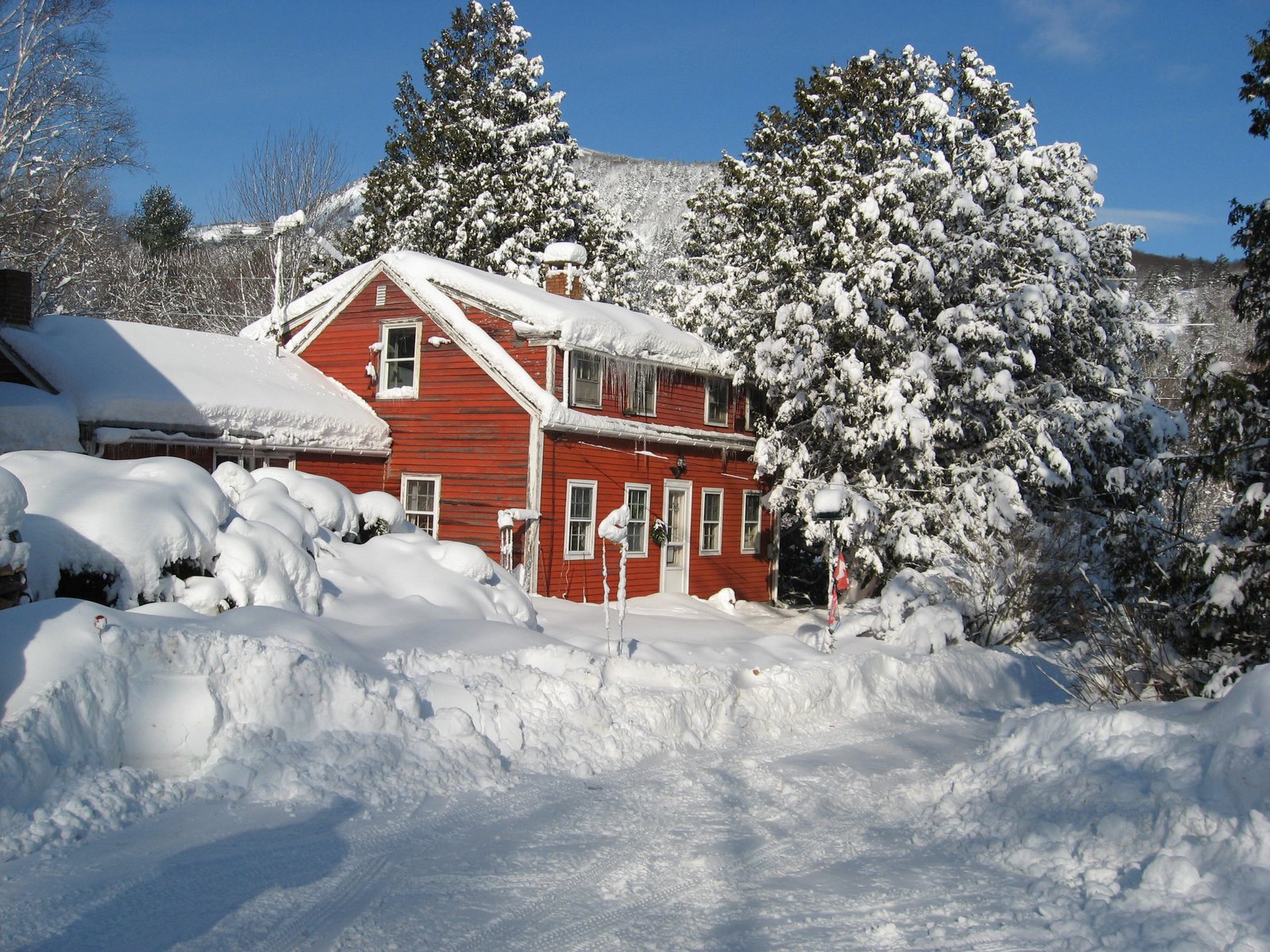
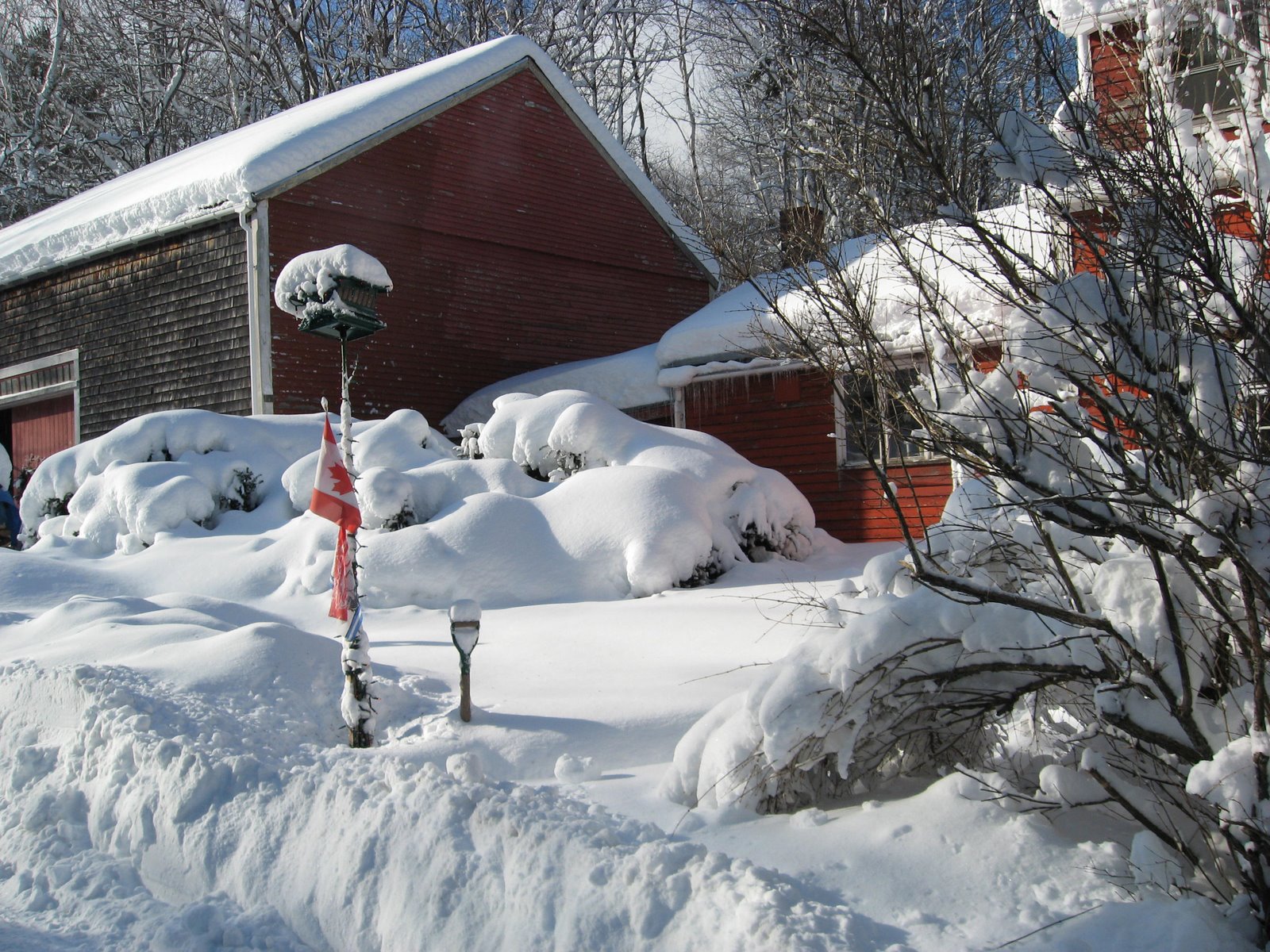
Sun brightens white on Bald Mountain this latest snow in spring as March prepares to step off calendar. Puffs of white snowy breath blow from firs partially up slope. Everything has slowed within. Each branch holds white extending bouquet of gathered flakes to air looping through pass between two mountains. Cars ride road to Snow Bowl's final weekend of skiing, tubing, and snowboarding. I've no desire to go anywhere. Where is there to go?
The entire universe is one bright pearl. When the right time comes, The essence of the bright pearl can be grasped; It is suspended in emptiness, Hidden in the lining of clothes, Found under the chin of dragons And in the headdresses of kings. This pearl is always inside our clothing, That is, inside us, our real nature. Do not think about putting it on the surface; Is should be kept in headdresses and under jaws. Never attempt to wear it on the surface. - Dogen (1200-1253)
Woman writes from Manhattan saying she walks to past haunts along city's streets; the first time in 34 years, she says, amazing to be here, or anywhere, with no "hafta be back." or for that matter, no "hafta do" anything.
Snow, Aldo
Once, I was in New York, in Central Park, and I saw an old man in a black overcoat walking a black dog. This was springtime and the trees were still bare and the sky was gray and low and it began, suddenly, to snow: big fat flakes that twirled and landed on the black of the man's overcoat and the black dog's fur. The dog lifted his face and stared up at the sky. The man looked up, too. "Snow, Aldo," he said to the dog, "snow." And he laughed. The dog looked at him and wagged his tail.
If I was in charge of making snow globes, this is what I would put inside: the old man in the black overcoat, the black dog, two friends with their faces turned up to the sky as if they were receiving a blessing, as if they were being blessed together by something as simple as snow in March.
Fifteen years ago looking across at Bald I saw a herd of deer single file traversing the mountain through deep snow. Those gathered in front room marveled at the passage. One by one over the years many have been caught by cars while crossing Barnestown Road between Bald and Ragged. Often luck has kept one from leaping in front of my car -- some have -- but like a dream in twilight made me wonder what had gone by ghostlike to safety.
Watching Bush's War on Frontline offers similar feeling -- what has gone by? Lingering incomprehension as to whether what has been done occurred out of intentional malfeasance or ignorant ineptitude. Also hard to comprehend is the pass given to the perpetrators of such a disastrous misadventure. My departed friend Richard would frown on what he called "going political" in this space. (I miss his chide.)
Essay on the Personal
Because finally the personal is all that matters, we spend years describing stones, chairs, abandoned farmhouses— until we're ready. Always it's a matter of precision, what it feels like to kiss someone or to walk out the door. How good it was to practice on stones which were things we could love without weeping over. How good someone else abandoned the farmhouse, bankrupt and desperate. Now we can bring a fine edge to our parents. We can hold hurt up to the sun for examination. But just when we think we have it, the personal goes the way of belief. What seemed so deep begins to seem naive, something that could be trusted because we hadn't read Plato or held two contradictory ideas or women in the same day. Love, then, becomes an old movie. Loss seems so common it belongs to the air, to breath itself, anyone's. We're left with style, a particular way of standing and saying, the idiosyncratic look at the frown which means nothing until we say it does. Years later, long after we believed it peculiar to ourselves, we return to love. We return to everything strange, inchoate, like living with someone, like living alone, settling for the partial, the almost satisfactory sense of it. (--Poem by Stephen Dunn)
Strange.
Inchoate.
The partial.
Almost satisfactory.
This Saturday.
Friday, March 28, 2008
Cat wants out. Or food. Or loads himself on chest, against arm, nuzzling neck. He's been appendage for two days. Then again, puppy is away. Insistence has its consequences.
Kuei-shan was asked, “Is there any further cultivation for people who have suddenly awakened?” He replied, “If they awaken truly, realizing the fundamental, they know instinctively when it happens. The question of cultivation or not is two-sided. Suppose beginners have conditionally attained a moment of sudden awakening to inherent truth, but there are still longstanding habit energies that cannot as yet be cleared all at once? They must be taught to clear away streams of consciousness manifesting habitual activity. That is cultivation, but there cannot be a particular doctrine to have them practice or devote themselves to. - Kuei-Shan (771-854)
Thinking back about insistence of war merchants to rearrange Middle East in our image depresses. Those in power now have near unlimited permission to act however they wish.
In the shop the Vietnam war is still being fought by those who were there. Air Force, Navy, Intelligence, and Spectators have at the war and each other. Swift Boaters boast blows to Kerry while medics realize a different anguish. Many wars are re-fought -- WWII, Korea, Vietnam, Desert Storm, and Current Fiasco -- all by people who've either been there or have had family there. Afghanistan and Iraq will have to wait. Kennedy, Nixon, and Johnson are still debated around the fireplace. Bush and Cheney are too fresh to have any perspective on them -- rather, raw feelings and intense mistrust cloud any clear assessment of their 8 years.
Cat finally settles to his quadrant of bed. Night quiets. Dark silences. Solitude visits.
Technique of non-reaction Shantideva mentions specific instances when it is advisable to remain like a mindless piece of wood. We can do this when our mind is very distracted or when the thought arises to belittle, slander, or abuse others. If pride, haughtiness or the intention to find fault with others arises, we can also remain impassive until our deluded motivation fades. Feeling pretentious, thinking to deceive others and wishing to praise our own qualities, wealth, or possessions are all occasions when it is wise to pretend that we are made out of wood. Whenever we have the desire to blame others, speak harshly or cause disruption we should practice this technique of non-reaction. (- Geshe Kelsang Gyatso, Meaningful to Behold, from Everyday Mind, a Tricycle book edited by Jean Smith)
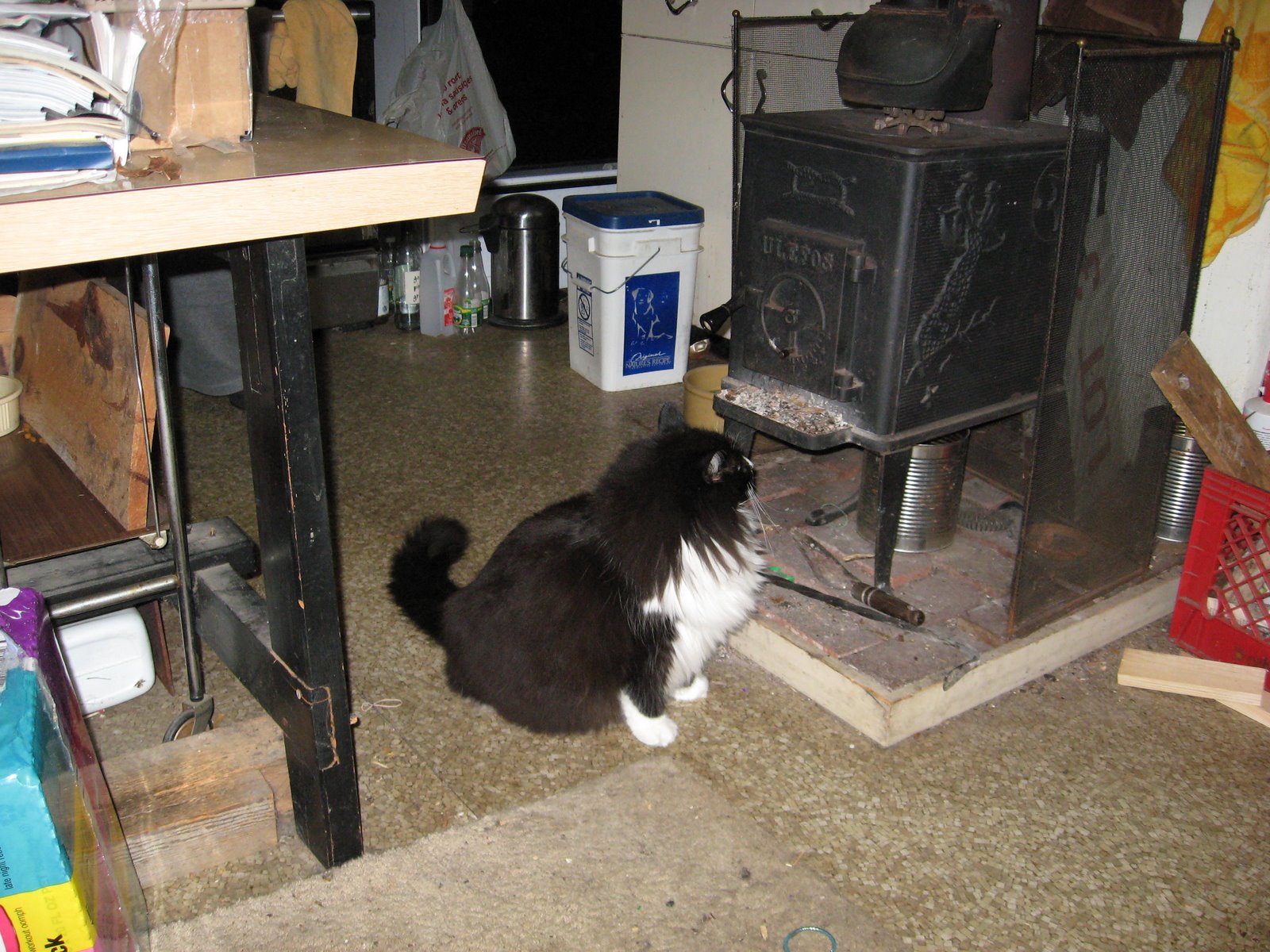
Wood goes into stove for burning. It snowed today. Everything white again. Ice from ceder tree falls on skylight.
Lastly, he showed himself to the Eleven themselves while they were at table. He reproached them for their incredulity and obstinacy, because they had refused to believe those who had seen him after he had risen. And he said to them, ‘Go out to the whole world; proclaim the Good News to all creation. (--Mark 16: 14-15, from Easter Saturday)
We might not know why.
Still.
Life goes on.
Thursday, March 27, 2008
Odd thing is it's as though a hard drive has been wiped clean.
For twenty seven years I’ve always sought the Way. Well, this morning we passed Like strangers on the road. - Kokuin (10th century)
And what remains is only what is.
Nothing fits anywhere but within itself.
No grievance. Only oddly familiar.
Wednesday, March 26, 2008
I've been thinking about what hito (hermit in the open) means.
My hut lies in the middle of a dense forest; Every year the green ivy grows longer. No news of the affairs of men, Only the occasional song of a woodcutter. The sun shines and I mend my robe; When the moon comes out I read Buddhist poems. I have nothing to report my friends. If you want to find the meaning, stop chasing after so many things. --Ryokan
Do I think it is possible to be a hermit in the open?
Robert Frost said,
"A poem begins with a lump in the throat; a homesickness or a love-sickness. It is a reaching out toward expression, an effort to find fulfillment. A complete poem is one where an emotion has found its thought and the thought has found the word."
And, "In three words I can sum up everything I've learned about life: it goes on."
The German monk in the retreat house kitchen asked a third time, then listened to my response about hito. He looked at me.
His expression was intent.
His eyes, bemused, said, "Go on!"
There's a thin line between everything said and unsaid.
I'm not sure which side to come down on.
Perhaps that thin line is all there is.
No sides.
Tuesday, March 25, 2008
I'm standing around.
("Stand around" is what the word "circumstance" means.)
Every place I look, there I am.
When I look within and see that I am nothing, that is wisdom. When I look without and see that I am everything, that is love. And between these two, my life turns. (— Nisargadatta Maharaj, quoted by Adyashanti)
Is there any remaining need to believe what any one else believes with regard to what is God, or Christ, or enlightenment, or truth? If there is anything to what stands around, then see for yourself -- or perhaps, more to the point, see yourself.
“Sages since time immemorial have only explained the problems of pollution. If one does not have all that false consciousness, emotional and intellectual opinionatedness, and conceptual habituation, one is clear as autumn water, pure and uncontrived, placid and uninhibited. Such people are called Wayfarers, or free people.” - Kuei-Shan (771-854)
A wayfarer is one traveling as one stands around.
Ortega y Gasset's well-known definition of Man -- Yo soy yo y mi circunstancia, "I am myself and my environment" -- should be understood as a strict anthropological statement. The environment belongs to me and not only influences me, but is part and parcel of my self, even if not exhaustively so.
Not only time and space in general, but concrete temporal and spatial things condition my life and my Being; they are part of my life and my Being. Not only do my friends and the people I live and talk with reveal me and shape me, but the world around me conditions me and is me, as well. I am as much a passive element as an active factor. Our Being is not what we often call our individuality. (--p.146, Epilogue, Aspects of a Cosmotheandric Spirituality, in The Cosmotheandric Experience, Emerging Religious Consciousness, by Raimon Panikkar, c.1993)
Individuality is undividedness.
Listen for it.
The more I stand around the more I wonder. If someone speaks your true name, turn around.
Listen to the voice of the one speaking it -- so very few know it.
Listen as it.
All around you stands what is needed to hear.
And well for you!
Monday, March 24, 2008
Holy Week Haiku
Holy Thursday
Woods walk winter edge hard ground -- taste bread, wine, this exchange -- forget me
Good Friday "...in truth you never lose what you always are." --Adyashanti
Stiff chill wind. This death -- Listen here -- no other way to utter silence

 I'm agnostic to belief systems. I want to know if the inquiry is open and active.