Monday, October 19, 2009

A single candle hangs in center of chapel zendo tonight.
On Going to see a Taoist Master

A dog barking and the sound of water;
Peach blossoms heavy with dew.
In these deep woods, deer can be seen;
At noon along the stream, I hear no bell.
Wild bamboo divides gray clouds;
Waterfalls hang from blue peaks.
No one knows where you've gone;
Disheartened, I lean against a second,
Now a third pine.

- Li Po
All things of the night remember in silence things of the day.

Only silence suffices these times.
Older Love

His wife has asthma
so he only smokes outdoors
or late at night with head
and shoulders well into
the fireplace, the mesquite and oak
heat bright against his face.
Does it replace the heat
that has wandered from love
back into the natural world?
But then the shadow passion casts
is much longer than passion,
stretching with effort from year to year.
Outside tonight hard wind and sleet
from three bald mountains,
and on the hearth before his face
the ashes we’ll all become,
soft as the back of a woman’s knee.

(-Poem by Jim Harrison)
That soft.

And as quiet.

Sunday, October 18, 2009

Alan Watts called his book: Cloud-Hidden, Whereabouts Unknown: A Mountain Journal. The production editorial writeup says: 'Watts suggests a way of contemplative meditation in which we temporarily stop naming and classifying all that we experience, and simply feel it as it is."

A good pointer.
Seeking But Not Finding the Recluse

Under the pine
I ask the boy;
He says: "My Mistress is gone
To gather herbs.
I only know
She's in those mountains,
In those deep clouds,
But I don't know where."

- Chia Tao (http://www.dailyzen.com/)
Rain with snow. At table we read Chapter 2 of Tao Te Ching. How 'have' things and not feel you 'own' them? Do things without taking credit for their being done? Letting things come; letting things go?

Snow with rain.

This raw night
.
Following practice.

Saturday, October 17, 2009

It will rain after midnight. In meditation cabin, warm stove. Single candle, all three of them. One on porch. Early darkness.
Joshu's Dog
A monk asked Joshu, a Chinese Zen master: `Has a dog Buddha-nature or not?'
Joshu answered: `Mu.' [Mu is the negative symbol in Chinese, meaning `No-thing' or `Nay'.] http://www.ibiblio.org/zen/gateless-gate/1.html
It might be there is an entirely distinct universe just the other side of thought. Where thought ends. Comes mere seeing.
Cherry blossoms filling the ground,
Sunset filling my eyes:
Blossoms vanished, spring old,
I feel the passing years.
When blossoms were at their finest
I neglected to call.
The blossoms did not betray me.
I betrayed the blossoms.

- Ishikawa Jozan (1583-1672)
I have often betrayed the blossoms.

I must rely on their willingness to be overlooked by a distracted passing person.

I have not called.

No invocation, no knowing God.

I know now my mistake.

Friday, October 16, 2009

Surrender, Lola said, is allowing what comes at you in life to pass through.

We were at conversation after reading Tolle.
Evening mountains veiled in somber mist;
One path entering the wooded hill:
The monk has gone off locking his pine door.
From a bamboo pipe a lonely trickle of water flows.

- Ishikawa Jozan (1583-1672)
There could be a better definition of surrender...

But, I don't know.

Thursday, October 15, 2009

I know what to ask. Ask why nothing makes sense. Ask whether this world really, as some say, is illusion. Ask for an extra piece of cake. It doesn't hurt to ask.
Alone on my zazen mat
I forget the days as they pass
The wisteria has grown thick
Over the eaves of my hut
The subtle Way of Bodhidharma
I never give it a thought
Does anyone know the truth of Zen
Or what to ask about it?

- Muso Soseki (1275-1351)
Watch film "The Visitor." The hard currency of belonging yet not belonging.

Hammer my finger, strain my elbow. Just plain pain.

Here's the truth of zen: just show up and do what needs be done. No explanation. No goal. No hope of redemption or reward.

When tired, yawn. When sleeping, dream.

When awake, no dream.

Dreamless sleep; dreamless wakefulness.

There should be many questions about now!

Wednesday, October 14, 2009

There's a fetching line from the film tonight: ''Lust awakens the desire to possess,'' warns the old monk. ''And that awakens the intent to murder.' (From film, ''Spring, Summer, Fall, Winter...and Spring'', written, directed, and edited by Kim Ki-Duk).
Skillful Desires

All phenomena, the Buddha once said, are rooted in desire. Everything we think, say, or do—every experience—comes from desire. Even we come from desire. We were reborn into this life because of our desire to be. Consciously or not, our desires keep redefining our sense of who we are. Desire is how we take our place in the causal matrix of space and time. The only thing not rooted in desire is nirvana, for it’s the end of all phenomena and lies even beyond the Buddha’s use of the word “all.” But the path that takes you to nirvana is rooted in desire—in skillful desires. The path to liberation pushes the limits of skillful desires to see how far they can go.

(- Thanissaro Bhikkhu, Tricycle Fall 2005)
The Bodhisattva of Compassion is lifted to the summit of attentive and consoling awareness of what is taking place in the world.

In our lives.

As we repeat foolishness.

Again. And again.

Tuesday, October 13, 2009

Karen Armstrong et al present the video History of God. It is quite a story. Does God change? Or is our consciousness deepening?

If God is completely other, does that mean we are no other? If God is, are we?

If you forget your feelings
about things of the world,
they become enlightening teachings.
If you get emotional
about enlightening teaching,
it becomes a worldly thing.

- Muso Kokushi (1275-1351)
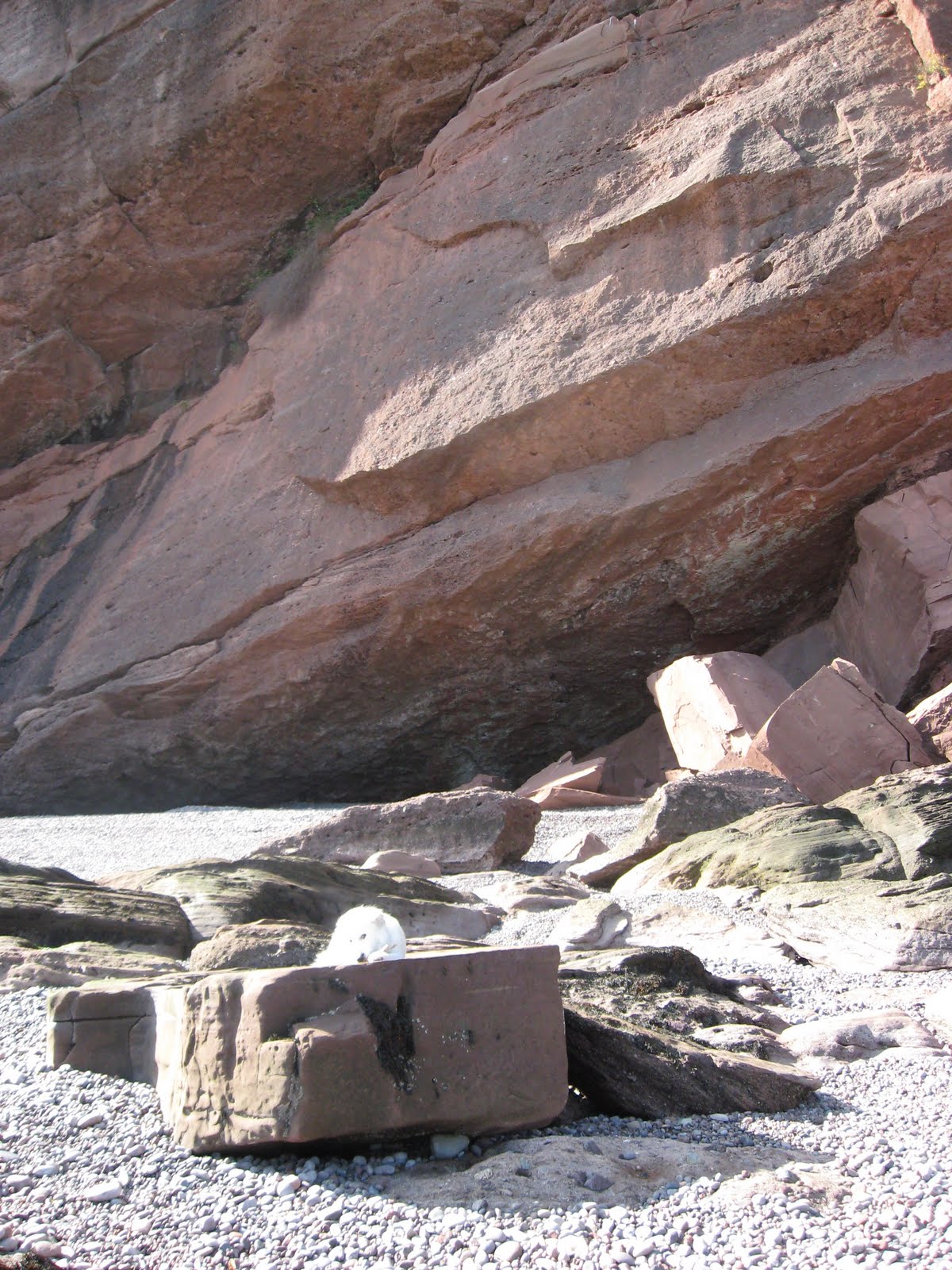
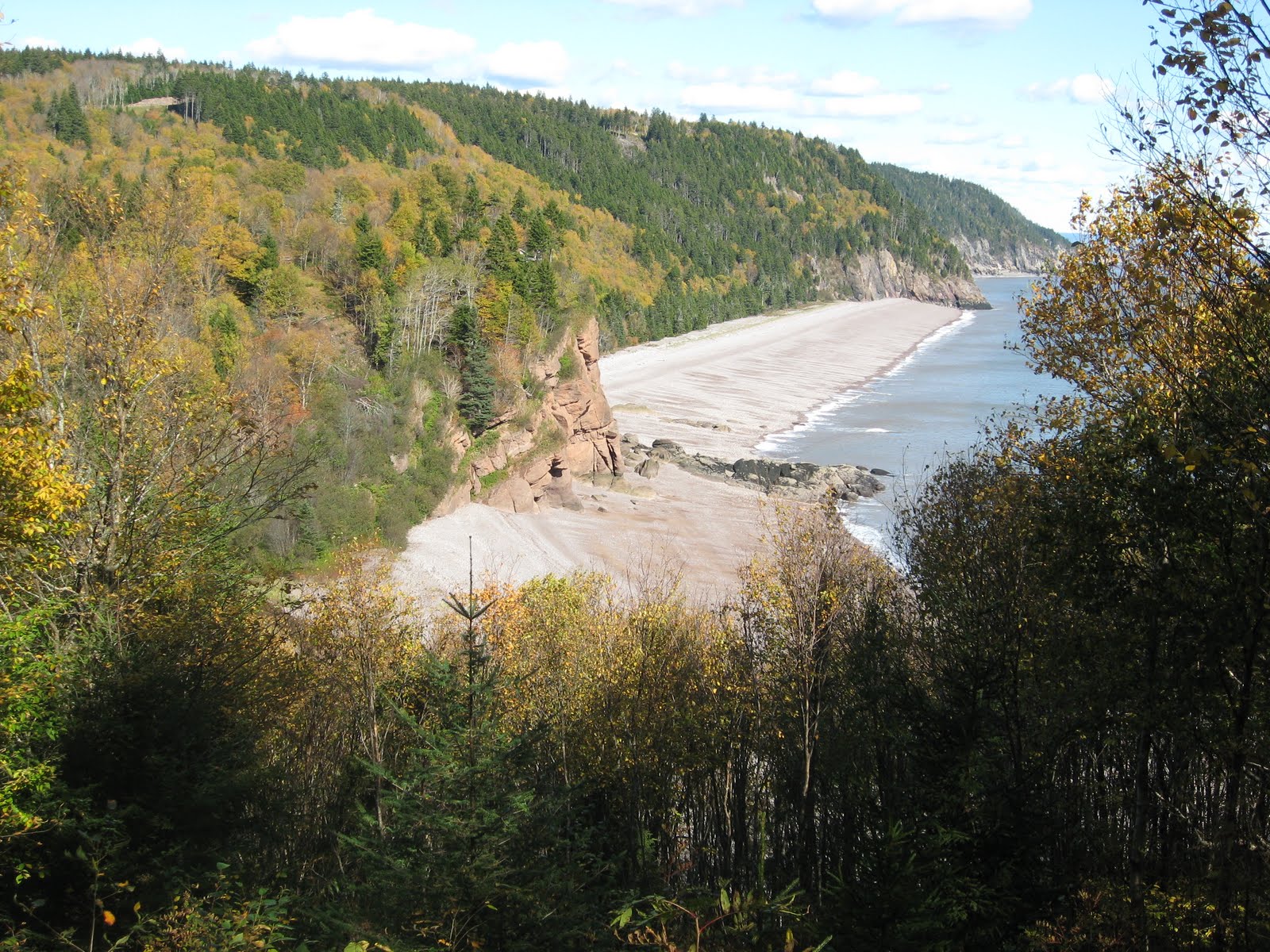
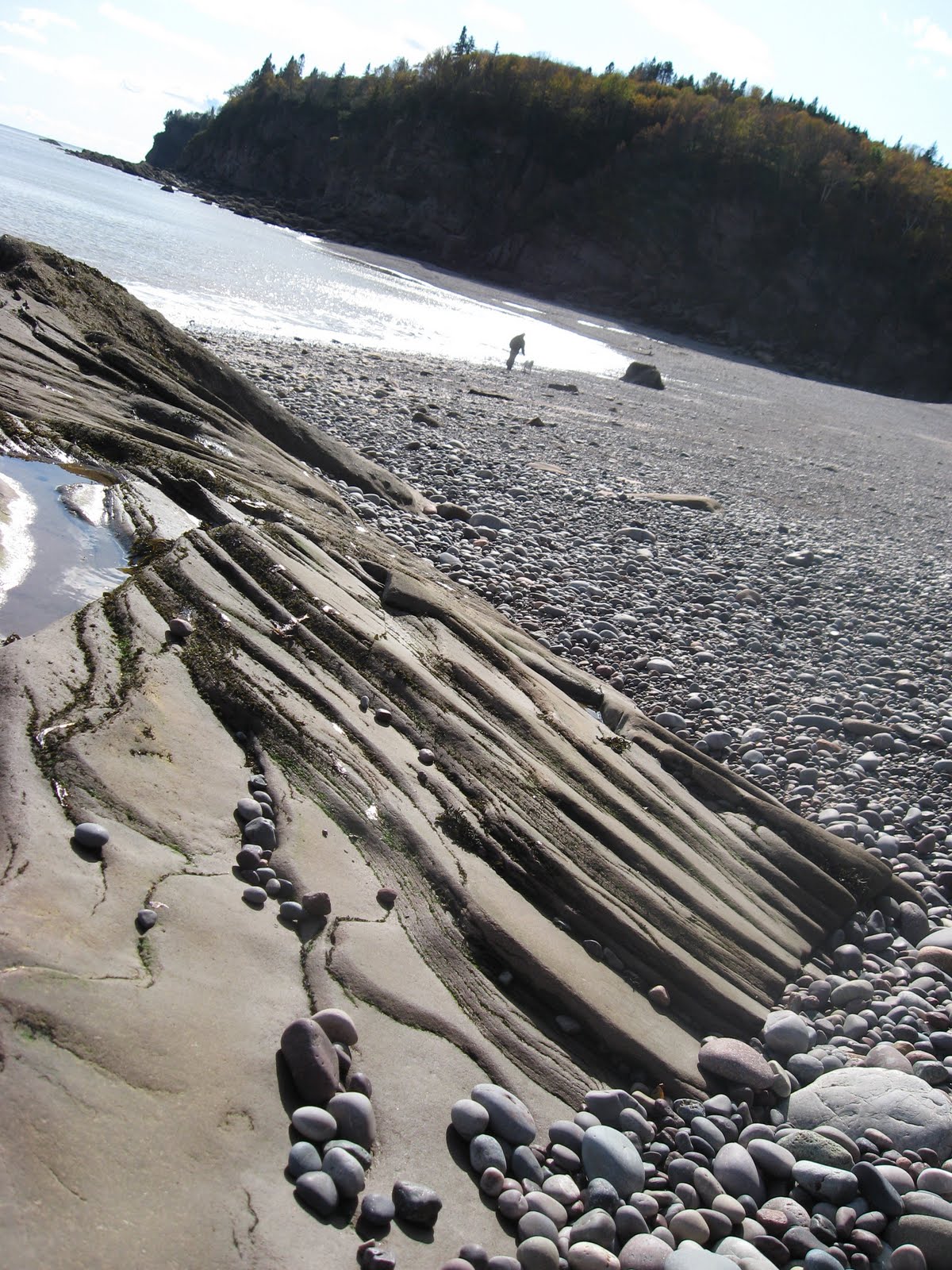
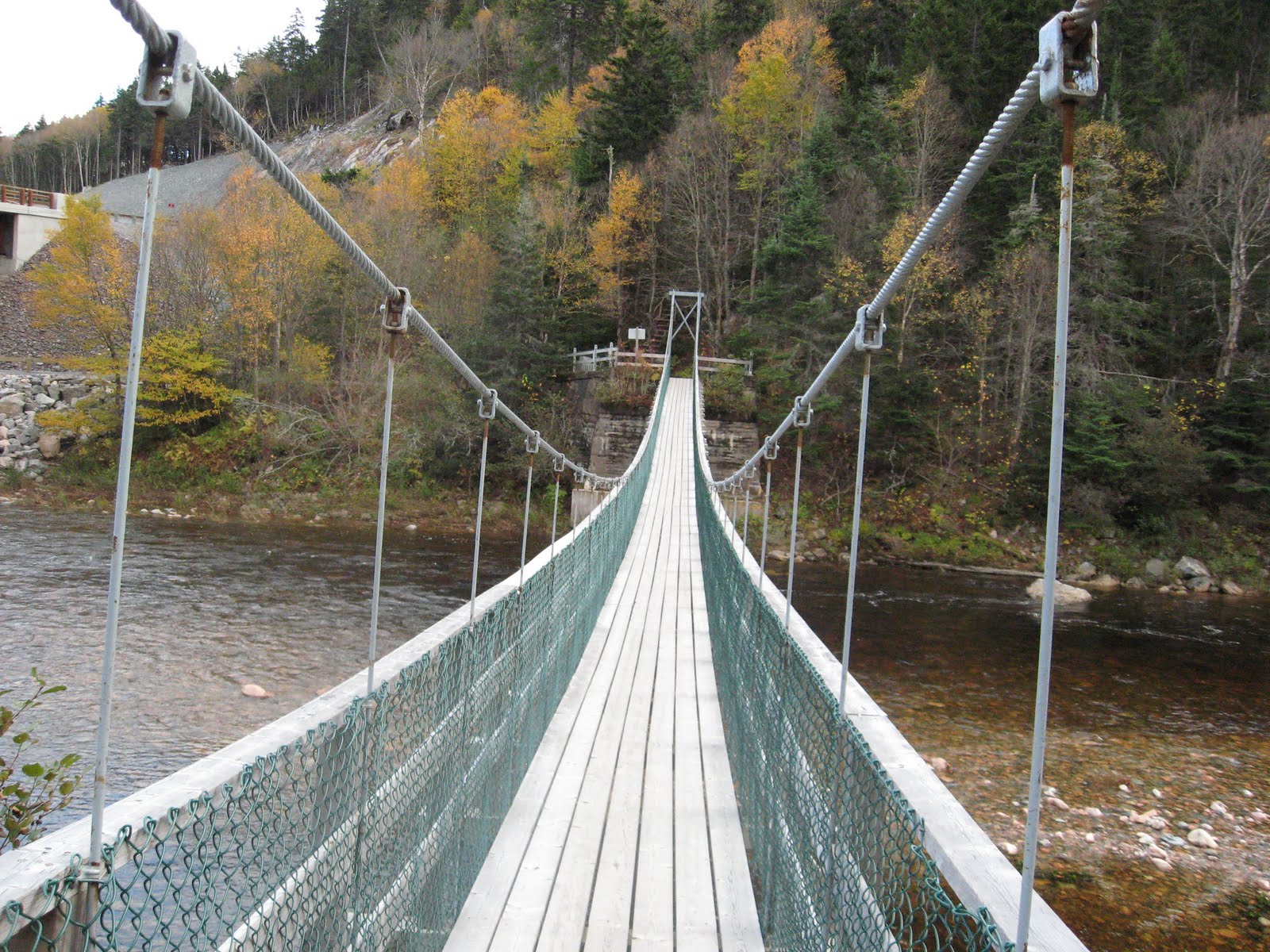
Canada was one walk after one hike after another walk and another hike. Mountain and cliff, stone beach and soggy marsh, sloshing shoes and majestic Fundy sandstone.

We come back exhausted and delighted.

Perhaps God will be merciful with us.

As we are merciful with one another.

The specificity of ineffability.

We cross over that which flows beyond.

Coming back through long snow squall outside Calais along Airline Drive.

Mark the date: 13th October.

Driving through snow!

Sunday, October 11, 2009

We're off to celebrate Thanksgiving with our Canadian neighbors. In Maine and the additional 49 states, Columbus Day is celebrated. Either way, we're pleased the US and Canada are taking a day to reflect on gratitude and neighborliness.
You must realize that what
is at stake here does not
reside in words and phrases:
it is like sparks from struck flint,
like the brilliance of flashing lightning.
However you mange to deal with this,
you cannot get around
losing your body and life.

- Yunmen (864-949)
We're pleased to have a country. We're pleased to have a neighboring country. Soon the borders we now so fervently protect will not be needed. We will lose the need to view ourselves so separately. Consequently -- this insight will ripple to neighborhood, states, countries, and ultimately every speck of awareness in the Cosmos. I suspect the Cosmos is waiting for us to catch up.

Until then, we visit. We build.

We bow to you in your journey.

Saturday, October 10, 2009

Raimon Panikkar writes: "God is an invocation."

Saskia says, "God is being called into being. God is not a static being."

The two of them call out something evocative this morning.

God is called into being as that which is the longing for true being, a being-true beyond any wish or conception, still replete and complete with what is taking place in the fullness of Becoming Itself.
Watch film "Southbounders" (2005). About hiking the Appalachian Trail, Maine to Georgia.

Wang Wei picks up the trail thread:
Creeks and summits are brilliant at sunset.
I laze in a boat, my way in the wind's hands.
Watching wild landscapes I forget distance
and come to the water's edge.

Gazing at lovely far woods and clouds
I guess I've lost my way.
How could I know this lucid stream
would turn, leading me into mountains?

I abandon my boat, pick up a light staff
and come upon something wonderful,
four or five old monks in contemplation,
enjoying the shade of pines and cypresses.

Before the forest dawns they read Sanskrit.
The monks' nightly meditation quiets the peaks.
Here even shepherd boys know the Tao.
Woodcutters bring in world news.

They sleep at night in the woods
with incense, on mats clean as jade.
Their robes are steeped in valley fragrances;
the stone cliffs shine under a mountain moon.

I fear I will lose this refuge forever
so at daybreak I fix it in my mind.
People of Peach Tree Spring, goodbye.
I'll be back when flowers turn red.
- Wang Wei (699-759)
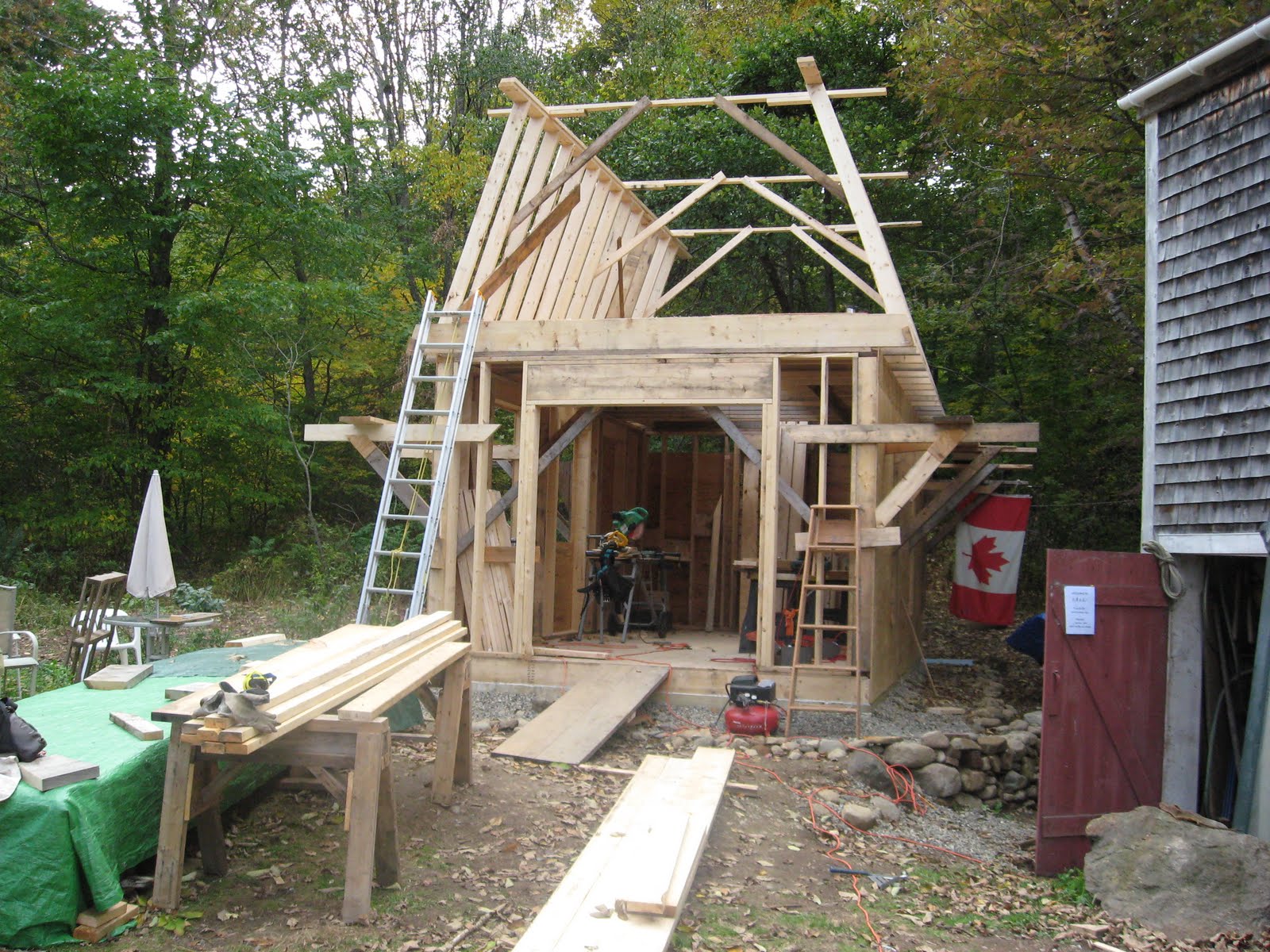
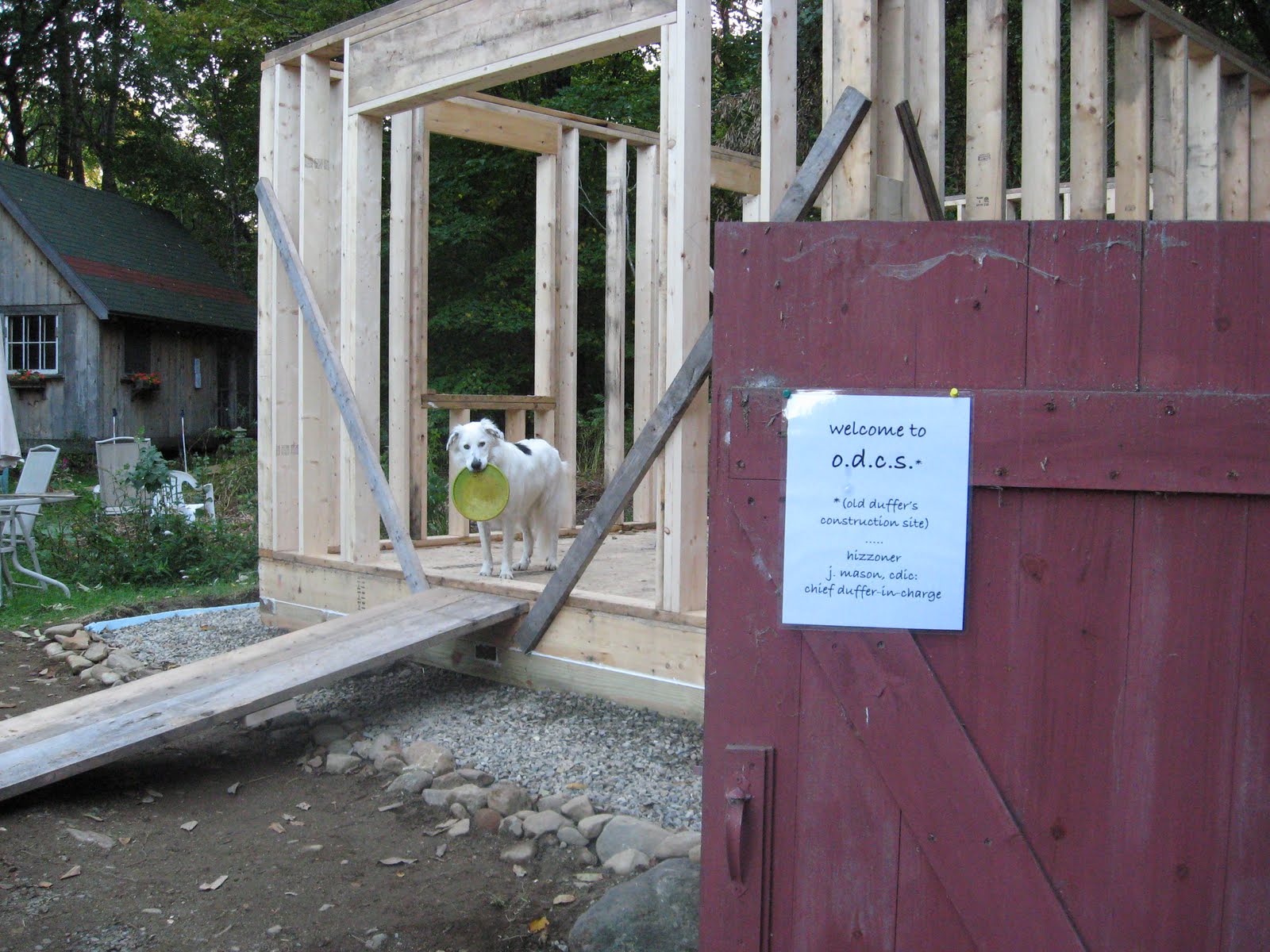
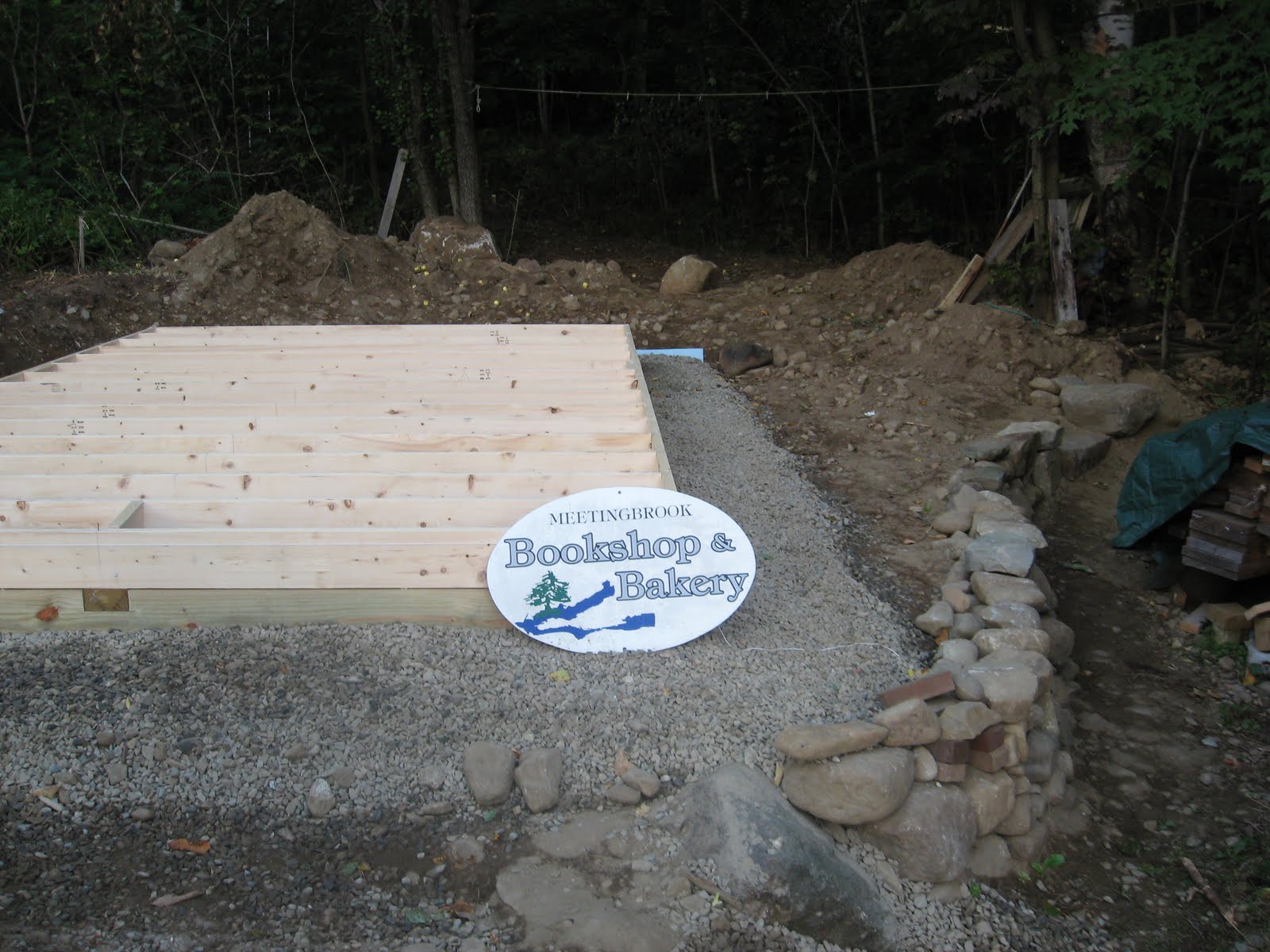
We work on roof of Book Shed/Library. Visitors stop by for tea. We talk about prison. Then back up to scaffold and impact drill.

Later I walk mountain as dusk draws down light on yellow leaves illuminating mud. Rokie's white coat flashes to and fro.

Nature is the great teacher. The only measurement is wind loosening leaves scattering dooryard and mountain trail.

To call out God is what humankind does with voice.

With silence is God there before any calling.

An invocation for each and all!

Watching flowers.

And leaves turn.

Friday, October 09, 2009

President Barack Obama will be awarded the Nobel Peace Prize. Many are surprised. That's understandable. It's hard to comprehend what is nascent.

Peace is being-born. Mr Obama knows this.

And "this" is not an easy reality to understand.
When the mind is always as clear and bright
As ten suns shining together,
Detached from views and beyond feelings,
Cutting through ephemeral illusions
Of birth and death,
This is what is meant by the saying,
"Mind itself is Buddha."

- Yuanwu
We like Mr. Obama. He seems to be a decent man. And we wish him well. There are those who do not like him. They do not wish him well. But we do.
The clouds come and go,
providing a rest for all
the moon viewers

(-Haiku by Basho, 1644-1694)
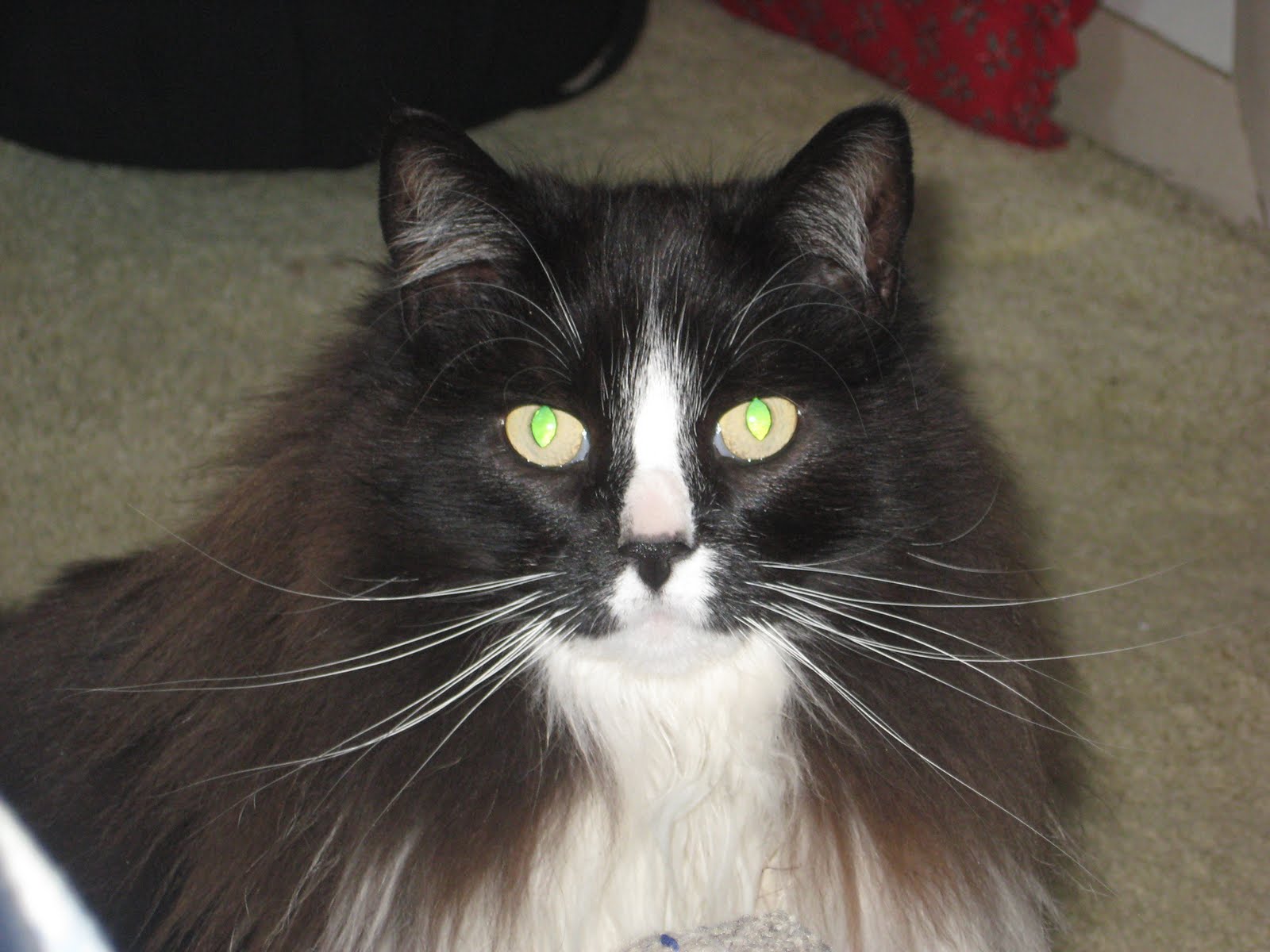
Rain this Autumn night in Maine. The cat decides indoors. There are dangerous foes for Mu-ge in these mountain environs. He has to step carefully and quietly, looking over his shoulder.

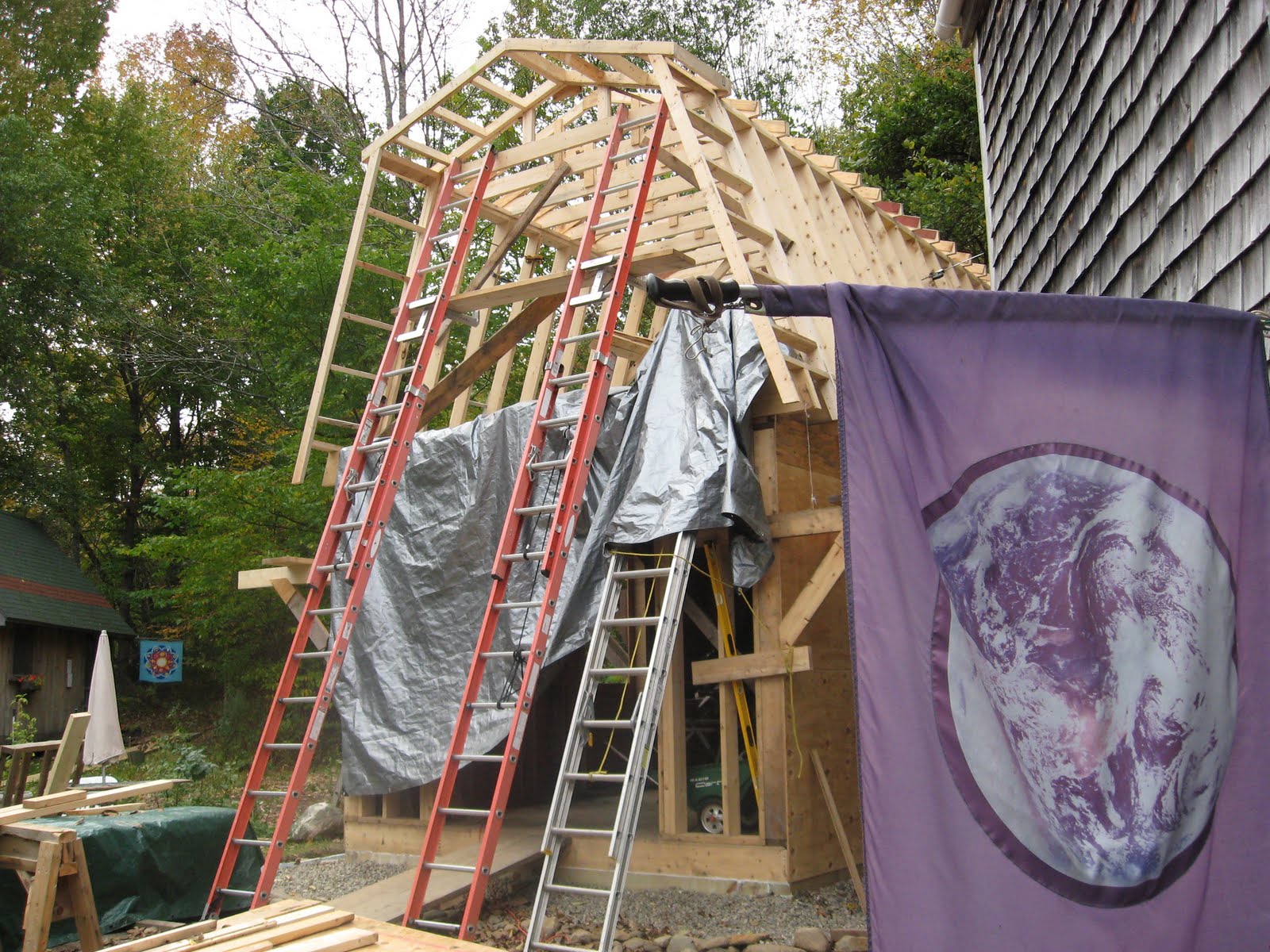
There's a silver tarp on second floor of book shed being built.

Five of us worked well together today. Then Sylvia and Ed stopped by as O'a did too . We all had soup and bread, tea and coffee.

And peanut butter cookies.

..........

Earlier in the day, David wrote from Belfast about the ongoing hostilities in Afghanistan. He worries we are continuing a dangerous war. I write him:
In the film "Confession" (1999) one of the characters played by Ben Kingsley says, "It's not hard to do the right thing, it's hard to know what the right thing is." He goes on to say something like: But once you know what the right thing is, it's hard not to do it.

There's the expedient thing, the pragmatic thing, the political thing, and the popular thing; but what is the right thing to do?

There will not be any victory. There will be continuing deaths. The mind dithers and delays doing what is right.

What's right might be hidden just now in this question: There are ugly things in this world -- why do we think we are remotely capable of eliminating all that is ugly? The problem with the small mind is its belief that ugly and beautiful are opposites and one of them must be destroyed in order to conform to your version of the illusory opposites. Both the Taliban and the United States are stuck in that belief.

As the Zen Master says, "Put it down! Put it all down!" That belief is far too heavy, bloody, and cruel. 'Ugly' is what 'beautiful' is when it tries to destroy its illusory opposite.

Some suggest we hate ourselves in this illusion. We refuse to accept the whole of ourselves. Thus we try to destroy 'part' of ourselves. It is not a solution to call the ugly beautiful or the beautiful ugly -- for that only perpetuates the false dichotomy created by the judging mind. Rather, our task is to do something more radical, namely, to live compassionately with the whole of it -- not blaming and opposing, but acting in such a way that there is no other way but the way that is from the beginning 'itself,' 'whole,' and 'completely beyond' human reason. Some suggest that this means to 'Be kind!'

Pick up the rubble. Soothe the pain. Encourage peace. Teach truth. Bake eggs. Serve coffee. Learn to serve one another with a balanced mind. Walk the dog. Feed the cat. Love life. See death for what it is -- the unknown inevitability that transforms what we see. See love as trust in transformation.

As Thich Nhat Hanh might have written: I have blown up the Trade Towers, I have visited my grandmother, I have sipped tea and chewed peanut butter cookies, I have killed my brother, I have comforted a child who scraped his knee, I have done everything, I have done nothing, I am you, you are me. We are looking at this problem we have created. There are tears in our eyes.

I am ready to leave Afghanistan. I am leaving. I've left.

I look back.

I see.
It is a good time for the Nobel Laureate to bring to birth a new wisdom.

A vital time.

For all to see.

Thursday, October 08, 2009

Doubt is cream in coffee. It lightens things. Cloaks the bitter.

Doubt slips into inquiry.
When you are deluded and full of doubt,
Even a thousand books of scripture
Are still not enough.
When you have realized understanding,
Even one word is already too much.
Zen is communicated personally,
Through mental recognition.
It is not handed on directly by written words.
- Fenyang
Inquiry asks into what is there.

Of course we are not apart from what is there.

It's just that we think we are.

God alone knows. The Way is nameless.

Therefore, know the nameless. And do nothing.

The Makita drill sends screws though wood during framing.

Wednesday, October 07, 2009

Not to make opposite of anything is not easy. What's easy is having no opposite. There you are!
An old man perches on White Mountain,
living among clouds and smoke and peaks.
Down below, Sanskrit prayer floods the valley.
It's raining. Petals cover the mountain.
The monk is concealed, his heart without desire,
but his name survives in his teachings.
Birds visit him, return speaking Buddhist law.
Guests depart with the habit of meditation.
All day I walk paths among the blue pines.
At twilight I seek lodging in a chamber
in the cave hidden deep in bamboos,
and hear waters plashing in the transparent dusk.
Sitting on my mat and pillow I am involved
in rose clouds of the sunset.
Am I merely a transient guest?
I will practice meditation until I cease.

- Wang Wei (699-759)
Thanks for visiting.

Don't come back.

Once here, there's nowhere to go.

Cease who?

Tuesday, October 06, 2009

The film 'Samsara" (2001, directed by Pan Nalin). A sensual and spiritual reminder just how difficult the turning-around is in the quest for enlightenment.
There are a few conundrums in the film which are left open to interpretation. One is the aphorism by the old monk, "Which is better? To satisfy one thousand desires or to conquer just one?" According to me, the one desire (for religions affirming transmigration and reincarnation, i.e. Samsara, the cycle of birth and death) is the sexual instinct, the desire which leads to further and further entanglements. Sex is the primary instinct, the central act in the propagation of life.

The second is the question and the answer written on the rock by the roadside. The question is: "How does one prevent a drop of water from drying up?" And the answer, on the back of the rock, is: "By throwing it into the sea." One possible interpretation of the analogy is: The drop of water is the individual soul. Its "drying up" is its death as a separate entity. The "sea" is the worldly life, in which it finds sustenance and mixes up with other selves.

(--from blog 'Remains of the Day,' http://harmanjit.blogspot.com/search?q=samsara)
We live in the world. This is where we work out our karma and salvation -- not in some crypt where the near-dead and really dead decompose their belief in a maze of desire.
If you memorize slogans, you are unable to make subtle adaptations according to the situation. It is not that there is no way to teach insight to learners, but once you have learned a way, it is essential that you get it to work completely. If you just stick to your teacher's school and memorize slogans, this is not enlightenment, it is a part of intellectual knowledge.
- Fayan
To work completely is to not second-guess.

My life has been lived waiting for the tossed coin to descend from the nadir of its upward flip. So much I've not done looking over my shoulder at something passing into dryness.

Maybe I won't get a sore throat.

Maybe I'll get to bed before three tonight.

Maybe the real meaning of a dizzy twirl is the falling to ground -- stopping for a while.

Monday, October 05, 2009


Sin isn't what it used to be. First of all, it doesn't arrive with pink and blue blankets. Secondly, it doesn't go away by nailing someone to a cross. Lastly, who benefits by the concept of sin?
How mysterious!
The lotus remains unstained
By its muddy roots,
Delivering shimmering
Bright jewels from common dew.
(- The Monk Henjo)
What is called 'sin' is the illusory belief in separate, isolated, and alienated existence -- the false claim that someone is better than another, that we're not equal, that our task is to subdue and dominate nature, women, animals, and those who fall into what we conveniently call 'sin.'

I'm having none of it. Not the concept. Not the belief. Not the organized congregations that pray for what is already our ground and true situation. God is not coming for us. God is emerging through the very inchoate being/reality we embody. God, if that word retains anything of the vibrance true being/reality originates, is coming through and with us.

That's just well-water talking.
'As. . . a dewdrop, a bubble, a cloud, a flash of lightning, view all created things.' Thus ends the Diamond Sutra, reminding us of irreducible impermanence. Sustainability cannot mean some kind of permanence. A waggish commentary says ‘Sustainability is a physical impossibility. But it is a very nice sentiment.’ The quest for permanence has always let us astray—whether in building stone castles, Great Walls, pyramids and tombs for pharaohs, great navies, giant cathedrals to ease us toward heaven, or cold war-scale weapons systems guaranteeing mutually assured destruction. We must live with change, like a bird on the wing, and doing so—let all the other beings live on too. Not permanence, but living in harmony with the Way.
(--Gary Snyder, Back on the Fire (Counterpoint, 2007), 70)
We persevere. We make sacrifices. We take what the tide brings in and make use of it. We thank the moon for its light.

We marvel at the fact of things. The Way of things. The Way of it all.

The quietness.

Without trying.

The stillness.

With ease.

Sunday, October 04, 2009

Rokpa's 2nd birthday and St. Francis of Assisi feastday. The 6th anniversary of the dedication of the chapel/zendo.

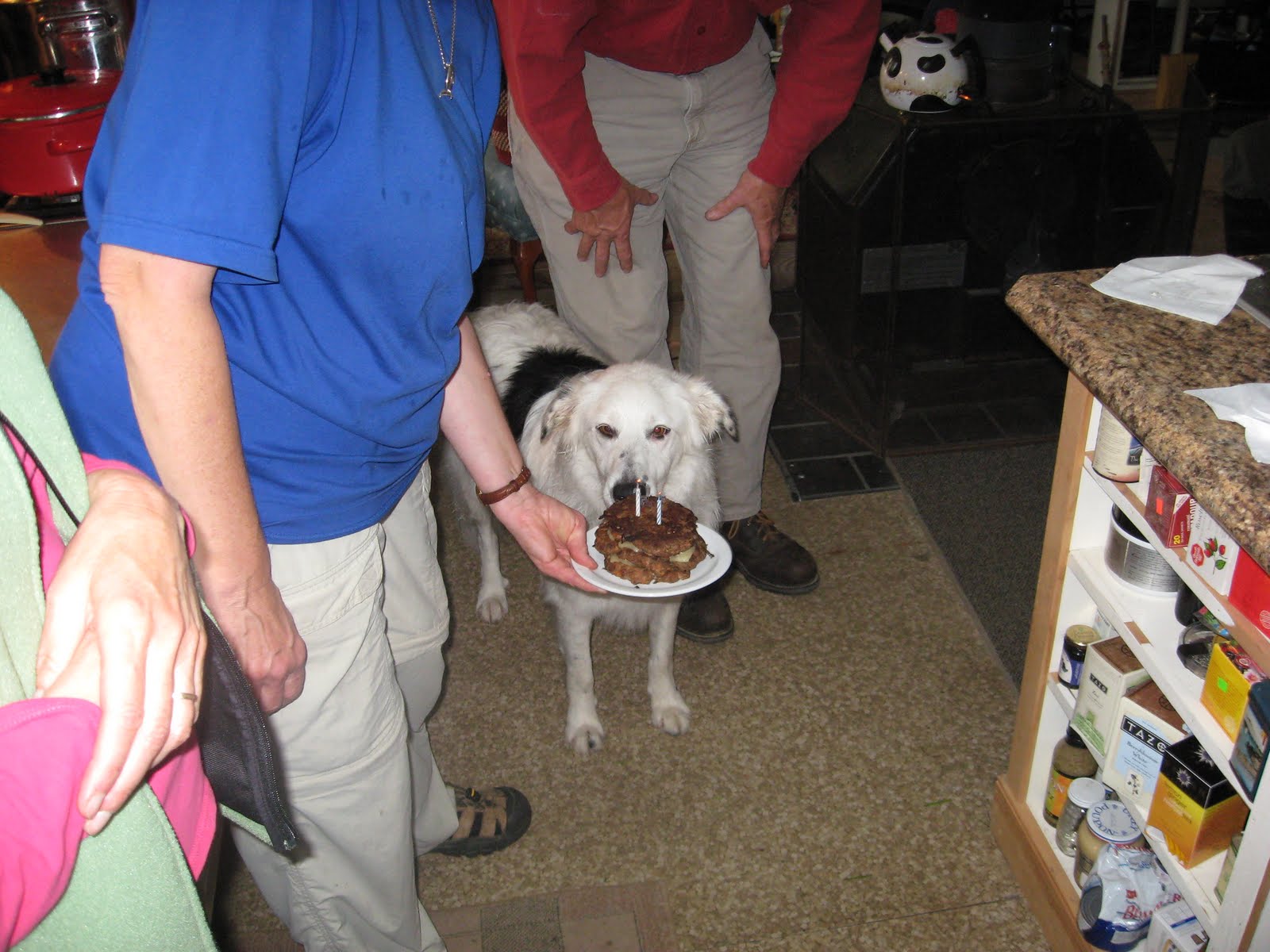
(His birthday "cake" consisted of: triple-level ground turkey, graded carrot, graded celery, spelt-flower, garlic and parsley, cheddar cheese between layers. We had to fight off the humans. Although Sam had his own special version.)


A perfect rag-tag meetingbrook ceremony in cabin celebration feast of Francis. Dean sang, Gene and Margaret sang, Cheryl played harp and sang, Sam played harmonica, Saskia flute. O'a, Bill, Linda, Susan, and Tom there in the cabin, appreciating. Michael and Jayan, Hughie and Hugh held down the Wohnkuche. Max snoozed in car.
A soaring endlessly curving path,
every few miles we have to rest.
I look around for my friends.
They've vanished in the wooded hills.
Rain floods the pine trees
and flows hushed among the rocks.
There are silent words deep in hill water,
a long whistle over the summits.
When I look at South Mountain
the sun floats white through the mist.
A blue marsh is luminous and clear.
Green trees are heavy shadows, drifting.
When I am tired of being closed in,
suddenly I come upon a clearing,
and the mind is at peace.

- Wang Wei (699-759)
The simplicity of earth, nature, God, and humankind held and seen as one.
"Oh grant that I may feel you always in everything." (From song 'Mystery' Missa Gaia)
A good prayer!

A good day!

Saturday, October 03, 2009

In his transitus, where did Francis go?
At Zen centers they say
There is a Way to be practiced
And a religious truth to be realized.
Tell me, what religious truth is realized,
What way is practiced?
In your present functioning, what do you lack?
What would you fix?
Younger newcomers, not understanding this,
Immediately believe these mesmerists and
Let them talk about things that tie people up.

- Linji (d. 867)
He is in the rain.

He is in these words.

He has found nature to be home.

A joy, if not perfect, at least complete.

Friday, October 02, 2009

No matter where I look, all I see is what is looking by itself as itself within itself. All that is heard is the sound of what is being said.

And it sees nothing, says nothing. Nothing worth mentioning. Nothing special.
The Dharma is without living beings, because it is free of the dust of living beings. It is selfless, because it is free of the dust of desire. It is lifeless, because it is free from birth and death. It is without personalities, because it dispenses with past origins and future destinies.
( - The Buddha in Vimalakirti Sutra)
Prison conversation and Assisted Living Center conversation both lend cheer to the day. It's just listening and speaking. Nothing else.
First He Looked Confused

I could not lie anymore so I started to call my dog "God."
First he looked
confused,

then he started smiling, then he even

danced.
I kept at it: now he doesn't even
bite.

I am wondering if this might work on
people?

(Poem by Tukaram {c. 1608 - 1649}, India. From “Love Poems From God” trans. by Daniel Ladinsky. c.1999)

Let's not kid ourselves. There is no God beyond what God is saying to each one of us.

Each.

One.

Of us.

Here. Right here.

Can you feel what you are within the name of God?

Being pronounced ?

Thursday, October 01, 2009

In the film "Phoebe in Wonderland" (2009), Miss Dodger tells Phoebe that one day she will realize all the things that make her different and say, "This is what I am."
One of the things that most nourishes true compassion is clarity—when we know what we are thinking and know what we are feeling. This clarity differentiates compassion from shallow martyrdom, when we are only thinking of others and we are never caring about ourselves. This clarity differentiates compassion from what might be thought of as a conventional kind of self-preoccupation, when we care only about ourselves and not about others. The Buddha said at one point that if we truly loved ourselves we would never harm another, because if we harm another it is in some way diminishing who we are; it is taking away from rather than adding to our lives.
(- Sharon Salzberg from "A Quiver of the Heart," Tricycle Spring 2009)
A woman left conversation tonight early. Thirty minutes later she was still in the dooryard trying to get into the locked car with a hanger while using a solar powered garden light to see what she was doing. When she got it open, still unable to find her keys, the security alarm continuously blared and honked. It was a drama that unfolded with solitary determination. She too was an articulation of "This is what I am."
but if a living dance upon dead minds

but if a living dance upon dead minds
why,it is love;but at the earliest spear
of sun perfectly should disappear
moon's utmost magic,or stones speak or one
name control more incredible splendor than
our merely universe, love's also there:
and being here imprisoned,tortured here
love everywhere exploding maims and blinds
(but surely does not forget,perish, sleep
cannot be photographed,measured;disdains
the trivial labelling of punctual brains...
-Who wields a poem huger than the grave?
from only Whom shall time no refuge keep
though all the weird worlds must be opened?
)Love

(--Poem by e.e. cummings)
Of the three "Toms" visiting here today: one wants to buy the house across from the lake; one stops for coffee after visit to V.A. at Togus; and one passes at final circle feeling tired and weak and shaky waiting for a diagnosis other than just being shy of 84.

The hammering and building of book shed continues. Six of us plus two dogs and a cat sat in garden chairs with coffee after clean-up inside the space trying to determine where the wood stove will go and how the stairs will ascend to the not yet begun second story.

We look at one another -- look around at mountains and brook and pond -- and say, "This is what I am."

Wednesday, September 30, 2009

Returning to the Way by going through the opposite. The Tao:
...flows through all things,
inside and outside, and returns
to the origin of all things.

(-from Chapter 25, trans. by Stephen Mitchell)
September leaving. October in a minute or two.

We are what Greatness is.
The realm of non-thinking
Can hardly be fathomed by cognition;
In the sphere of genuine suchness
There is neither "I" nor "other."
- Yunmen (864-949)
How is it we once thought ourselves not what we are?

Tuesday, September 29, 2009

Thinking of angels, specifically, archangels today.

Maybe the history of religion and theology is the unfolding of consciousness. The narratives we relate are the specific insights consciousness unveils..

Someday we will know the true nature of reality.
There is ultimately no means
of safeguarding anything in this world;
anything you gain can be
lost, destroyed, or taken away.
For this reason if you make
the acquisition and retention
of goods or status your aim in life,
this is a way to anxiety and sorrow.
- Muso Kokushi (1275-1351
)
What is this reality?
Well, now,
if little by little you stop loving me
I shall stop loving you little by little.

If suddenly
you forget me
do not look for me,
for I shall already have forgotten you.

(from: If You Forget Me, by Pablo Neruda)
My right elbow suffers from hammering large nails.

I think "God" has disappeared into the center of creation.

Monday, September 28, 2009

Watched "The Devil Came on Horseback" (2007) -- the story of Darfur as witnessed and told by Brian Steidle. Murder, rape, and pillaging.

The terribleness of it.
We're All in the Same Boat

We’re all in the same boat. Born as we are in this human body, we can’t escape the blessings and tortures of the human brain. From our first breath, we yearn for love and understanding in the most complicated ways imaginable. We find it most satisfying as we learn to give it. The ability to do this comes from acceptance of our frailties. By understanding the conditions of our own lives, we accept the conditions of others. Compassion is not condescension, but a leveling of the playing field, a recognition of yourself in others and an acceptance that their stress is your stress, that their happiness is your own. The gulf between us all is imaginary, born of insecurity and fear.

(- Stephen Schettini, from “What to Expect When You’re Reflecting,” Tricycle, Fall 2008)
I can only wonder why I am so willing to murder my brothers and sisters. Aside from someone paying me to do the killing, why do I do it?
Skull Trees, South Sudan

Arok, hiding from the Arabs in the branches of a tree,
two weeks surviving on leaves,
legs numb, mouth dry.
When the mosquitoes swarmed
and the bodies settled limp as petals under the trees,
he shinnied down, scooping out a mud pit with his hands
sliding into it like a snake,
his whole body covered except his mouth.
Perhaps others were near him,
lying in gloves of mud, sucking bits of air through the swamp holes,
mosquitoes biting their lips,
but he dared not look.

What did he know of the rest of South Sudan, pockmarked with bombs,
skull trees with their necklaces of bones,
packs of bony Lost Boys
roving like hyenas towards Ethiopia,
tongues, big as toads, swelling in their mouths,

the sky pouring its relentless bombs of fire. Of course they were
tempted to lie down for a moment,

under the lone tree, with its barely shade,
to rest just a little while before moving on,

the days passing slyly, hallucinations
floating like kites above them
until the blanched bones lay scattered in a ring around the tree,
tiny ribs, skulls, hip bones—a tea set overturned,
as the hot winds whistled through them
as they would anything, really,

and the sky, finally exhausted,
moving on.
( Poem by Adrie Kusserow, Published in Best American Poetry 2008; originally published in The Kenyon Review)
I will begin again: Who am I? Why am I here? What is life? How should I live? Who are you in my life?

I will look to the source, the ground, of my and all being.

I will stop murdering my family.

I cease being false.

Stop looking for me.

I am no longer where you think I am.

Sunday, September 27, 2009

Heavy rain.

Good sitting practice.
Wanting nothing,
With all your heart stop the stream.
When the world dissolves,
Everything becomes clear.
Go beyond this way or that way
To the farther shore where the world dissolves,
And everything becomes clear.
Beyond this shore and the farther shore,
Beyond the beyond,
Where there is no beginning, no end,
Without fear, go.

- Buddha in the Dhammapada
It's an odd time to be an American. It feels like everyone is accusing everyone else of being un-American. No more debate and dissent. No more arguing and reasoning.

Rather, yell. Accuse. Rage and hate.

It's an odd time.
In the Absence of Bliss

Museum of the Diaspora, Tel Aviv

The roasting alive of rabbis
in the ardor of the Crusades
went unremarked in Europe from
the Holy Roman Empire to 1918,
open without prerequisite
when I was an undergraduate.

While reciting the Sh’ma in full
expectation that their souls
would waft up to the bosom
of the Almighty the rabbis burned,
pious past the humming extremes
of pain. And their loved ones with them.
Whole communities tortured and set aflame
in Christ’s name
while chanting Hear, O Israel.

Why?
Why couldn’t the rabbis recant,
kiss the Cross, pretend?
Is God so simple that He can’t
sort out real from sham?
Did He want
these fanatic autos-da-fé, admire
the eyeballs popping,
the corpses shrinking in the fire?

We live in an orderly
universe of discoverable laws,
writes an intelligent alumna
in Harvard Magazine.
Bliss is belief,
agnostics always say
a little condescendingly
as befits mandarins who function
on a higher moral plane.

Consider our contemporary
Muslim kamikazes
hurling their explosives-
packed trucks through barriers.
Isn’t it all the same?
They too die cherishing the fond
certitude of a better life beyond.

We walk away from twenty-two
graphic centuries of kill-the-jew
and hail, of all things, a Mercedes
taxi. The driver is Yemeni,
loves rock music and hangs
each son’s picture—three so far—
on tassels from his rearview mirror.

I do not tell him that in Yemen
Jewish men, like women, were forbidden
to ride their donkeys astride,
having just seen this humiliation
illustrated on the Museum screen.

When his parents came
to the Promised Land, they entered
the belly of an enormous
silver bird, not knowing whether
they would live or die.
No matter. As it was written,
the Messiah had drawn nigh.

I do not ask, who tied
the leaping ram inside the thicket?
Who polished, then blighted the apple?
Who loosed pigs in the Temple,
set tribe against tribe
and nailed man in His pocket?

But ask myself, what would
I die for and reciting what?
Not for Yahweh, Allah, Christ,
those patriarchal fists
in the face. But would
I die to save a child?
Rescue my lover? Would
I run into the fiery barn
to release animals,
singed and panicked, from their stalls?

Bliss is belief, but where’s
the higher moral plane I roost on?
This narrow plank given to splinters.
No answers. Only questions.

(Poem by Maxine W. Kumin)
I remember a question from Brooklyn asked so often: "Who do you think you are?"

Lets remember to ask.

Let's urge honest responses.

Like the rain.

Down to earth.

Blessed Yom Kippur!

Saturday, September 26, 2009

Walking mountain this afternoon. Dog runs 10 miles to my 2 miles. Hiking boots and ski poles.
Thinking is more interesting that knowing, but less interesting than looking.
(-Goethe)
In prison, man from India stops into classroom and gives hug. I say I am enjoying learning in the course. He says, "What do you mean 'learning?' -- you are the teacher.

That's odd, I think. I've never thought myself a teacher.

He must be referring to someone else. All I do is share the learning of those in class with themselves.


Friday, September 25, 2009

Dogen's shusho-itto / shusho-ichinyo-- the unity of practice and realization -- holds up our doubting enthusiasm.

So we practice every day.
In the flash of a single thought,
The agitated mind is put to rest.
All the inner and outer sensations
Become lucid and transparent.
Breaking the great void
By a turning of the body,
The ten thousand phenomena
Of the majestic world
Rise and disappear.

- Han-Shan Te-Ch'ing
There are so many things to turn our minds this way and that. It's a miracle we're not turned inside out.
What I Understood

When I was a child I understood everything
about, for example, futility. Standing for hours
on the hot asphalt outfield, trudging for balls
I'd ask myself, how many times will I have to perform
this pointless task, and all the others? I knew
about snobbery, too, and cruelty—for children
are snobbish and cruel—and loneliness: in restaurants
the dignity and shame of solitary diners
disabled me, and when my grandmother
screamed at me, "Someday you'll know what it's like!"
I knew she was right, the way I knew
about the single rooms my teachers went home to,
the pictures on the dresser, the hoard of chocolates,
and that there was no God, and that I would die.
All this I understood, no one needed to tell me.
the only thing I didn't understand
was how in a world whose predominant characteristics
are futility, cruelty, loneliness, disappointment
people are saved every day
by a sparrow, a foghorn, a grassblade, a tablecloth.
This year I'll be
thirty-nine, and I still don't understand it.

(Poem, "What I Understood" by Katha Pollitt, from The Mind-Body Problem. © Random House, 2009.)
Nor I.

Or, as the Buddhists say, No I.

Neither way, I can't say.

Thursday, September 24, 2009

The sky. The sky with stars. The elderly man sitting in the car saying he was ready to let go. He was not afraid to die.

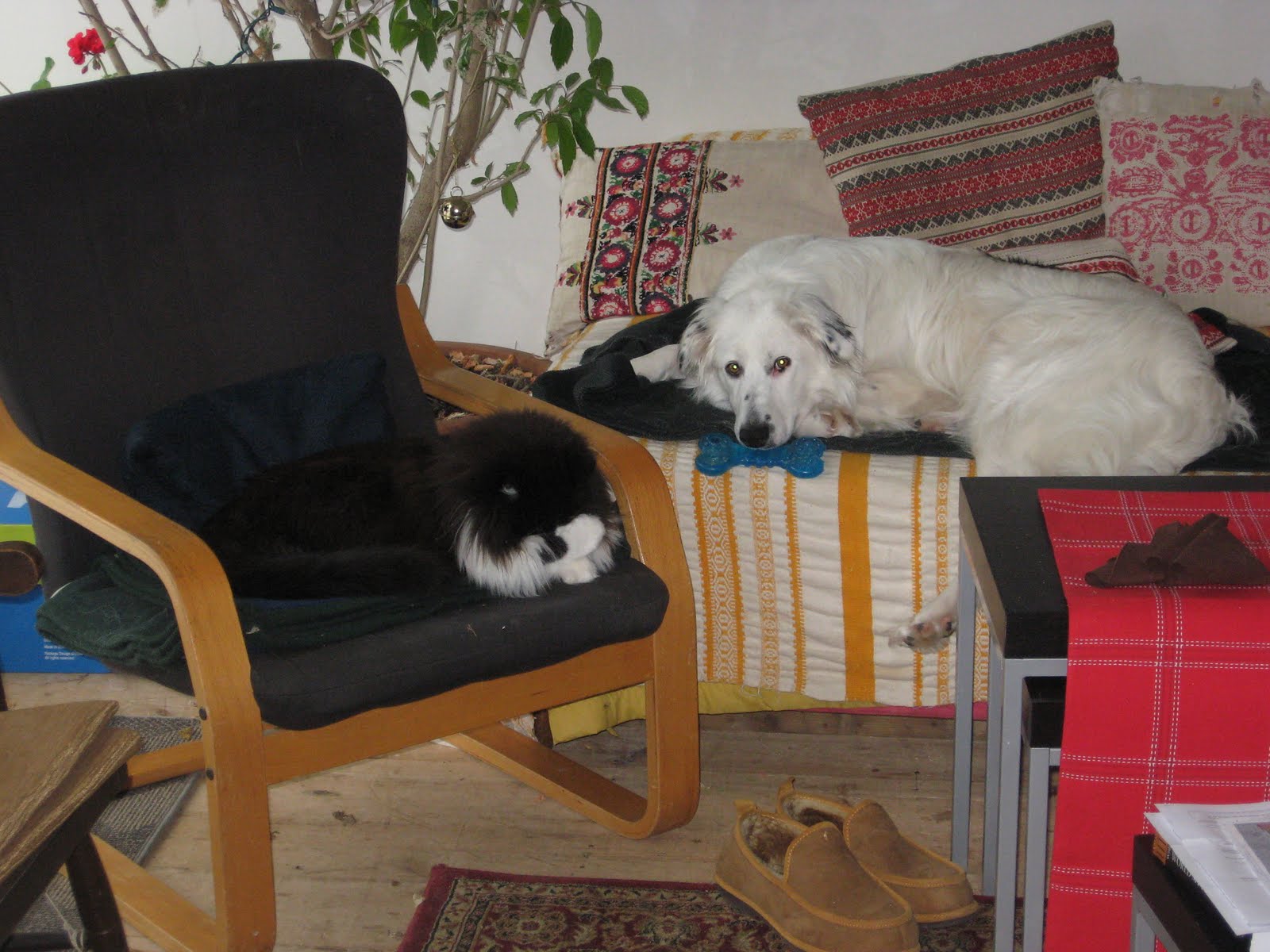
The white dog and the black cat at barn door.
Improving Upon Silence
The most important step in developing skillful speech is to think before speaking (or writing). This is called mindfulness of speech. Few things can improve the nature of our relationships as much as the development of skillful speech. Silence offers us, and those around us, the spaciousness we need to speak more skillfully. When we speak with greater skill, our true self—our compassionate, loving self—emerges with gentle ease. So before you speak, stop, breathe, and consider if what you are about to say will improve upon the silence.

(- Allan Lokos, from “Skillful Speech,” Tricycle, Winter 2008)
In the library in-town, the woman psychiatrist at the podium read her poetry about loss and grief. Afterwards, we hug. She signs and inscribes the copy I brought to her.

The final poem is about listening.

The sacredness of it.

The necessary silence.

Infinite.

Wednesday, September 23, 2009

Who is my mother? Where is my father?
The moon's the same old moon,
The flowers exactly as they were,
Yet I've become the thingness
Of all the things I see!
- Bunan (1602-1676)
Mo Tzu (470-391 BCE) thought Universal Love was a good idea.
Inclusive Care

The ethical guideline for which the Mohists are most well known is jian ai, sometimes translated as “universal love” but probably better rendered as “inclusive care.” Jian (together, jointly) in this context has the connotation of including everyone in society together within a whole. Like the English ‘care’, ai (love, care) is ambiguous, since it may refer to a range of attitudes from strong affection to detached concern. In Mohist texts the word typically seems to refer to a dispassionate concern about the welfare of its object.

Inclusive care was generally not the doctrine that attracted criticism from the Mohists' contemporaries. Ancient critics objected mostly to their frugal, austere lifestyle, opposition to music, and plain burial practices, which recognized no differences in social rank. Little was said about their core ethical doctrines. The exception was Mencius, who is reported to have equated inclusive care with renouncing one's father (for this reason, he dismissed Mozi as a “beast”). Many later Confucian critics have followed Mencius in focusing on inclusive care, maintaining that it runs counter to human nature. The doctrine deserves careful attention, partly to evaluate this criticism and partly to draw philosophical lessons from how the Mohists apply the notion of impartiality that stands at the heart of their ethics.

(--from Stanford Encyclopedia of Philosophy)
That's a good phrase -- Inclusive Care.

A Table in the Wilderness

I draw a window
and a man sitting inside it.

I draw a bird in flight above the lintel.

That's my picture of thinking.

If I put a woman there instead
of the man, it's a picture of speaking.

If I draw a second bird
in the woman's lap, it’s ministering.

A third flying below her feet.
Now it's singing.

Or erase the birds
make ivy branching
around the woman's ankles, clinging
to her knees, and it becomes remembering.

You'll have to find your own
pictures, whoever you are,
whatever your need.

As for me, many small hands
issuing from a waterfall
means silence
mothered me.

The hours hung like fruit in night's tree
means when I close my eyes
and look inside me,

a thousand open eyes
span the moment of my waking.

Meanwhile, the clock
adding a grain to a grain
and not getting bigger,

subtracting a day from a day
and never having less, means the honey

lies awake all night
inside the honeycomb
wondering who its parents are.

And even my death isn't my death
unless it's the unfathomed brow
of a nameless face.

Even my name isn't my name
except the bees assemble

a table to grant a stranger
light and moment in a wilderness
of Who? Where?
(Poem by by Li-Young Lee b.1957)
My mother is the attention given and received by whatever is attending or attended to.

My father is right here in the source of presence with anything at all.

Gifts of light and moment.

In a wilderness.

Tuesday, September 22, 2009

Experience teaches fools. I know this by experience.

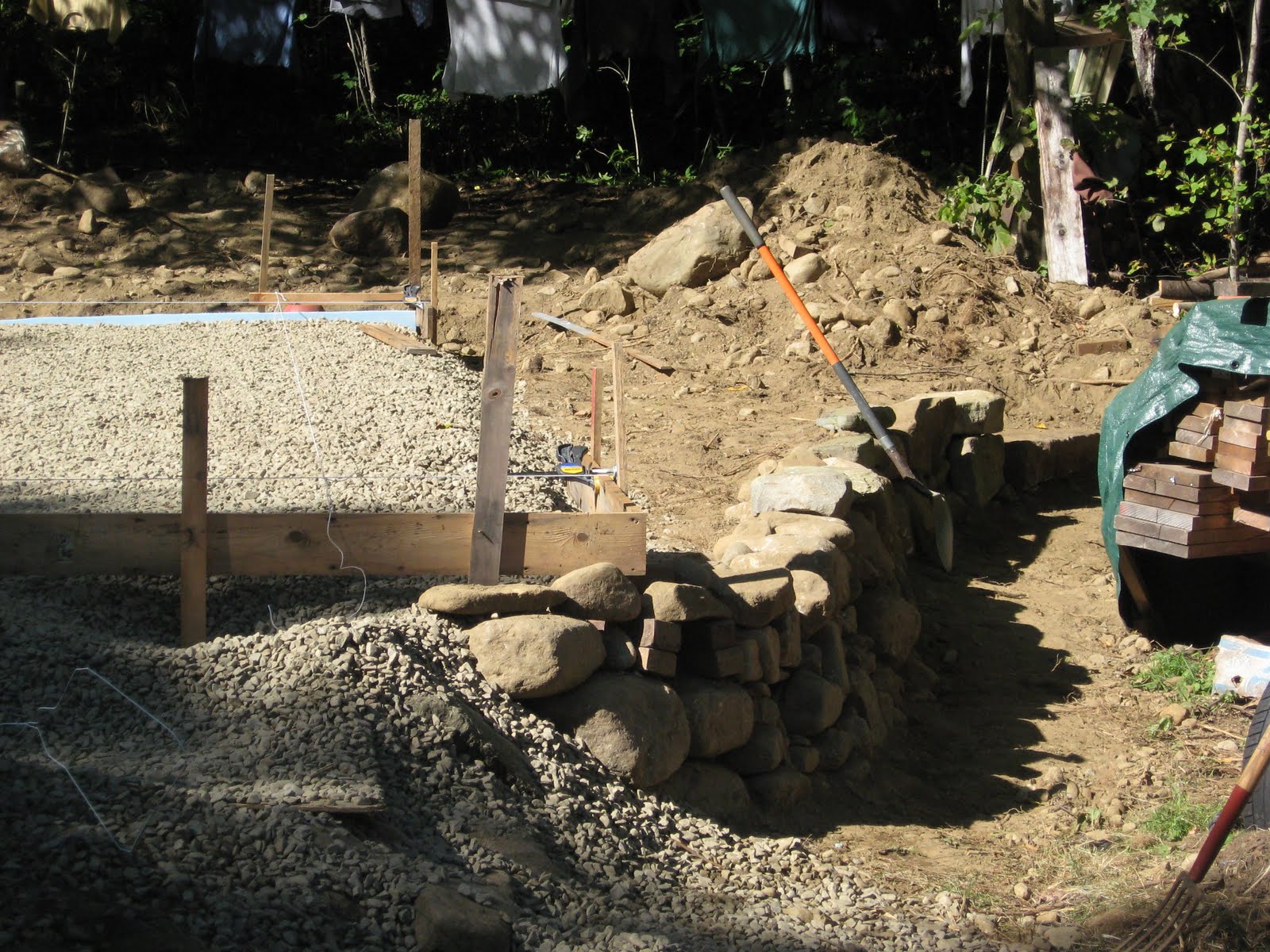
Just before plywood went over joists and insulation a single leaf fell on yellow fiber. As haiku history would have it -- everywhere it is autumn. We put two poems in Trappist Preserve jar for a time capsule atop gravel under floorboards and write: "This was a hermitage. Prayer and silence were practiced. For your peace." One poem by Li Po on Chuang Tzu and the Butterfly, one by Naomi Shihab Nye on Equinox.


Tuesday Evening Practice now consists of 20 minutes silent sitting, 20 minutes reading from The Dhammapada, and 20 minutes reflection in the style of Lectio.

Flooring down, one wall framed.

As Catherine of Sienna said: "All the way to heaven is heaven."
Everywhere looking
Seeing everything -- just this --
Practicing autumn.
(-- wfh)
There's nothing under our feet.

Still.

Look there.

Monday, September 21, 2009


Listening to the teachings of the DaoDeChing. Wayne Dyer says that 'Namaste' can be translated: 'I honor that place within you where we are one.'

It is too difficult to sort through all the differences and divisions, distractions and difficulties that each of us projects onto the other -- things that cloak us like an old veil.
Though night after night
The moon is stream reflected,
Try to find where it has touched,
Point even to a shadow.

- Takuan (1573–1645)
Living as a hermit, all I have is a view. It most likely is no one else's view. This room is my cell. I look out. It is summer. Tomorrow, Inshallah, when I look out it will be autumn. What will have changed?

Duration? Distinction? Denotation?

A fellow with cup of coffee in hand talks about AA and ACIM (Alcoholics Anonymous and A Course in Miracles.) We compare notes on how fervently each regards their 'scripture.' He says that one is a matter of life and death. I tell him I understand, and that, for me, just talking with him is a matter of life and death.

The first lesson in ACIM is:
Lesson 001

Nothing I see in this room [on this street,
from this window, in this place] means anything

Now look slowly around you, and practice applying this idea very specifically to whatever you see:
This table does not mean anything.
This chair does not mean anything.
This hand does not mean anything.
This foot does not mean anything.
This pen does not mean anything.
Then look farther away from your immediate area, and apply the idea to a wider range:
That door does not mean anything.
That body does not mean anything.
That lamp does not mean anything.
That sign does not mean anything.
That shadow does not mean anything.
Notice that these statements are not arranged in any order, and make no allowance for differences in the kinds of things to which they are applied. That is the purpose of the exercise. The statement should merely be applied to anything you see. As you practice the idea for the day, use it totally indiscriminately. Do not attempt to apply it to everything you see, for these exercises should not become ritualistic. Only be sure that nothing you see is specifically excluded. One thing is like another as far as the application of the idea is concerned.

Each of the first three lessons should not be done more than twice a day each, preferably morning and evening. Nor should they be attempted for more than a minute or so, unless that entails a sense of hurry. A comfortable sense of leisure is essential.
(Lesson 001, A Course in Miracles, http://www.themiracletimes.com/acim/lesson_text.php?l=1
These are difficult initial words. I suspect there's a long walk to be taken with such notions.

We agree on acceptance. Here's what is written online re acceptance and AA:
Acceptance was an idea in a personal story introduced in the 3rd edition and stories are not included here. It was not part of the original book.
See page 449 in the 3rd edition or page 417 in the 4th edition [of the Big Book].

It says in part:
And acceptance is the answer to all my problems
today. When I am disturbed, it is because I find some
person, place, thing, or situation—some fact of my life
—unacceptable to me, and I can find no serenity until
I accept that person, place, thing, or situation as being
exactly the way it is supposed to be at this moment.
Nothing, absolutely nothing, happens in God’s world
by mistake.
(http://anonpress.org/bb/acceptance.htm)
Another long walk.

Fresh coffee is made. Solitude refreshed. The world goes the way it goes. From behind this window voices from elsewhere. Still, I am alone.

I am meaningless.

I am neither true nor false.

"Life," says Dogen Zenji, "is one continuous mistake."

Hence, the continuing conversation. Even in solitude.

Sunday, September 20, 2009

Rokie's been out, had a milkbone, and dozes on kitchen bed. It's 39 degrees. Sun is coming through windows over sink but not yet on barn wall.
It's by far the hardest thing I've ever done
To be so in love with you and so alone

(intro to Follow Me, song by John Denver)
Maybe I was thinking about Mary Travers. The Denver lyrics could have been written by a contemplative hermit dwelling in solitude and ecstatic about the paradox of complete presence with no ego to sort it into distance and dichotomy.
IV

She says, ``I am content when wakened birds,
Before they fly, test the reality
Of misty fields, by their sweet questionings;
But when the birds are gone, and their warm fields
Return no more, where, then, is paradise?''
There is not any haunt of prophecy,
Nor any old chimera of the grave,
Neither the golden underground, nor isle
Melodious, where spirits gat them home,
Nor visionary south, nor cloudy palm
Remote on heaven's hill, that has endured
As April's green endures; or will endure
Like her remembrance of awakened birds,
Or her desire for June and evenings, tipped
By the consummation of the swallow's wings.

V

She says, ``But in contentment I still feel
The need of some imperishable bliss.''
Death is the mother of beauty; hence from her,
Alone, shall come fulfilment to our dreams
And our desires. Although she strews the leaves
Of sure obliteration on our paths,
The path sick sorrow took, the many paths
Where triumph rang its brassy phrase, or love
Whispered a little out of tenderness,
She makes the willow shiver in the sun
For maidens who were wont to sit and gaze
Upon the grass, relinquished to their feet.
She causes boys to pile new plums and pears
On disregarded plate. The maidens taste
And stray impassioned in the littering leaves.

(--from poem, Sunday Morning, by Wallace Stevens)
First coffee as Chickadee jabbers to green feeder above Yew bush. From Snow Bowl horn toots play from rescue vehicle, no emergency. There will be chairlift rides today from 9 to 3. I can barely lift my elbow -- pain lingers from pounding spikes into planks while framing floor joists with light hammer.

For me and my house, I hope the memorial service will be a happy religious event. I want people to sing hymns, and I hope friends will recall some happy moments. If they don’t, much of my life will have been wasted. The service shouldn’t go on too long, as refreshments will be served afterwards. A memorial service reminds us that, at death, we leave behind all that we have but celebrate all that we are. Without defining what a really good life is, at least we can say it is one so full that even the funeral director is sorry to see us go.

What is said at a funeral should be reasonably honest. Grief has a way of clouding our memories, and some services leave the impression that mean and useless people never die. This much is true: Perfect people never die, and when we gather to remember someone, telling the truth helps the healing. Once I heard a daughter, while speaking at her father’s memorial service, say this: “He was often hard to live with and, at times, a real grouch. But he was my Dad, and I loved him.”

When I go, if someone remembers me as patient, a case of mistaken identity has occurred. I pray, but no one who knows me would confuse me with St. Francis of Assisi.

Being remembered as we really were and still loved frees mourners from vague feelings of guilt. God’s Grace is what allows us to celebrate the lives of people who die, not our ranking in Who’s Who or a listing in the most recent volume of The Best People Who Ever Lived.

In short, when we die, it’s best to let our lives speak for themselves. If we are fortunate enough to be part of a faith community, words of resurrection and hope can be embraced and claimed. We can laugh together and weep together because the joke is ultimately on the Grim Reaper. That’s why he’s so grim.

The final gathering can be a party. As I think about death — as lots of people my age do — this is what I’d like: A party, and you are all invited. Refreshments will be served.

(-- from Two Funerals and a Party, in Quaker Life, September/October 2009, By Tom Mullen. This article, a shortened version of the final chapter in Tom’s book, Living Longer & Other Sobering Possibilities, published by Friends United Press in 1996. Mr. Mullen died in August: Thomas James Mullen, 1934-2009 http://www.fum.org/QL/issues/0909/TwoFuneralsandaParty.htm
I've been invited to reflect on sadness in my writings. It is true. I sit with this temperament that has long visited. As Naomi Nye writes, alongside kindness, sorrow is the other deepest thing
Kindness

Before you know what kindness really is
you must lose things,
feel the future dissolve in a moment
like salt in a weakened broth.
What you held in your hand,
what you counted and carefully saved,
all this must go so you know
how desolate the landscape can be
between the regions of kindness.
How you ride and ride
thinking the bus will never stop,
the passengers eating maize and chicken
will stare out the window forever.

Before you learn the tender gravity of kindness,
you must travel where the Indian in a white poncho
lies dead by the side of the road.
You must see how this could be you,
how he too was someone
who journeyed through the night with plans
and the simple breath that kept him alive.

Before you know kindness as the deepest thing inside,
you must know sorrow as the other deepest thing.
You must wake up with sorrow.
You must speak to it till your voice
catches the thread of all sorrows
and you see the size of the cloth.

Then it is only kindness that makes sense anymore,
only kindness that ties your shoes
and sends you out into the day to mail letters and purchase bread,
only kindness that raises its head
from the crowd of the world to say
it is I you have been looking for,
and then goes with you every where
like a shadow or a friend.

(~ Poem by Naomi Shihab Nye, From Under the Words: Selected Poems)
If (or when) consciousness shifts again as it did in the Axial Age years between 800-200 BCE -- a shift Karl Jaspers describes as "a deep breath bringing the most lucid consciousness" -- perhaps the Bhahmanic divine fire at core of everything will lead us to close our prisons, remove the silly notion that any person or corporation can actually "own" a portion of square footage in the cosmos, and there will be brought up into daylight the compassionate understanding that human beings will have for their well-being and use all manner of services, money, shelter, and genuine appreciation. Karen Armstrong suggests a 2nd Axial Period (1600-1900 CE, an age of Enlightenment) might now be followed by a third.

I wonder about this shift of consciousness many speak about. I see in it the dissolution of egoic strictures, when we will open to graceful kindness and loving service with one another. What will we call it? " Maybe, "The Graceful Breath Age."
Unaware of illusion or enlightenment,
From this stone I watch the mountains,
Hear the stream.
A three-day rain has cleansed the earth,
A roar of thunder split the sky.
Ever serene are linked phenomena,
And though the mind's alert, it's but an ash heap.
Chilly as the dusk I move through,
I return, a basket brimmed with peaches on my arm.

- Genko (?– 1505)
Saskia reads a story about two men in a furniture delivery truck who'd been working together in Maine finding out they were indeed biological brothers, both having been adopted and separated at an early age. People started noticing the profound resemblances they had to one another.

That's what will happen. We will notice the profound resemblances between and among us -- a simple divine/human holism that is also equally shared by all sentient beings, every rock and breath of breeze, every thought and longing of heart. We'll come to see. We'll know. And we'll finally be free.
Sometimes, all I need is the air that I breathe
And to love you.

(--from song, The Air that I Breath, by the Hollies)
Off in the distance, the barking of a dog.

A car passes down Barnestown hill.

Treetop branches rustle in breezy morning applause -- a prelude appreciation of approaching Graceful Breath Age.

We will sit awhile with the Quakers at Vesper Hill Chapel overlooking sunny Penobscot Bay between Camden and Rockport. The silence at these sittings refreshes.

Allowing each thing to speak, with spare presence, for itself.

Saturday, September 19, 2009

"I'm here," the character says at end of film. Je suis la! She has finally spoken her grief and action after 15 years spent in absence from everyone and her own life.

We say: Here is one -- another itself.
The eye sees it,
But no hands can take hold of it.
The moon in the stream:
This is the secret of this school.
--Shrinkage-ryu school
This is how the earth is shaped. How we are. How God is blossoming the seed bursting forth from hiding.

Soil came to be so that the shovel would have something to move.

Something changes with our thinking.

We're not two.

We're here.

Friday, September 18, 2009

The practice is stillness. Even when moving.
Wind stirs;
Waterfall sends cold sounds
Moonrise over the foothills
Shines its light on my bamboo window
Dearer with age,
These mountains ways.
If I die at the foot of this cliff,
Even my bones will be pure.
- Jakushitsu (1290–1367)
Today at prison and at nursing home, good conversations, poems, and Confucian thought.

Tonight at hermitage, continuing to read Tolle. Learning to let be.

Nearing midnight, we dedicate the brass bell donated to us by the kind woman in Cushing. We make the intention to pray for her family. The bell sits on woven creation before Buddha and under cross.

We also pray that stupidity in religion, ours and others', might pass away and be forgiven as we learn to let be with attentive awareness.


Mu-ge and Rokpa have the right no-idea.

Thursday, September 17, 2009

It's an old debate. What use the body? Why not attend to spirit alone. Mind and body are separate, aren't they?

I come down on the side of the body. As Tom said tonight, with trillions of cells comprising the human form, so miraculous and mysterious, how is it someone thinks that getting rid of ego and the body is even possible? Matter and energy will transform and transcend, but not go away.

Maria said, "The body has many needs...why is that?" Harold said years ago God enters the world through our senses and learns of it the same way. If so, stipulating the metaphor, why do we nix the body and wish it gone for some spiritual eternity?
17 Whether Pirsig thinks he is speaking to eternity is a point he is ambiguous on. Pirsig's pragmatism comes through when, after Gennie tells him that he should write down all of his thoughts about philosophy, he says, “The trouble is that essays always have to sound like God talking for eternity, and that isn't the way it ever is. People should see that it's never anything other than just one person talking from one place in time and space and circumstance.” (ZMM, p. 172) Here Pirsig directly repudiates the style of writing that traditional philosophers have generally used, but while describing the opening and closing of routes through the “mountains of the spirit” Pirsig says, “But the fact that the old routes have tended, because of language rigidity, to lose their everyday meaning and become almost closed doesn't mean that the mountain is no longer there. It's there and will be there as long as consciousness exists.” (ibid., p. 188-9)
(--footnote from Philosophologology: An Inquiry into the Study of the Love of Wisdom, by Matthew P. Kundert, August 2004, in MOQ.org, a forum for the discussion of Robert M Pirsig's Metaphysics of Quality.)
http://www.moq.org/forum/Kundert/Philosophologology/Philosophologology.html

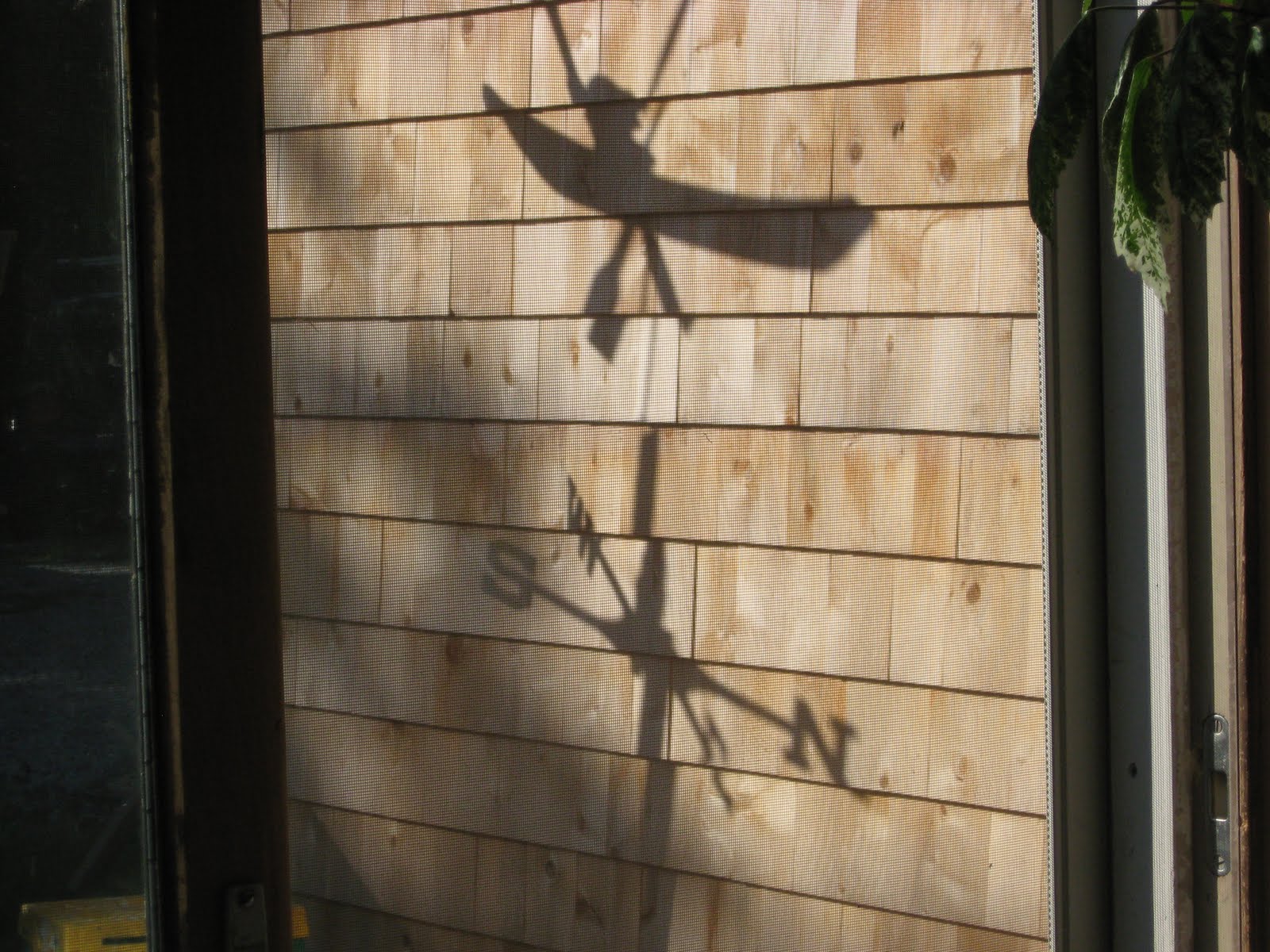
The rower in the dory floats above iron weather vane on cedar shingles of sun-shadow outside glass slider. He's there only early mornings. Ephemeral, yes. Impermanent, of course. Insubstantial, if you must. But -- there.

As long as consciousness exists we will see and experience. No amount of 'believing' will add or subtract what is actually part of sentient apprehension. Things are 'there' for us -- as we return the favor by acknowledgment and appreciation.

I look up to the sky while at end of driveway at edge of road. There are a lot of celestial bodies above. None of which I have imagined. With or without me, they are there.

I am willing to allow that 'God' is not what I nor anyone thinks God is.

I have no idea that contains the matter.
Chuang Tzu And The Butterfly

Chuang Tzu in dream became a butterfly,
And the butterfly became Chuang Tzu at waking.
Which was the real—the butterfly or the man ?
Who can tell the end of the endless changes of things?
The water that flows into the depth of the distant sea
Returns anon to the shallows of a transparent stream.
The man, raising melons outside the green gate of the city,
Was once the Prince of the East Hill.
So must rank and riches vanish.
You know it, still you toil and toil,—what for?
(Poem by Li Po, 701-762 / Chu / Kazakhstan)
Matter re-forms my life.

Life re-forms matter.

Form, they say, is emptiness.

So, it is, we go on.

What for?

Ha!

Wednesday, September 16, 2009

On cushion this morning, circular rug with rings of circles, the silence of it.

Five phrases: no burden, no barrier, no beginning, no boundary, no bullshit.

Spacious and content,
Without confusion from
Inner thoughts of grasping,
Effectively overcome habitual behavior
And realize the self
That is not possessed by emotions.
Be broad-minded,
Whole, without relying on others.

- Hongzhi Zhengjue (1091–1157)
Five no's.

Afterwards, coffee, egg, muffin, sausage, and cantaloupe.

Tuesday, September 15, 2009

What do you say?

Poet Wallace Stevens in his poem, 'Evening Without Angels,' writes:
Where the voice that is in us makes a true response,
Where the voice that is great within us rises up
,
We wonder: What voice? We ask: Is it the voice of God? Or is it my own voice? Some ask: Are these two questions with two answers, or one with one?
The practice of true reality
Is simply to sit serenely
In silent introspection.
When you have fathomed this,
You cannot be turned around
By external causes and conditions.
This empty, wide-open mind
Is subtly and correctly
Illuminating.

- Hongzhi Zhengjue (1091–1157)
Sometimes sorrow is our sole comfort. A diffuse sorrow. Nothing that can't fade with the end of downpour when sun comes suddenly through and day is different than it was. Still, sorrow seeps into earth even as quiet resides with fallen chipmunk prey to awkward facticity of cat's teeth.
The Changes In Santa Ynez
Through the last long weeks of summer
I waited for fall,
though you’d hardly know it,
so subtle here,
a tinge in the vineyards,
stately old tarantula crossing the road
on his way to die for love.

Now it’s come, and I’m hardly aware,
a paler blue in the sky,
the blanket I pull up
from the foot of the bed at three a.m.,
the familiar books of longing I turn to,
the rustle of leaves I’ve walked through before

(Poem by Dan Gerber, b. 1940)
On mountain trees myriad leaves quorum talking about autumn as summer takes a final lap. Like sensitive souls gathering to give heart a place to express its loving concern, the conversation is about ordinary things -- red squirrels, last night's wind, the way rain keeps wet all June. They talk of things as flutter of chickadee arrives at branch. They will become a different form of emerging earth soon enough. They do not talk much of that. What is beyond is what is within.
The holy old man [Simeon] said of the infant Jesus: "He has been established as a sign which will be contradicted." He went on to say to Mary: "And your own heart will be pierced by a sword." (--from A sermon of St Bernard, Office of Readings, on Feast of Our Lady of Sorrows)
Yesterday Cross, today Sorrows -- two days of ancient metaphor -- and we stand up again and cross over the terrain of daily life with all that accompanies. A man recently talked about traveling with anger. We were reading The Art of Just Sitting at table practice. The night became itself.

We go on with what we are, what we carry, thinking about all the misalliances and misapprehensions stuffed into rucksacks, strings loose, slung on shoulders. Jesus and Mary are touchstones. It's easier to talk of them, it seems, than our own personal and intimate experience. Over airwaves and over our shoulders is heard Jesus this Jesus that Jesus everywhere. In other circles it's Allah this Allah that Allah everywhere. Our religious references give us room to sequester ourselves off to the side while fronting argument and dispute in matters that deflect our true and troubled heart and mind.

We ofttimes use religiosity and spirituality to prop us up as if glue were a protection in autumn's transforming transition.
Evening Without Angels

the great interests of man: air and light, the joy of
having a body, the voluptuousness of looking.
—Mario Rossi


Why seraphim like lutanists arranged
Above the trees? And why the poet as
Eternal chef d'orchestre?

Air is air.
Its vacancy glitters round us everywhere.
Its sounds are not angelic syllables
But our unfashioned spirits realized
More sharply in more furious selves.

And light
That fosters seraphim and is to them
Coiffeur of haloes, fecund jeweller—
Was the sun concoct for angels or for men?
Sad men made angels of the sun, and of
The moon they made their own attendant ghosts,
Which led them back to angels, after death.

Let this be clear that we are men of sun
And men of day and never of pointed night,
Men that repeat antiquest sounds of air
In an accord of repetitions. Yet,
If we repeat, it is because the wind
Encircling us, speaks always with our speech.

Light, too, encrusts us making visible
The motions of the mind and giving form
To moodiest nothings, as, desire for day
Accomplished in the immensely flashing East,
Desire for rest, in that descending sea
Of dark, which in its very darkening
Is rest and silence spreading into sleep.

. . . Evening, when the measure skips a beat
And then another, one by one, and all
To a seething minor swiftly modulate.
Bare night is best. Bare earth is best. Bare, bare,
Except for our own houses, huddled low
Beneath the arches and their spangled air,
Beneath the rhapsodies of fire and fire,
Where the voice that is in us makes a true response,
Where the voice that is great within us rises up,
As we stand gazing at the rounded moon.

(Poem by Wallace Stevens, 1879-1955)
The voice within us -- the voice that is great within us -- is asking a new question. It asks: What am I? What are you?

From a small silence comes a quiet sound: "I am the within."

All these years the small quiet voice has been in the gently moving stillness.

It is. And we are. Le meme chose. The Itself.

What am I? I am the not-other-than voice that is gentle and great, moving and still, within and always within. This is the ne (non) plus ultra: (i.e. "Nothing further; the uttermost point; perfection.")

This is what I am. This is who we are.

All sorrow, all joy. All suffering, all healing. All uncertainty, all peace. It is here we find one another. As we are. Included. Welcomed.

Nothing other than.

As leaves on branches all along the path test the air.

Readying.

Monday, September 14, 2009

And you?
What are they asking when they say, How do you feel?

When you ask accomplished teachers how they are, they always say, “Good, good, very good” — always good. Many people say that they feel dishonest saying they are good when in fact they have problems. But what we are talking about here is developing a fundamental sense of strength and well-being. Wouldn’t it be better to associate our mind with that rather than with all the fleeting emotions and physical sensations we experience throughout the say? What is the point of being honest about something so fleeting and impossible to pin down? If your well-being is so dependent upon emotions and physical sensations, you will have little opportunity to say, “I am well.” So when people ask how you are, say, “Good!”

— Dzigar Kongtrul Rinpoche, from "Old Relationships, New Possibilities" (Tricycle, Winter 2008)
The premier tennis players finish two weeks of tournament in New York. The Argentine beat the Swiss and took home a new car and 1.8 million dollars. He's twenty years old.

On the news an actor has died. A cable network star is calling the president someone who hates white people. The elected people in congress see an advantage in disgracing their office with mute assent of the folly.

It is not easy to cheer oneself through the day. Still, things are good.

I read about someone attempting to prove there is a God because he saw lights while teetering on the verge of death. Maybe the 'out of body' experience talked about might better be characterized as an 'outer body experience.'

There is no separation.

We share the particles of our bodies and breath.

It's hard not to feel the desperation that vibrates in another's bones in ones own bones.

Even the tenderness is felt.

Who are we?

And what are we doing here?
How can we ever lose interest in life?
Spring has come again
And cherry trees bloom in the mountains.
- Ryokan (1758-1831)
Soon, Autumn.

The falling time.

Sunday, September 13, 2009

The wind filled cabin tonight. It sat on each cushion not occupied. It rang bells and bamboo chimes. It walked slowly in circle with the rest of us.

Shikantaza, or, just sitting. Or just walking. Just eating. Just watching. Just lying down.

Nothing but what you are doing.
I sought Zen from temples and teachers,
Then found it along the way of Tsao His
Inside this moment forever.
When walking now, I walk Zen.
When sitting, I sit Zen.
Talking, quiet; moving, stillness,
The calm within.
- Hsuan Chyuen (655–713)
From sidewalk in front of St Francis Church in Belfast I joined my hands together and bow to Father Joe as the priest stepped out door after his last mass at the parish. He has handkerchief to his face. The people are singing final hymn. He holds up his hand gesturing to my direction saying, "Thank you Bill." (I'm surprised to hear my name.)

Things change. Nothing remains the same. Everything returns in a different version of itself.

And so, we practice being life.

Say goodbye. Say hello.

And go. Or stay.

As is asked of us.

Just this.