Saturday, November 21, 2020

co (m) ments

 A comment following New York Times article on Sir Anthony Hopkins:

call me al
california Nov. 19

This period of life had been called "second childhood." before we had a taxonomy of dementia that dehumanized this stage. Hopkins and I are among the lucky ones, both in our eighties who, far from suffering, are shedding life's disappointments to relish the comfort an infant feels in a loving family. My short term memory is sporadic, reminding me of the myriad jokes such as "the good thing about getting Alzheimer is you can hide your own Easter Eggs" This is actually true, but it also means that finding your glasses can be frustrating, as are the names of long time friends. On the beneficial side is that the residue of cognitive function allows the possibility of focused thinking unfettered by considerations of societal opprobrium. Those who are quite lucky, facilitated by a loving relationship, can relish the pleasures of sensual emotional comfort that are transformative. For me it even allows acceptance of the reality of our nation and the world being in the hands of a single individual. Anger isn't in my repertoire, nor is hatred, as the resolution is out of my control. Too many people suffer in this final stage of life, as the industry of "eliminating Alzheimers" thrives. Suffering during this stage of life would be diminished if no longer a source of profit for those marketing costly placebos.


(—re. article, “Anthony Hopkins Makes It Look Simple. (And Maybe It Should Be.)”, New York Times, by Kyle BuchananNov. 19, 2020)


Followed by:


Ama Nesciri  Camden Maine 


He draws me in. I am mesmerized by his work.


I remember him in “Instinct” (1999), a remarkable film loosely based on the novel “Ishmael”. He is riveting as the traumatized and intensely committed anthropologist Dr. Ethan Powell. 


Quote:” We have only one thing to give up. Our dominion. We don't own the world. We're not kings yet. Not gods. Can we give that up? Too precious, all that control? Too tempting, being a god?” (Hopkins as Ethan Powell)


In all his work he makes me smile with gratitude that I’ve been able to view his talent and unsurpassable presence throughout career and characters.

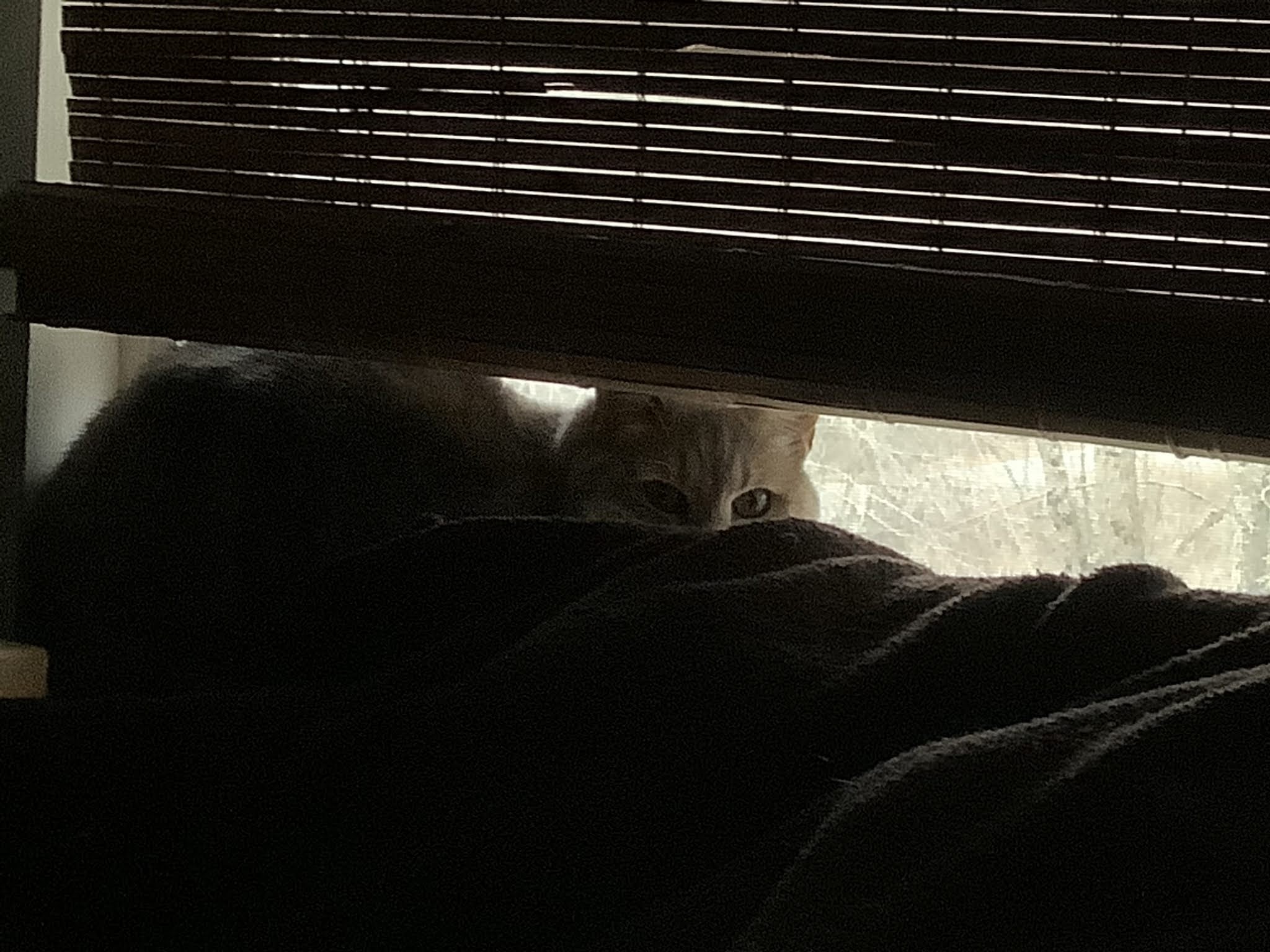
Friday, November 20, 2020

think being watched

 I am uncertain what to say.

Both Buddhists and Vedantists agree that this subtle ‘I’ should be given up if you want liberation, but disagree about the terminology and how belief in this ‘I’ can be annihilated. 

Buddhists say: ‘There is no entity at all, no ‘self’ or ‘I’, just a sequence of causatively conditioned psychic and physical processes.’ For the rest they do not talk about an ‘I’. They even disapprove of talking in terms of ‘I’, for instance in a statement like “When we regard the nature of this knowing as being ‘me’ or ‘I’, and hold onto that concept – this is a small view, and it is confused, mistaken.”¹

Nevertheless in Dzogchen, the radical non-dualistic core of Tibetan Buddhism from which the last quote originated, a number of texts have been produced in the past in which the term ‘I’ is used, even with emphasis, to point out the highest principle, as being the ‘majestic creativity of the universe’. In one of the root texts of Dzogchen, the Kunjed Gyalpo, it is stated: 

“I, the creativity of the universe, pure and total presence, am the real heart of all spiritual pursuits”; and
“Because all phenomena are none other than me, I, the all-creating 
one, am the decisive experience of everything.”²

  From texts like these it becomes apparent how comparative the term ‘I’ actually is. The same term that deserves to be disapproved as signifying a mistake, is apparently also used to denote the highest principle.

(—Excerpt from Introduction to: "I” Is A Door: The Essence Of Advaita As Taught By Ramana Maharshi, Atmananda And Nisargadatta Maharaj" by Philip Renard. Scribd.)

I don’t know what to think. 

 I think I am being watched.

when at drug store

Waiting for flu shot

Every chair a zafu

Each aisle for slow kinhin 

One breath following another —

This place of zen practice

Thursday, November 19, 2020

safe, well

The US election is in danger from the defeated president to overturn the loss and reinstate himself for an additional four year term.

COVID new cases in the US, the news station reports, today were 189,000.

Advice from CDC is stay home for Thanksgiving, and no inside gatherings with those outside immediate families.

One name is associated with the above three sentences.

It is not worthy anymore to be spoken or written.

A repugnant individual.

A terrible time.

Still, 

Be safe.

Be well.

what, then, are we to do

as I

live and


breathe


until we

no longer


see one


an-

other

Wednesday, November 18, 2020

wait for it

 I have not come here to be alone

Alone has come here to be me.

When I am nowhere to be found

What is itself alone will be revealed

Tuesday, November 17, 2020

morning

Hope

(arrives)

              just as

Night wanders away

Monday, November 16, 2020

who’s a pessimist

If I were a pessimist I’d take pleasure in the unhealthy state of the country and the unhealthy outgoing incumbent still at the helm.

But I’m not a pessimist.

I’m an unknowing being looking at a set of circumstances, causes, and conditions that suggest an ignorance and spiteful uncertainty at the fate of the 65 days remaining until a new president is inaugurated.

Time to go to war.

Time to disable democracy.

Time to suffer viral illness and die from negligence and inane behavior.

I’m not a pessimist. I’m not. I’m really not.

is what is breathing in

Thich Nhat Hanh has a breathing gatha that is familiar. “ Breathing in, I know I am breathing in.”

This morning I hear it differently:

Breathing in

I Am 

Knowing

I Am

Breathing in.

This is how we know God — by doing what God is doing.

It is a kind of knowing that doesn’t know, but is, what is God’s present activity.

Sunday, November 15, 2020

vishal hriday, all there is, is consciousness

Dirk Vandersloot, the homeopathic doctor, introduced the writings of Ramesh Balsekar to meetingbrook twenty five years ago. We carried The Net of Jewels the year it was published the year we opened the bookshop.

“You have to be there to contemplate the terror of death and your impending absence therewith! Paradoxical, that you must be present first to give rise to the terror of your absence! In fact, the thought of not being here can only be contemplated precisely because you are always here! So death is an idea of absence within your presence!”      (--Ramesh Balsekar)

During one of the last satsangs of Ramesh, he used the term ‘Vishal Hriday’. 

What is Vishal Hriday? It literally translates as ‘Big Heart’. What it actually means is ‘One Heart’. To place it in the context of his teaching, it translates as ‘All there is, is Consciousness’.

Consciousness functions through each one of us; we are instruments through whom the same Consciousness functions. Nobody truly ‘does’ anything, but all events are a happening that had to happen according to the will of God… the Source… Consciousness. There is no ‘other’ to blame, condemn, or hate. When there is no ‘other’ to hate, there is truly no ‘other’. When there is no ‘other’ there is no ‘me’ as well, separate from the ‘other’. When there is no ‘me’ or ‘other’, then everything is all there is – and all is exactly as it is supposed to be in that moment. This is impersonal love: the absence of separation. Impersonal, for there is no ‘other’ separate from ‘me’ to love personally. Living this understanding (not just thinking it) is Vishal Hriday – a total acceptance of ‘what is’: acceptance of people exactly the way they are – including oneself, of situations exactly the way they are, and even of death – the end of the existence of ‘me’ as a separate entity.

Could there be a greater love than accepting whatever life brings in the next moment? Could there be a greater love than accepting people exactly the way they are? Could there be a greater love than not hating anyone? Ramesh used to say, “I’m not telling you to love everyone. All I am saying is, just don’t hate anyone.”

(--from the book Explosion of Love, in The End of Duality, by Gautam Sachdevawriting about Ramesh Balsekar's death)

It was good to know Dirk (d. 2014) and good to read Ramesh (d. 2009).

As it happens, they were good to have happened.

the next buddha, we need to find

These from podcast website Future Primitive.

“It is possible that the next Buddha will not take the form of an individual. The next Buddha may take the form of a community – a community practicing understanding and loving kindness, a community practicing mindful living. This may be the most important thing we can do for the survival of the earth.”

– Thich Nhat Hanh, “The Next Buddha May Be a Sangha”

“Venerating the past in itself will not solve the world’s problems. We need to find the link between our traditions and our present experience of life. Nowness or the magic of the present moment, is what joins the wisdom of the past with the present. When human beings lose their connection to nature, to heaven, to earth, then they do not know how to nurture their environment. Human beings destroy their ecology at the same time as they destroy one another. From that perspective, healing our society goes hand in hand with healing our personal, elemental connection with the world.”

– Chogyam Trungpa, “The Sacred Path of the Warrior”

within youse, between yous

This world is not what it seems. How shall I live in this troubling and mind boggling existence?

As I

Live and

Breathe.

I think of the Kingdom of God as the Really Real (with two capital Rs). That experience of the Really Real—the “Kingdom” experience—is the heart of Jesus’ teaching. It’s Reality with a capital R, the very bottom line, the pattern-that-connects. It’s the goal of all true religion, the experience of the Absolute, the Eternal, what is.

God gives us just enough tastes of God’s realm to believe in it and to want it more than anything. In the parables, Jesus never says the Kingdom is totally now or totally later. It’s always now-and-not-yet. When we live inside the Really Real, we live in a “threshold space” between this world and the next. We learn how to live between heaven and earth, one foot in both worlds, holding them precious together.

We only have the first fruits of the Kingdom in this world, but we experience enough to know that it’s the only thing that will ever satisfy us. Once we have had the truth, half-truths do not satisfy us anymore. In its light, everything else is relative, even our own life.

(—Richard Rohr, Jesus and the Reign of God, Sunday, November 15, 2020)

Dwell

Between

You and me

This and that

Here and there.

Nor will people say, ‘Here it is,’ or ‘There it is,’ because the kingdom of God is in your midst. (– Luke 17:21)

I can hardly wait to learn to read. ‘Midst’ is middle. The kingdom of God is between you. Or, maybe, ‘within youse.’

What

Are we

Creating?

Saturday, November 14, 2020

one last thing

 There’s nothing to be said objectively about God.

God is the inter-subjective awareness of no other.

As is love.

Friday, November 13, 2020

yet we breath

 Our myths try to reveal to us what is beyond factually verifiable knowing.

There is another knowing. This occurs when something is true and takes up residence inside one’s being as would an idea that has not found words to express it.

As if God is breathing. 

A breathing below, above, within, and surrounding what is gathered from oblivion, present as reality taking place, and what is coming to be with each breath.

And we breathe.

No, we don’t know.

Yet we breathe.

And each breath is the opening of mind and heart to what is revealing itself in our midst.

Consider this: 

He has shown you, O mortal, what is good.  

And what does the Lord require of you?  

To act justly and to love mercy      

and to walk humbly with your God.


      (—Micah 6:8, New International Version)

 Breathing throughout.

Thursday, November 12, 2020

what is zen

Zen is seeing oneself everywhere.

As one sees itself within everything.

aισθητικός

write 

oneself,

a poem

zazen within what is becoming seen

Yes

I am

Willing

Let life be what is here what is this as I become (simply, with breath)

Willing

I am

Yes

Wednesday, November 11, 2020

witnessing the decimation of the democratic institutions

It is Veterans' Day. It is Remembrance Day.


The democracy they served and fought for is being held hostage by the current president and his republican crew. 

Former Defense Secretary William Cohen on Tuesday slammed Donald Trump’s administration for acting like a “dictatorship” as the president refuses to acknowledge defeat in the 2020 election. 

“We’re witnessing the decimation of the democratic institutions which the American people have come to expect will be nonpolitical in terms of our national security,” Cohen told CNN’s Don Lemon. 

Lemon asked Cohen, a GOP former senator for Maine who led the Pentagon during Bill Clinton’s presidency, to comment on Secretary of State Mike Pompeo’s refusal to recognize the victory of President-elect Joe Biden.

(--William Cohen, former Maine republican senator, former Defense Secretary, Huffington Post re CNN interview with Don Lemon) 

 This is not a party partisan squabble. This is an undignified feint and possible dangerous threat by internal dissidents to transitional custom and good order following an obvious election outcome. 

“My reaction is the way they are conducting themselves is more akin to a dictatorship than a democracy,” Cohen told Lemon. 

“And I think the State Department has been politicized just like the DOD has tried to be politicized, and what we’ve done to undermine the intelligence community and other agencies,” he added. “I think it’s consistent with what has been taking place for four years now.”       (--Ibid) 

We are grateful for the service and good will of our veterans. We are grateful that warriors come home from war and continue to insist on solid practices of democracy. 


America needs thoughtful and practiced patriots.


We need to replace or hold apart those in political office who do not know how to practice democracy.

Tuesday, November 10, 2020

when a man with integrity dies

 I recall, fondly, reading and listening to him.

“God has spoken to mankind in many languages: through Judaism to Jews, Christianity to Christians, Islam to Muslims,” he wrote. “No one creed has a monopoly on spiritual truth; no one civilization encompasses all the spiritual, ethical and artistic expressions of mankind.”

He added: “God is greater than religion. He is only partially comprehended by any faith.”

(--from Obituary for Rabbi Jonathan Sacks, 10nov20, NYTimes)  

Each of us borrows from his integrity. 

something for students in prison course

THE EDUCATION OF THE WARRIOR


That mind of fearfulness

Should be put in the cradle of loving-kindness 

And suckled with the profound and brilliant milk 

Of eternal doubtlessness.

In the cool shade of fearlessness,

Fan it with the fan of joy and happiness. 

When it grows older,

With various displays of phenomena,

Lead it to the self-existing playground. 

When it grows older still,

In order to promote the primordial confidence, 

Lead it to the archery range of the warriors. 

When it grows older still,

To awaken primordial self-nature,

Let it see the society of men

Which possesses beauty and dignity.

Then the fearful mind

Can change into the warrior's mind,

And that eternally youthful confidence

Can expand into space without beginning or end. 

At that point it sees the Great Eastern Sun.


(--Chögyam Trungpa Rinpoche (Shambhala: The Sacred Path of the Warrior))


the predicament

 After watching on Netflix A Life on Our Planet: My Witness Statement and a Vision for the Future (2020, I remain in awe of both the beauty and the predicament of nature, and an individual man’s witness commitment to the whole of it.

David Attenborough: A Life on Our Planet
David attenborough a life on our planet.jpg
Film poster
GenreNature documentary
Narrated byDavid Attenborough
Composer(s)Steven Price
Country of originUnited Kingdom
Original language(s)English
Production
Executive producer(s)
CinematographyGavin Thurston
Editor(s)Martin Elsbury
Running time83 min
Production company(s)
  • Altitude Film Entertainment
  • Netflix
  • Silverback Films
Release
Original networkNetflix
Picture formatUHDTV 2160p
Original release4 October 2020
Chronology
Preceded byLife in Cold Blood

David Attenborough: A Life on Our Planet is a 2020 British documentary film[1] narrated by David Attenborough.[2] The film acts as a "witness statement",[3] through which Attenborough shares first-hand his concern for the current state of the planet due to humanity's impact on nature and his hopes for the future.[4] It was released on Netflix on 4 October 2020.[5]

 (—Wikipedia)

With someone like Sir David, now age 93, in the world, he, a treasure of experience, compassion, intelligence, and wisdom —  it makes someone like the lame duck occupant of the White House an even more curious player on the planet. 

The film is on Netflix.

Do yourself a favor.

Released on the feast of Francis of Assisi, probably not an unconsidered coincidence.

As for the gratuitous comparison of one great man with that other man, I am guilty of witnessing in one a loving gift of concern for life and wisdom on this planet, and the other, a terrible rift of self-indulgent crass uncaring narcissism tearing decency from its roots tossed on destructive fires of ignorance.

That being said, and comparisons the icky things they are, I am again reminded that it is the whole of nature and the whole of humanity that requires our compassionate wisdom.

Thank you, Sir David! Please stay longer.

Say thank you, Mr. Trump to those who’ve kept you standing...then...Please go away!

Monday, November 09, 2020

something from sunday evening practice

 Amid the noise of jubilation and the noise of grievance, there's a need for grace and compassion.

GRACE - Cultivating Compassion While Interacting with Others, talk by Roshi Joan Halifax, time 12:46

Such important words. 

what you and me can be

                 (a reconciling haiku)

There is no winning

Or losing — there is this, that

And no other — grace

Sunday, November 08, 2020

might I have this dance with you

Half for, half against.

The stuff of democracy —

We’ll have to converse

Saturday, November 07, 2020

there you go

saturday morning work meditation

A piece by Rumi:

This we have now
is not imagination.

This is not
grief or joy.

Not a judging state,
or an elation,
or sadness.

Those come
and go.

This is the presence
that doesn't.

It's dawn, Husam,
here in the splendor of coral,
inside the Friend, the simple truth
of what Hallaj said.

What else could human beings want?

When grapes turn to wine
they're wanting
this.

When the nightsky pours by,
it's really a crowd of beggars,
and they all want some of this!

This
that we are now
created the body, cell by cell,
like bees building a honeycomb.

The human body and the universe
grew from this, not this
from the universe and the human body.


(—from The Essential Rumi)

with all his works and all his pomps

 Yes, we do reject him, yes we do!

It’s a tragedy that it had to happen this way: so many people sick, thrown out of work by shutdowns, ruined by failed businesses and by failing governments, victims of all ages dead. People want to work again – but they need to be given new and better positions in a different kind of economy that’s the basis for a Green New Deal.

It was libertarian individualists and free market fundamentalists that got us into the climate crisis, and now a global public health crisis has exposed their impotence and the baseness of their ideas. Just as they ignored the warnings of the climate scientists, they now endanger their fellow citizens by refusing to listen to the experts in epidemiology.

Libertarian and faux populist leaders are aiming for a replay of the fiasco that followed the last big global upheaval, the financial crisis of 2008: bail out the big industries, and let ordinary taxpayers and ill-paid ‘necessary workers’ foot the bill. The richest 1 per cent are already profiting from the pandemic, and they desperately want to get the train of progress going again so that they can profit even more.6 Lockdowns preclude people from taking to the streets to protest such colossal injustice – but what if enough of us decline to reboard the train?

It’s time to resist ‘return to normal’, for the simple reason that our former ‘normal’ was on course to heat up the planet so much as to render it uninhabitable – or to make it so difficult to inhabit that only a fraction of the current world population would survive.7 The old normal was becoming lethal to the species, but the next normal needn’t be. The International Energy Agency has estimated that all the government restrictions in response to the pandemic could result in an 8 per cent drop in carbon emissions for 2020 – remarkably just what the United Nations Environment Programme says will be necessary every year for the next decade if we’re to prevent a temperature rise of over 1.5oC.8 That’s what we need, and we could manage it if we tried.

(—from Preface to How to Think About the Climate Crisis,  A Philosophical Guide to Saner Ways of Living, by Graham Parkes, c.2020)

Ego te baptizo 

Friday, November 06, 2020

to come

 Of course it is sad that the White House has little interest and no will to restrain or contain the coronavirus.

The current occupant should fold it up and head home.

There’s no sympathy, no fond feelings, for or from the man or his surrounding aides.

We are bereft of affiliatory affection.

It is a desolate realization and a troubling transition to come.

transition

Thank you, Donald Trump, for showing America that only you could lead the faithful few who would benefit from your interests.

Thank you, Joe Biden, for showing America that wide and common interests will be heard and respected under your leadership.

not one could I find

 In middle of night, when not much moves, prayer breathes..

You know how they taunt and deride me;

my oppressors are all before you.

Taunts have broken my heart;

I have reached the end of my strength.

I looked in vain for compassion,

for consolers; not one could I find.

(—from ps.69) 

Prayer is the end. 

Nothing follows it.

Without sound.

Breath itself.

Thursday, November 05, 2020

longing for sanity and good sense

 It is coming down to crumbs and peanut shells.

Doom and gloom, grievance and accusation.

A nation longing for sanity and good sense waits under dripping water.

It is time to go to bed. Compline insinuates itself into prayerful mind.

add+ilucoto

What does it mean to be a writer, asks the philosopher of critical theory?

I wouldn’t know.

What I do know is what I propose for inmate students whose classes are suspended for six weeks due to coronavirus.

We will address the battleground and tension of learning while dispersed with ADD+ILUCOTO.

Auto/dyad didacticism + individual learning understanding conversation together.

A new code of learning for warriors of self/other inquiry.

Wednesday, November 04, 2020

societal collapse

Not difficult to be tired and anxious.

Less easy to cooperate in a collective action.

We vote then run back into our house.

100,000 new cases of Coronavirus today.

The tired and anxious are difficult to soothe.

I must admit, it is curious to still be alive.

the invisible root, passion for the possible

We need imagination: 

 In The Wake of Imagination, Richard Kearney shows that the concept of imagination has a complex genealogy in the Western tradition. In the Platonic corpus, imagination (eikasia) is nothing other than an imitation of the visible world, which is itself a mere shadow of the forms. Against Plato, Aristotle argued that “imagination [phantasia] is the process by which we say that an image [phantasma] is presented to us,” and that “the soul does not think without a mental image.” Imagination, in short, for Aristotle, was the passage between sense experience and reason. Nevertheless, Aristotle agreed with Plato that “imagination is mostly false,” and the Greeks, for the most part, used phantasma as a “reproductive rather than a productive activity . . . [an] imitation rather than origin” (WI, 12).

In a sense, the imaginatio of the Latin writers combines the meaning of the Greek phantasma with the negative connotations of the Hebrew yetzer. The latter term denotes a human creativity whose first use marked the fall of humanity into history. This creativity is a usurpation of the divine Yetzirah, and Adam and Eve’s eating the fruit of the tree of knowledge marked the beginning of time. By this action, humanity not only gained knowledge of good and evil but, just as important, also could remember the past and project itself into the future through its creative activity. The freedom of human beings, Kearney remarks, “to choose between good and evil, and to construct one’s story accordingly, is thus intimately related to the yetzer as a passion for the possible” (WI, 42).

(—from, p.18, Introduction: The Miracle of Imagining, by Peter Gratton and John Panteleimon Manoussakis, in TRAVERSING THE IMAGINARY, Richard Kearney and the Postmodern Challenge, c.2007)

And mourning:

In “On Stories and Mourning,” Paul Ricoeur argues that the notion of sorrow must be added to any discussion of narrative and action. Action, Ricoeur suggests, is coupled not just with narrative but also with “the work of mourning” elucidated in Freud’s essay “Mourning and Melancholia.” Ricoeur extends his meditation on mourning to the contemporary loss of authority in the political field, arguing that we must not “underestimate mourning” at the political level. Mourning, he argues, provides people with an ability to begin again “in such a way that we may overcome obsessive or compulsive repetition.” Marking the careful balance between memory and forgetting, Ricoeur notes that the “invisible root” of any community is the act of telling stories.. (Ibid, p.21)

 In the morning, when imagination and mourning look out over bare trees and November pall, the possibility of sidling closer to each other with radical and intimate affection, upholds the faint but felt realization a new story desires to issue from our deep longing and emerge as nascent origin — to be what we are coming to be.

what to do, now

Grinding coffee beans

English muffin in toaster

Tree in dooryard bare

morning after

 What do you think? 

              Me? 

I don’t know what to think.

                You?

Dawn light over east

Tuesday, November 03, 2020

of wondering listening, owl

 Whoo, whoo, whoo

middle of night

the cold air

carries question

from mountain

Monday, November 02, 2020

ego sum

 May all, 

living and dead, 

Rest In Peace!

final day

Vote and

Veto.


It’s time

to reverse

a mistake.

all souls, her soul, four years ago

For all that has been,  

                   Thank you.  


For all that is to come,  


                              Yes!  


(– Dag Hammarskjold)

Sunday, November 01, 2020

who from their labors rest

all saints suffer fools

with patience forgiving what

idiots hold fast

save nothing, delight everything

Time is what some say 

it is a play without words

a vast blank telling

Saturday, October 31, 2020

freedom at the very beginning

Where to begin? 


Forward


If any of you thinketh to be wise in this age, 

then let him be foolish, in order to be wise. 

For the wisdom of this world 

is foolishness before God... 


—1st Epistle To Corinthians

of Holy Apostle Paul [3: 18-19].

The title of this book demands an explanation. The philosophy of freedom does not signify here an investigation of the problem of freedom as one of the problems of philosophy, for freedom does not signify here an object. The philosophy of freedom means here -- the philosophy of the free, a philosophy, issuing forth from freedom, in contrast to a philosophy of slaves, to a philosophy, issuing forth from necessity, for freedom signifies the condition of the philosophising subject. A free philosophy is a philosophy religious, a philosophy intuitive, a philosophy of sons, rather than of step-sons. The path of this book issues forth from freedom at the very beginning, and does not arrive at freedom merely at the end. It is impossible to deduce freedom from anything, in it is possible to dwell only from the beginning. Divine truth also is impossible to deduce, it becomes manifest like a flash of lightning, wholly given within its revealing. This its firm and unwavering faith consists in this, that truth is given within mystical apperception, that it is impossible to act, impossible to be understood, without having under it a solid footing of the Divine, a Divine foundation, without having graced an assist, being thus instead forsaken and forlorn and sundered off from the universal soul, -- such defines the character of the exposition of this book. Within it there consciously transpires a method of issuing from, and not arriving at, of an issuing from that what is revealed, gleaned as an illuminating light, rather than of arriving at that which still remains unrevealed, unseen and immersed in darkness. This is the path traversed by all the mystic-thinkers...

  (—from, "The Philosophy of Freedom"  (Kl. № 5) 1st English Translation of Nikolas Berdyaev's 1911 book, "Философия свободы", translated by Fr. S. Janos, 2020) http://www.berdyaev.com/FiloSvoboda.jpg

It is our beginning that that many of us fear, not our end.

It is freedom we find frightening, not captivity.

Like the zen saying “seven times down, eight times up” we forget our origin.

Start here.

Friday, October 30, 2020

truth contains therein

 I hear the voice of nature measured with October yellow, mauve, burnt orange. Sitting at picnic table during walk through state park upper circle vacant camping sites. 

 “The sound of a voice* is the harbinger of the truth contained therein.”  

        *(Christian Wiman in Yale conversation with Marilynne Robinson 20feb2020 misremembering quote from George MacDonald’s 1868 England’s Antiphon about George Herbert's poetry in YouTube at 7:35 — MacDonald's word was ‘verse’ not ‘voice.’)

To reference presidential candidates in final days before election alongside beauty of the silence of god, companionship of co-monastic, pre-rain scent of wavering leaves nodding with our conversation— might seem unseemly.

But listen to their voices.

Hear the challenger’s pathos and compassion.

Hear the incumbent’s bathos and pusillanimity.

Both tone and timber, resonance and responsibility, sensitivity and scrupulosity for truth must be the audial authenticity and audacity for our wounded souls in this time in the place wherein we dwell on edge of teetering civilized concern and care for one another.

Signaling what approaches.

We, listening, with profound attentiveness.

Must we verse ourselves with the adverse and perverse before a true voice sounds through?

wu-shin

 The mind of America is antagonistically dualistic.

One to one combat. Eliminate the other.

Wu-shin, no-mind, is healing awakening.

It’s not too late — is it?

Don’t mind me.

Thursday, October 29, 2020

using the etymology of silence

It has been a point of interest that language conceals as much as it reveals (cf. Heidegger). And it has been a long practice to manipulate language to present or represent thought in a way from which thought cannot protect itself.

We are victims of a monstrous irrationality

- which we call 'means of communication' -

but which in actual fact obstructs real communication.

A vast machine which processes 'events' and reduces them to gibberish

in which reality is a total loss."

(- Thomas Merton)

In our current political babble emanating from a desperately chicanerous incumbent there is a more than likely chance that meaning and truth are absent guests in the house of human communication.

 [Gottlob Frege, 1848-1925] presents us with a dilemma that lies at the heart of his lifelong attitude toward language. On the one hand, language is indispensable for us in order to get access to thought. On the other hand, language – because of its sensible character – obscures thought (which by itself is insensible). Thus, Frege saw himself forced to deal with language by way of a continuous struggle – fighting the distortions that are imposed on thought by language, and diagnosing as well as clarifying the misunderstandings that result from these distortions.

But why is language indispensable for thought, and why did Frege think that it is? These two questions are central for an understanding of the rise of philosophy of language in general, and of Frege’s engagement in philosophy of language in particular. They are important because, if it turns out that we cannot find a convincing reason for the indispensability of language for thought, then the struggle with language that Frege is talking about above would not seem necessary for philosophical inquiry: we could just circumvent the obstacle of language and access our concepts and thoughts directly. Historically, dealing with the second question in particular might give us some insight about the extent of Frege’s possible indebtedness, or lack thereof, to earlier conceptions of the relations between language and thought and language as such.

Thus, it would be worthwhile taking a closer look at the two traditional functions of language with regard to thought that Hobbes and Locke distinguished in the context of their respective epistemological reflections. These were: (a) the indispensable assistance of language to memory, or to the representation and recording of one’s own thoughts, and (b) its role as a necessary vehicle of the communication of one’s own thoughts to other people.

(—Internet Encyclopedia  of Philosophy)

The advertising and propaganda forces are in full gear and surrounding our houses breaking in doors and shouting warnings to drop to the floor and submit to their orders to not resist.

Speak now.

Using the etymology of silence, let your attentive emptiness dissolve the insubstantial foolishness of desperate charlatans.

MU!

Say nothing well.

Hear nothing with discerning heart.

“Let nothing disturb you,
Let nothing frighten you,
All things are passing away:
God never changes.
Patience obtains all things.
Whoever has God lacks nothing;
God alone suffices.”

― Santa Teresa de Jesús

May we be happily sufficed! 

Wednesday, October 28, 2020

no recourse to force or compulsion.

Man I know used to say he was an anarchist. I think of him now. Executive Branch a cartoon in a cheap newspaper. Supreme Court a work-crew of cultish guys and gals dismantling laws and propping a criminal demagogue. A senate of ambulance chasers suing citizenry for the remainder of their pocket change. A justice department chanting the mantras of a decadent guru who spoils everything he touches.

Anarchism, he’d say, looks good right now. 

Take it down, he’d say, ignore them, all of them, practice civil disobedience, laugh at them and go about your business, go on with your day. Let them devour one another, rob the treasury, launder money, defame everyone refusing to kowtow, stink up the place.

I wonder where he is these days. What he’d say now? 

Was his rhetoric a passing phase of anger and disappointment? Do we deserve the leaders we have? The court we have? The sadness that covers everything?

I’m not an anarchist.

I’m a zen buddhist.

I’m a contemplative christian.

I’m nobody and nothing.

I’m happy in my emptiness.

And if this country and its artificiality collapses in on itself? (As it certainly will.)

I will continue to practice through the desolation and debris until the nothing that is this country and the nothing that is me becomes the Nothing that is God, a disappearing love, and we disappearing into the coming-to-be waiting for someone, anyone, to wake up and greet another with compassion, loving kindness, and wisdom.

Nothing else exists but compassion, loving kindness, and wisdom.

Nothing else.

No recourse to force or compulsion.

Things as-it-is.

Itself.

Alone.

Where you are that.

Where each is that.

Where what is coming-to-be says: 

I am that

I am!

Tuesday, October 27, 2020

there is one thing

                 (haiku after Ji {Shih} / Ri {Li})*

 As woman reads from

Sandokai, flowers on desk 

transform light to words


a nonagenarian sangha friend sends us a monday poem

won’t you celebrate with me


won’t you celebrate with me 

what i have shaped into 

a kind of life? i had no model. 

born in babylon 

both nonwhite and woman 

what did i see to be except myself? 

i made it up 

here on this bridge between 

starshine and clay 

my one hand holding tight 

my other hand; come celebrate 

with me that everyday 

something has tried to kill me 

and has failed.


 (—poem by Lucille Clifton, “won't you celebrate with me” from Book of Light.  © 1993)

Monday, October 26, 2020

be that

Don’t wear a mask. Die. This is how Republican politicians see things. A sad reality.

I disagree. Wear a mask. Live. Reject the angry hostility that hates you.

Stay home. Vote. Decide to love even those who don’t want any love. Stay hidden. Love without noise.

Nature, said Heraclitus, loves to hide. Be natural. Stay obscure. Be so transparent you are invisible.

That’s it. The source of existence is emptiness. Nothing precedes us and also follows closely. Be that.

they arise and they pass away

 Opening eyes, Monday morning, chill air through open windows. Sound of cars making way east south-east toward Hosmer Pond. 

We are meant to find joy. Each moment. Each breath. Each glance. 

Walking mountain with friends yesterday. He a friend for fifty seven years, we started together on college basketball team. We immersed Franciscan life for five years before New Year’s Eve 1969. We studied simplicity and classical languages along New York side of the Delaware River, contemplation in hills of northern New Jersey, philosophy near beach in New Hampshire, and philosophy/theology in nation's capital in Washington DC. We lived this pax et bonum between Kennedy assassinations. Brothers still, seldom in one another’s company.

The simplicity of it.

I think it is true of many of us that we don’t notice what a gift it is just to be alive. How could we not notice? Well, we sort of take it for granted. But this gift is not without its problems. One of these problems is actually the very thing that made me realize how awesome life is, what a gift it is and how much I appreciate it. That is the fact that life is evanescent, impermanent. It is precious because we can’t just take it for granted. When we realize this, we may wonder, “Well, if my life is a gift, how shall I use it, how shall I give it back, how shall I express my appreciation for it, or completely live this life which is wonderful and evanescent?”

In Zen Mind, Beginner’s Mind, Suzuki Roshi tells the story of the four horses. One of the horses starts to run just seeing the shadow of the whip, before it even touches him. The next one starts to run just having the whip touch the hair of its skin. The third horse starts to run when it really feels the pain of the whip on its skin. And the fourth horse doesn’t really get going until it feels the whip in the marrow of its bones.

I came to practice the first time I almost died. The second time I almost died, I really came to recognize what a joy it is to be alive.

What is this whip? This whip is just that evanescence of life, just that teaching of impermanence. One of the Buddha’s most significant teachings is to hold up impermanence for us to see, but actually it is just how things are—anything, anytime, anywhere. There is a Pali chant which expresses this:

All things are impermanent
They arise and they pass away.
To live in harmony with this truth
Brings great happiness.

If you see how things are, “things as-it-is” as Suzuki-roshi used to say, you see that they arise and they pass away. The trick is to live in harmony with the way things actually are; our suffering comes from wanting things to be different than they are

(—from, This Life, Which is Wonderful and Evanescent,  BY BLANCHE HARTMAN| JANUARY 14, 2019, LION’S ROAR)


We take time to speak, the four of us, at brunch on porch warmed by sun going lower in October sky. Politics, spirituality, COVID, health, dogs, yogurt with fruit, eggs with cheese and bacon, bread with peanut butter and marmalade. 


Two cats circled feet. 


Senator King of Maine uses phrase “impropriety in real time” about the pushing through of Supreme Court nominee by republicans eight days before election. 


There is a cold pall over the nation. We do not have a sane intelligent president and the country will decide over the next few weeks whether unintelligent insanity is what is wanted going forward. 


Many are concerned. A woman at Sunday Evening Practice said she is frightened. 


There might be left-over coffee in kitchen.


I’ll go see.

Sunday, October 25, 2020

nothing moves

“Get lost,” says the angry voice.


And we do not know where we are. 


”Be here,” says the compassionate one.


And we look around. We’re home.

“The healing is in the return … Not in not getting lost in the beginning.  (Sharon Salzburg)

Yes, we wander.


No, we are never not within our home and at origin.


This morning, light comes up over near hill. 


Clock on wall ticks.