Friday, January 18, 2008

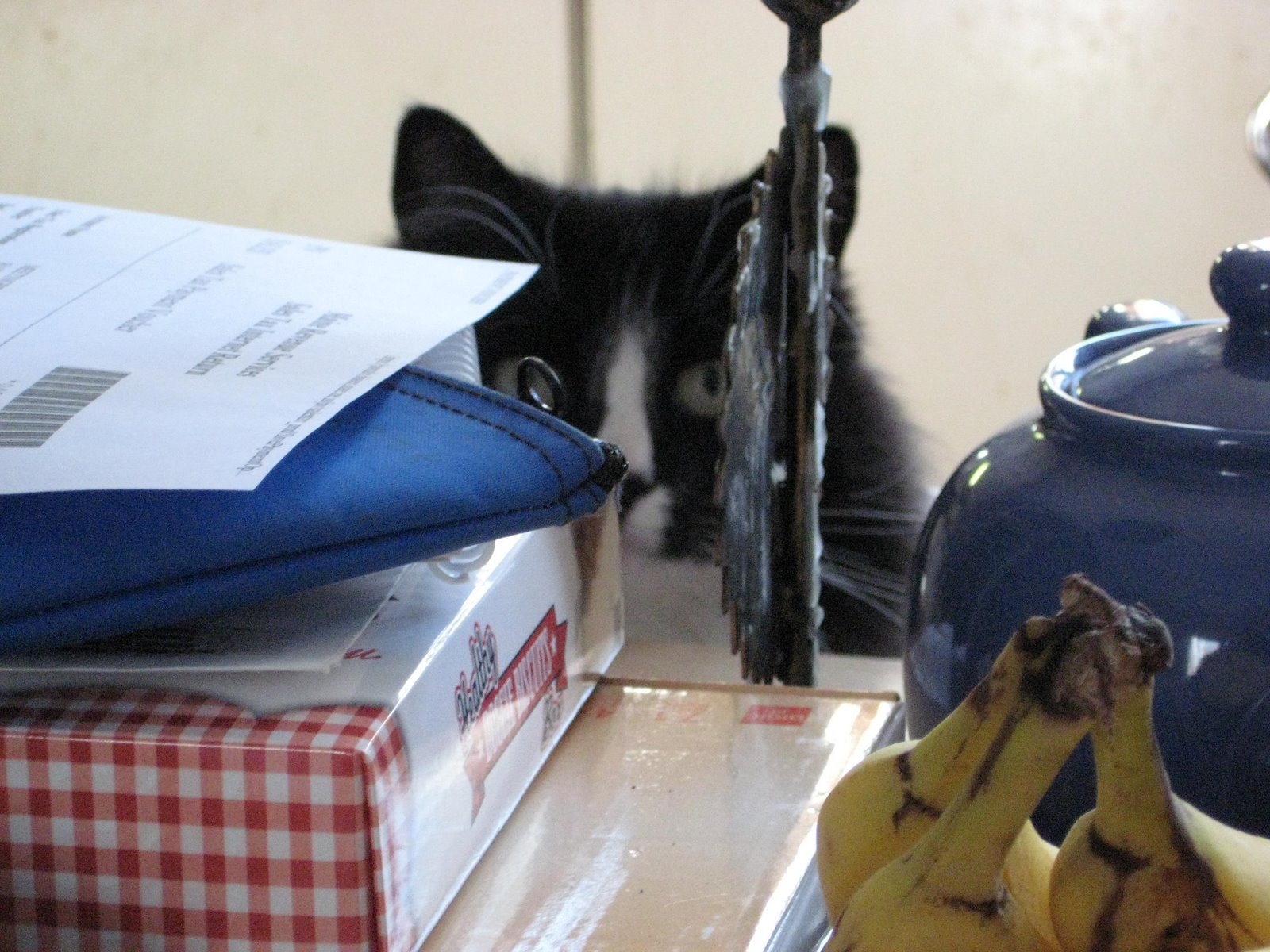
Eat spinach every day. And a banana.
Soundless Sound

I like bamboo as the symbol
Of constancy and simplicity.
I built my house deep within the grove.
Do not strike my bamboo with a piece of brick.
Perhaps the sound might be
Heard by other Zen monks
And cause trouble.

- Jakushitsu (1290–1368)
Chew quietly.


No need to confuse anybody with the suspicion you're interested in health.

Thursday, January 17, 2008

Sometimes what appears to be conversation is monologue.

Someone we know is diagnosed with depressive cancer. He lives alone. His monologue is a conversation. His busy mind conducts every square millimeter of space into a place of inquiry and complaint. We send a message he is in our prayer. And he is.
Good friends, if you would cultivate imperturbability, just whenever you see people, do not see their right or wrong, good or bad, faults or troubles; then your own nature is immovable. Good friends, even though the bodies of deluded people be immobile, yet when they open their mouths to speak of the right and wrong, strengths and weaknesses, good and bad of other people, they turn away from the path. If you cling to mind or cling to purity, this veils the truth.
What is called sitting meditation? In this way there is no obstruction, no impediment. When outwardly, in the midst of all pleasant or unpleasant realms, thoughts do not arise in the mind, this is called “sitting.” Inwardly to see that one’s own nature does not move is called “meditation.”

- Hui-neng (638-713)
In "No Exit" Sartre wrote "Hell is other people." Does that suggest that heaven is no-other? Not in the sense of vacuity, but that if you see "no-other" you are seeing heaven as singular expression of lovely what-is.

St Antony, Abbot (251 - 356) is considered the founder of monasticism.
He lived to be over a hundred years old, and died in 356.
The Gospels are full of wise sayings of Jesus that seem to be ignored, and one of the most poignant of these was in his meeting with that young man who asked over and over again, insistently, “What must I do to have eternal life?”. When, in the end, Jesus told him that if he wanted to be perfect he would have to sell all that he had and give the money to the poor, the young man went away, sorrowing; because he was very rich. What could be more of a waste than that? You tell someone what he has to do, and he is afraid to do it. And yet... 250 years later, St Antony hears the story, and does give away all that he has, and becomes the founder of monasticism. And then again, over 1,000 years later, St Francis of Assisi hears the story, and gives away his possessions (and some of his father’s) and revolutionises Christianity again.
Not all the words that we speak are forgotten, even though we cannot see their effects ourselves. Let us pray that those unknown effects may always be good ones.
(--from Universalis.com)

In the desert there were many monks. There were, no doubt, many mad monks. We're all a bit mad. If someone cries out to God, are they mad? When purpose and meaning seem less and less, are we mad? When no-other appears in the emptiness of just this and this, is that madness?

So many madmen and madwomen! We cry for God; God hears the cry; God is the one crying. The balm and calming resurrecting realization that comes over us time to time is the fact God is no-other. I'd ask what that means, no-other, but it's not meaning nor is it purpose surrounds the realization of true mature no-other.

It's just that everything is itself and, as well, that which is beyond itself. Particular facts, jottings of instances that pretend they're not the whole ball of rubber bands -- when they are.
What's In My Journal

Odd things, like a button drawer. Mean
Thing, fishhooks, barbs in your hand.
But marbles too. A genius for being agreeable.
Junkyard crucifixes, voluptuous
discards. Space for knickknacks, and for
Alaska. Evidence to hang me, or to beatify.
Clues that lead nowhere, that never connected
anyway. Deliberate obfuscation, the kind
that takes genius. Chasms in character.
Loud omissions. Mornings that yawn above
a new grave. Pages you know exist
but you can't find them. Someone's terribly
inevitable life story, maybe mine.
(-- Poem: "What's In My Journal" by William Stafford, from Crossing Unmarked Snow, Harper Collins, 1981.)
No one's fooled.

God is in the details.

Every one of them.

Wednesday, January 16, 2008

I sit quietly.
Listening to the falling leaves.
A lonely hut, a life of renunciation.
The past has faded,
Things are no longer remembered.
My sleeve is wet with tears.
- Ryokan (1758-1831)
To renounce is to give up. "I give up" for a renunciate means letting go of attachment to what is not essential.

The essential is what is core, source, true nature, of itself, in itself. What is essential is no other. Just what is there. Besides that, too many words.

I'd rather be quiet.

Tuesday, January 15, 2008

If we are defined by that which disturbs us, and we find that nothing disturbs us, do we have no definition? Second to that -- is the opposite of the definite the infinite?
When we practice zazen [Zen meditation] our mind always follows our breathing. When we inhale, the air comes into the inner world. When we exhale, the air goes to the outer world. The inner world is limitless, and the outer world is also limitless. We say "inner world" or "outer world," but actually there is just one whole world. In this limitless world, our throat is like a swinging door. The air comes in and goes out like someone passing through a swinging door. If you think, "I breathe," the "I" is extra. There is no you to say "I." What we call "I" is just a swinging door which moves when we inhale and when we exhale. It just moves; that is all. When your mind is pure and calm enough to follow this movement, there is nothing: no "I," no world, no mind nor body; just a swinging door. (--Shunryu Suzuki, Zen Mind, Beginners Mind from Everyday Mind)
There is only breath breathing. Sitting in shadow the meditator contemplates each breath as being just what it is.
Love Minus Zero/No Limit

My love she speaks like silence,
Without ideals or violence,
She doesn't have to say she's faithful,
Yet she's true, like ice, like fire.
People carry roses,
Make promises by the hours,
My love she laughs like the flowers,
Valentines can't buy her.

In the dime stores and bus stations,
People talk of situations,
Read books, repeat quotations,
Draw conclusions on the wall.
Some speak of the future,
My love she speaks softly,
She knows there's no success like failure
And that failure's no success at all.

The cloak and dagger dangles,
Madams light the candles.
In ceremonies of the horsemen,
Even the pawn must hold a grudge.
Statues made of match sticks,
Crumble into one another,
My love winks, she does not bother,
She knows too much to argue or to judge.

The bridge at midnight trembles,
The country doctor rambles,
Bankers' nieces seek perfection,
Expecting all the gifts that wise men bring.
The wind howls like a hammer,
The night blows cold and rainy,
My love she's like some raven
At my window with a broken wing.

(Song by Bob Dylan, Copyright 1965)
We often seem silly -- our sorrows and our seriousness. The fears we hold about loss and disgrace. We worry about not being able to control the finite circumstances of bodily needs -- food, shelter, clothing, transportation, heating fuel, our children.

Our perception is clouded and unfocused. We want someone to show us the way. If we are the way, we want someone to show us ourselves. It is too difficult seeing for ourselves.
"If the doors of perception were cleansed everything would appear to man as it is, infinite." (--William Blake)
On earth.

As it is.

In heaven.

Monday, January 14, 2008

Sometimes silent sitting resembles what could be imagined as death.

It is not death. Nor is death an imagined thing. Silent sitting is only silent sitting. Imagination is something else. It happens of itself. As does, I suspect, death. In the presence of imagination, silence, or death, I am astonished. That I am, or you are, or this is. Astonished!

Wittgenstein said that with death, the world does not alter, but comes to an end. He said that death is not an event in life, that we do not live to experience death. "There are, indeed, things that cannot be put into words. They make themselves manifest. They are what is mystical." (Proposition 6.522, from Tractatus Logico-Philosophicus, by Ludwig Wittgenstein)
Mystical: 1 a: having a spiritual meaning or reality that is neither apparent to the senses nor obvious to the intelligence mystical food of the sacrament> b: involving or having the nature of an individual's direct subjective communion with God or ultimate reality mystical experience of the Inner Light>
(-Merriam-Webster)
Each day we pray for those who are dying, those who will die today, and all those who have died, especially those with no one to pray for or remember them. Then we say the Our Father, asking that what is "as it is" in heaven will be "as it is" also on earth.
When truly sought even the seeker cannot be found.
Thereupon the goal of the seeking is attained,
And the end of the search.
At this point there is nothing more to be sought,
And no need to seek anything.

- Padmasambhava, (Daily Zen)

What are we looking for? Kids on corners looking out for police. Lobbyists looking left and right with their money. Soldier behind automatic weapon acutely aware of every movement. Women and men at red lights taking the only pause of their crowded day. Monk in solitude gazing at nothing.
Which One

I eye the driver of the Chevrolet
pulsing beside me at a traffic light

the chrome-haired woman in the checkout line
chatting up the acned clerk

the clot of kids smoking on the sly
in the Mile-Hi Pizza parking lot

the meter reader, the roofer at work
next door, a senior citizen

stabbing the sidewalk with his three-pronged cane.
Which one of you discarded in a bag

—sealed with duct tape—in the middle of the road
three puppies four or five weeks old

who flung two kittens from a moving car
at midnight into a snowbank where

the person trailing you observed the leg
and tail of the calico one that lived

and if not you, someone flossing her teeth
or watering his lawn across the street.

I look for you wherever I go.

(Poem: "Which One" by Maxine Kumin, from Jack and Other New Poems. W.W. Norton, 2006. The Writer's Almanac)
I like the old phrase: "I'm looking out for you." Someone watching out for us is a useful ambiguity. Will we be found? Will I be protected? Do we thank someone? Or worry they're closing in on us?

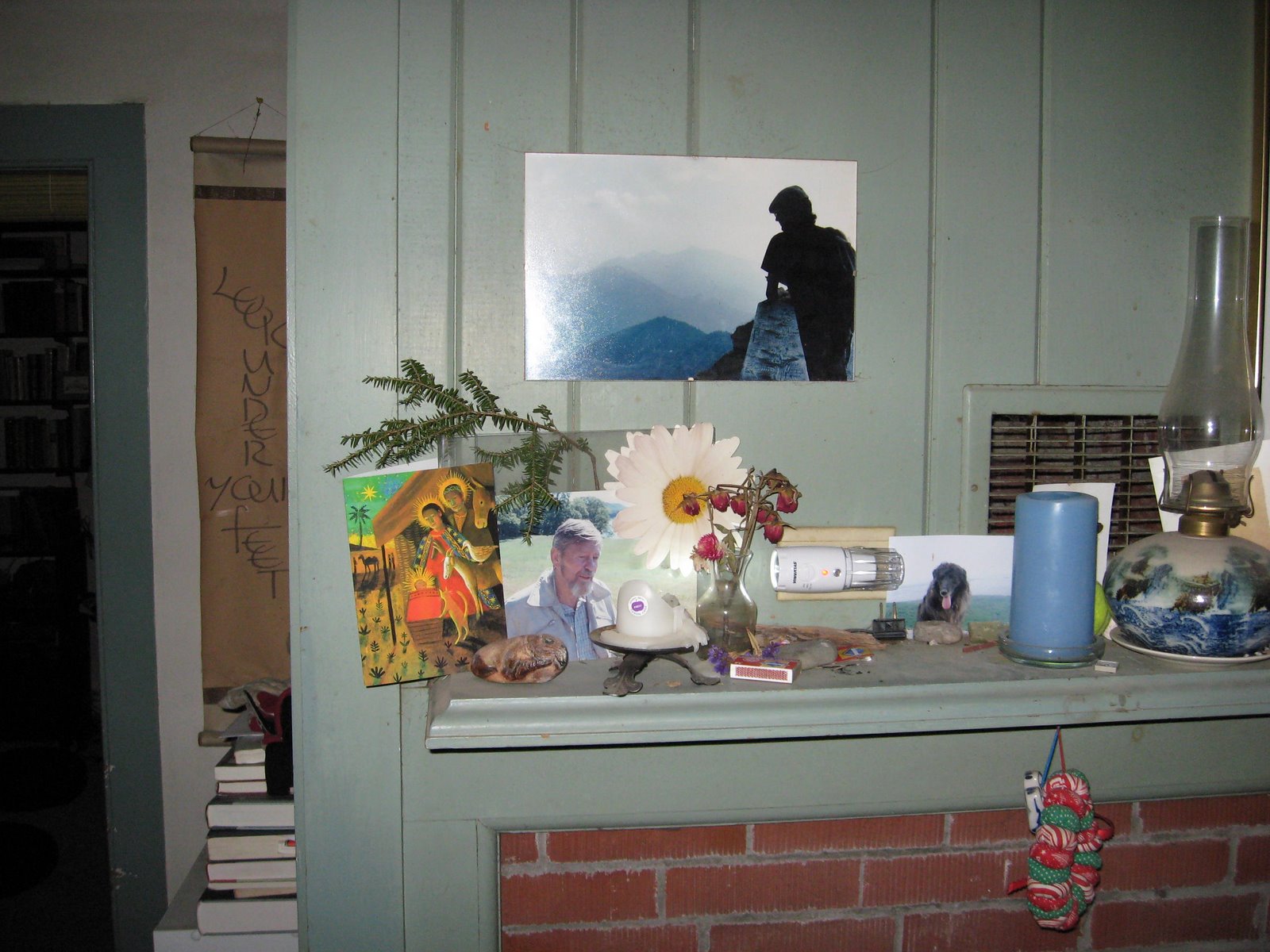
The boy looks out from a mountain in Austria. The dog, from a mountain overlooking Penobscot Bay. The gentleman in the photo looks from a rise over reservoir in Granville. Of the three, only the boy remains manifest.

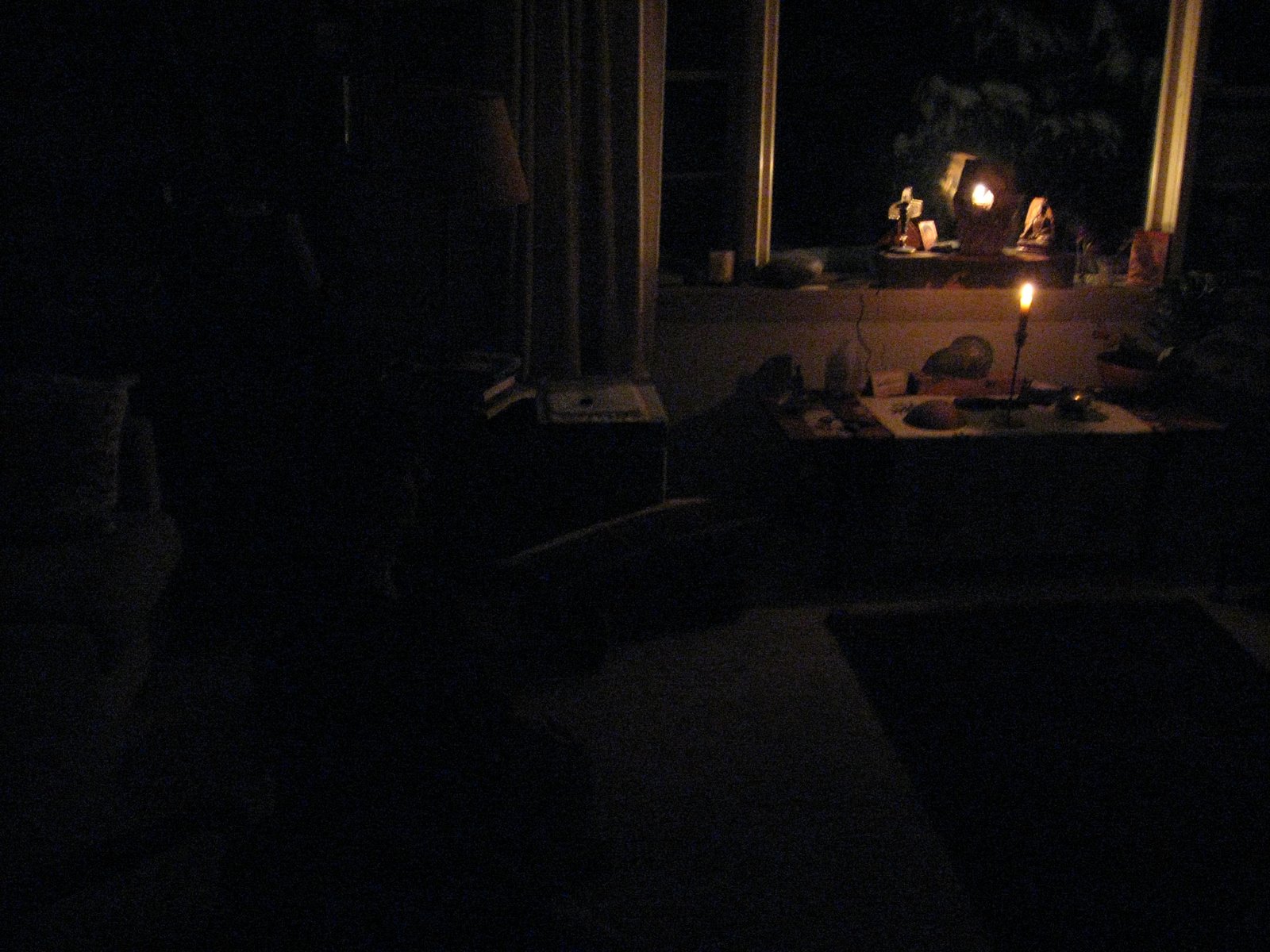
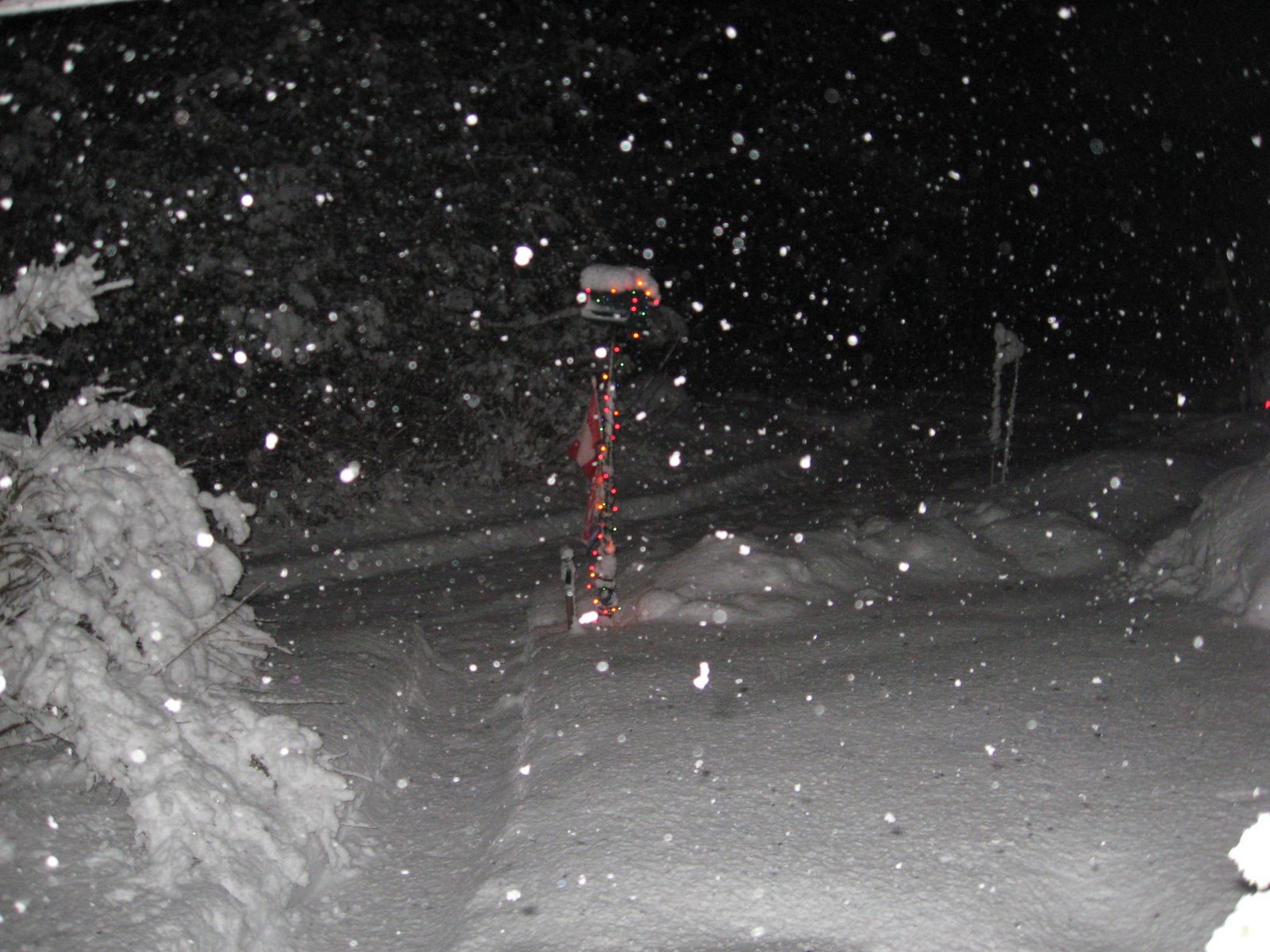
Before going to bed, brief silent sitting in front room. A foot of snow, and still falling.

It's right here, at hand, under foot.

No need to seek anything.

Sunday, January 13, 2008

In the film The Son of Man, made in South Africa in 2006, Jesus says to the man who has just said "I'm going to kill you," something like the following: "How long will it take you?" or, "How quickly can you do it?" The words sound smart and brazen. Maybe they're something else.
Evening mountains veiled in somber mist,
One path entering the wooded hill:
The monk has gone off, locking his pine door.
From a bamboo pipe a lonely trickle of water flows.
- Ishikawa Jozan (1583-1672)
Maybe Jesus is asking the power-brokers how long do they think it would take to kill a radical belief in the goodness of man? How quickly can truth be dispersed and disappeared? Is there enough energy and time in the universe to uproot the essential nature of the cosmos?

They prefer to hear Jesus' question as a smart ass retort. That would fall within their experience and comprehension. But perhaps Jesus is taking the long view. Maybe he sees something beyond their limited vision -- something for those who long for hope.

We like the idea of sturdy trust in the essential foundation of reality. Like the biblical emphasis on the breath-word of creation. The Holy Spirit itself weaving the wholeness we cannot fathom nor can we disassemble.

Evil, some might say, perpetrates division. The person of good heart invites indivision. The sole-seeing wholeness, the soul-seen holiness -- these are the elements of the courage of the Christ in and through time.
Love After Love

The time will come
when, with elation
you will greet yourself arriving
at your own door, in your own mirror
and each will smile at the other's welcome,

and say, sit here. Eat.
You will love again the stranger who was your self.
Give wine. Give bread. Give back your heart
to itself, to the stranger who has loved you

all your life, whom you ignored
for another, who knows you by heart.
Take down the love letters from the bookshelf,

the photographs, the desperate notes,
peel your own image from the mirror.
Sit. Feast on your life.

(Poem by Derek Walcott)
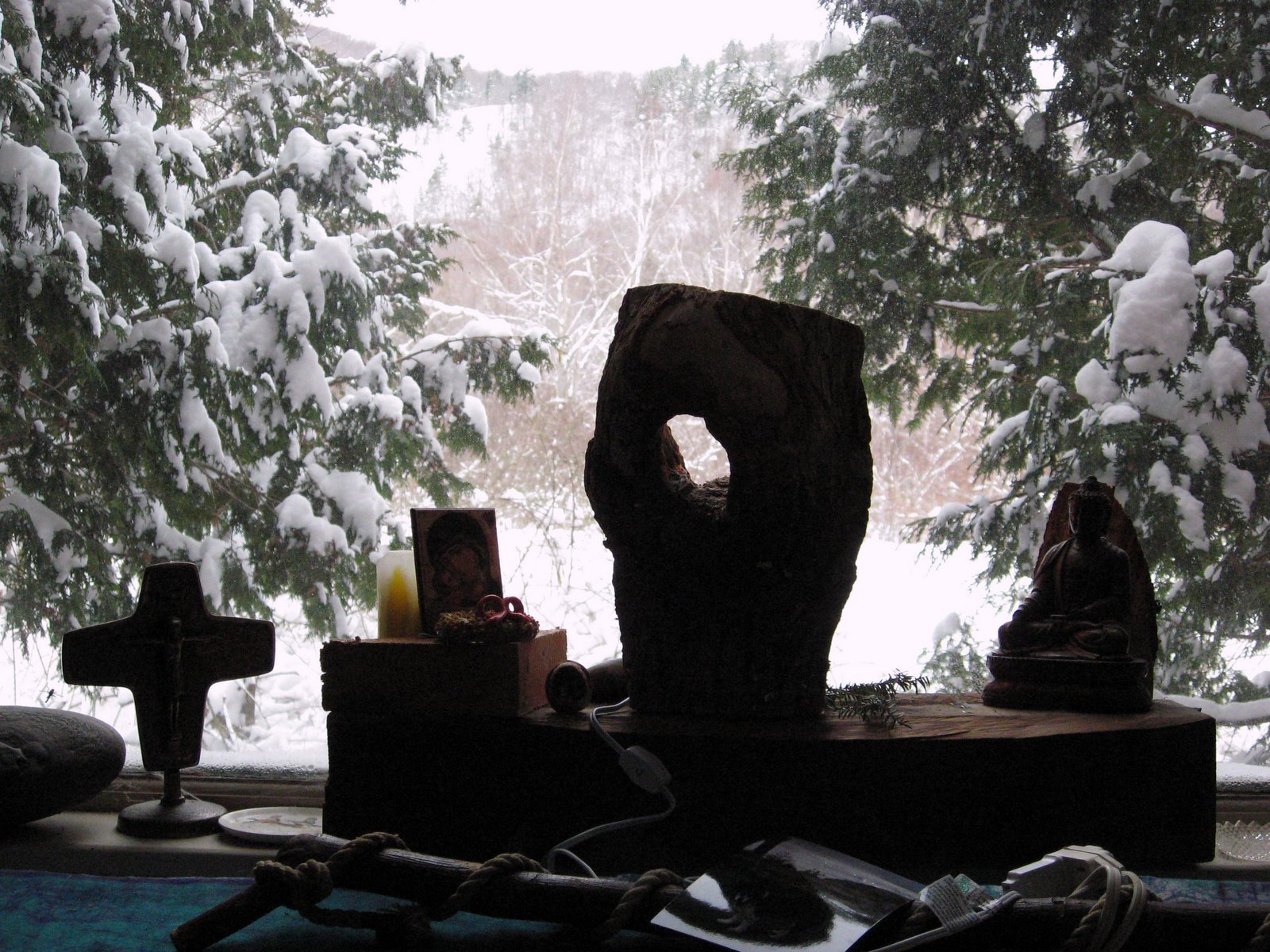
The winter meditation room is set up in front room of house in a flurry before arrival of first car. Chapel/zendo cabin will be for solitary mice the duration of cold months on Sunday evenings. Someone might wish a winter silent retreat. The mice have said this is acceptable. The peace dove 'open' flag is again torn by hard winds but says it will endure its invitation through Maine's 1st quarter of 2008. Zafus brought in make semi-circle with seiza bench and Charlotte's foot-rest-become-sitting-bench turning out from window altar.

We look in and bow each time we descend stairs. We see ourselves in its spacious gift of itself for us.

At table of Sunday Evening Practice, Symphony No. 3, Op. 36, first movement, composed by Henryk Górecki in 1976, using Walcott's poem as Lectio, a lovely interlude of listening.

It would take a very long time to undo the loveliness done unto us with God's love, to unhear the sound of our own name, to undream a dream that is now material flesh and blood.

Snow Monday.

You can't kill life itself. You can only attempt to kill the idea of life itself. The thought of such killing drives men and women into paroxysms of fear of self and others.

Real love steps into itself facing oneself with goodness born of itself.

I'd like one of those.

Indivison, please!

Saturday, January 12, 2008

Out of nothing else, this.

That's my translation.
Genesis 1
1 In the beginning God created the heavens and the earth.
2 Now the earth was [a] formless and empty, darkness was over the surface of the deep, and the Spirit of God was hovering over the waters.
3 And God said, "Let there be light," and there was light.
4 God saw that the light was good, and He separated the light from the darkness.

(--New International Version)
From darkness, light. From nothingness, something. From wholeness, separation? (Can that last one be right!)
There is no help in changing
Your environment.
The obstacle is the mind,
Which must be overcome,
Whether at home or in the forest.
If you can do it in the forest,
Why not in the home?
Therefore, why change the environment?

- Ramana Maharshi

It's all about translation. It's about mind. And the mind we mostly use is a dualistic mind. But what if we employed a non-dualistic mind?

What if there was nothing else? No "other" place, or other thing, no other separate making of two against which to contrast what it is wished to be emphasised, to be the focus of a beneficent act?

This place, this person, this action, this planet, this existence -- is not other than itself. Itself is the core and extension of itself in alternating expression of itself expanding into what it is becoming.

Today, this intuition: Out of nothing else, this.

I'm glad to be here.

Doing this.

Nothing else.

Friday, January 11, 2008

It is late.

Rain ran through the day. Some lightning. Raw. At Rankin's Hardware we pick up stove pipe. Wrong size. Will try again tomorrow. Kept shop closed. Prison first thing: Protective Custody Unit; Buddhist Group; Regular Meetingbrook Education Group. In the hallway one of the men shares Yale Review poem with me. In room talk of Obama and primaries. In BG young man wants to know if once a drug dealer, then getting enlightenment, do you become an enlightened drug dealer? In PC, reading NYTimes Magazine's Lives They Lived, two soldiers who'd published account of Iraq seldom heard, died in IED blast. In RMEG, story of shy Harlem blogger who was fierce in print.
Where subject and object are realized
As a single sphere

Happiness and sorrow mingle as one
Whatever circumstances I encounter,
I am free in the blissful realm
Of self-awakening Wisdom.

- Milarepa
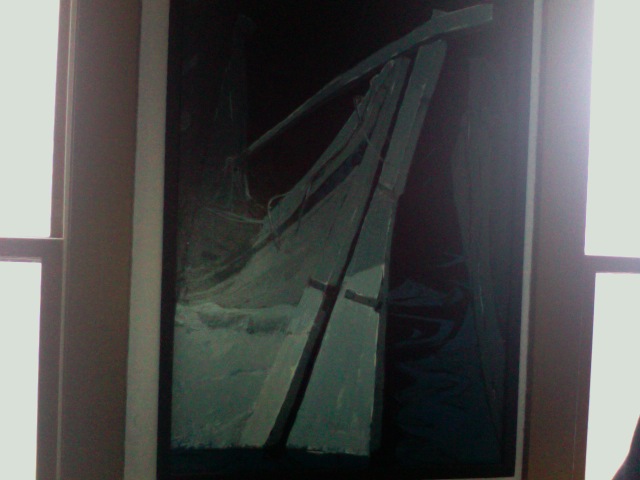
At the shop Sunday, Hugh sat awhile as I started the fire in wood stove. I reminded him of his painting ustairs in the Harbor Room. "I know, I know," he growled, "I want it to stay here for now." We're delighted to have it. From Greece, a rudder from classic sailing vessel, he says it befits our place. "The most important part of a ship isn't its engine nor its guns," he says. "It's the rudder. That's why I left it here." After a bit he gets up to go. "I'm glad I stopped in," he says. "Me too," I say. As he leaves I think about how many people I've known in their eighties. I like them.

If we forget that in every criminal there is a potential saint, we are dishonoring all of the great spiritual traditions. Saul of Tarsus persecuted and killed Christians before becoming Saint Paul, author of much of the New Testament. Valmiki, the revealer of the Ramayana, was a highwayman, a robber, and a murderer. Milarepa, one of the greatest Tibetan Buddhist gurus, killed thirty- seven people before he became a saint. Moses, who led the Jews out of bondage in Egypt, began his spiritual career by killing an Egyptian. If we forget that Charles Manson is capable of transformation, that doesn't reveal our lack of confidence in Manson, it shows our lack of confidence in our own scriptures. We must remember that even the worst of us can change.

Over the past twenty years I've had the privilege of knowing thousands of people who did horrible things and yet were able to transform their lives. They may not have become saints, but I have seen murderous rage gradually humbled into compassion, lifelong racial bigotry replaced by true brotherhood, and chronic selfishness transformed into committed altruism. The promises of every great spiritual tradition are indeed true: Our deepest nature is good, not evil.
(--from, Seven Ways to Fix the Criminal Justice System, by Bo Lozoff, from Renaissance Universal, http://www.ru.org/artseven.html)

So much is the luck of the draw. So, let's not put much stock in how good we are, or how noble, or how we've managed to live an upstanding life. I'm amused by the theater of righteousness played out on the street. It's not that simple. There's something else at work. It might be called luck, or grace -- but spare us the innuendo of holier than thou. Bad news can happen to any one of us on any Tuesday following any Monday. That's when life jump-starts. When chair has been kicked out from under and we swing with the will of something we did not envision -- then?

We'll talk then.

In the meantime, how do you like them Patriots? Who'll take Michigan primary? Do ya think Roger Clemens didn't really get juiced? Will there be a recession?

When the time appears we really have to talk, let's pray we'll have the courage to show up.

It'll be a nice change.

Thursday, January 10, 2008

Thought is seeing what is, as it is, now.
The clouds of sunset
Gather in the western sky,
And over the silent silvery Han
Rises a white jade moon.
Not often does life
Bring such beauty.
Where shall I see the moon
Next year?

- Su T’ung-Po (1037-1101)

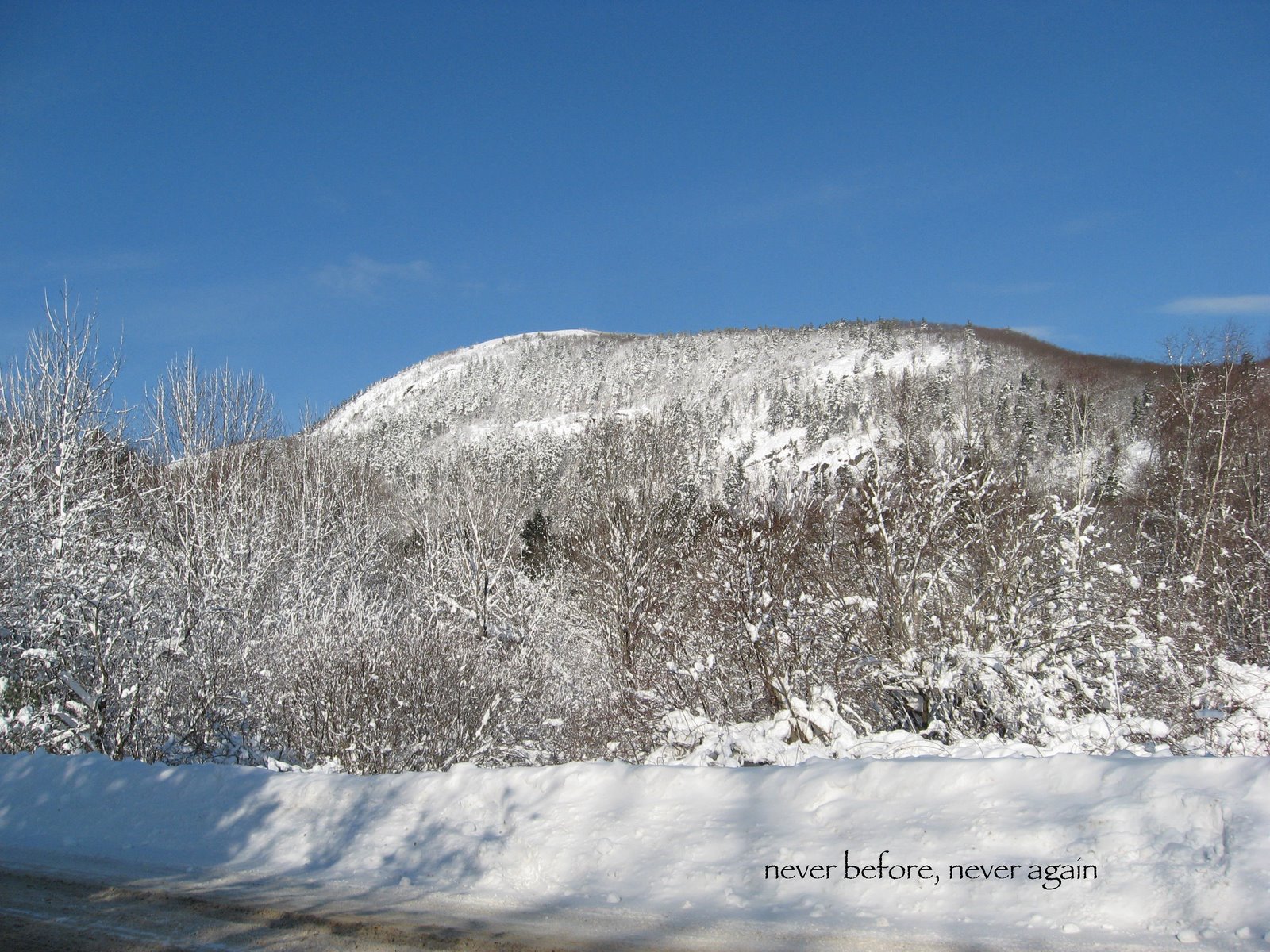
Bald Mountain appears. I look out from dooryard and there it is. Never before. And, the thought occurs, never again.

Sometimes there's confusion about thought. Real thought is akin to pure seeing. And then there are those thoughts which mechanically stagger through and grab at our brains like sticky fingers sorting down feathers into small plastic refrigerator bags.

Pure seeing, or mere seeing, is thought without content. When what is seen is hardened at the edges by erroneous opinion of repetition, that hardened thought becomes a concept or a fixed opinion. Concepts, when hardened further, become beliefs. And beliefs are the separating protection we cultivate against seeing things new and now.

Origin-al thought, (which is prior to ossification and beyond repetition), is seeing what is, as it is, now.

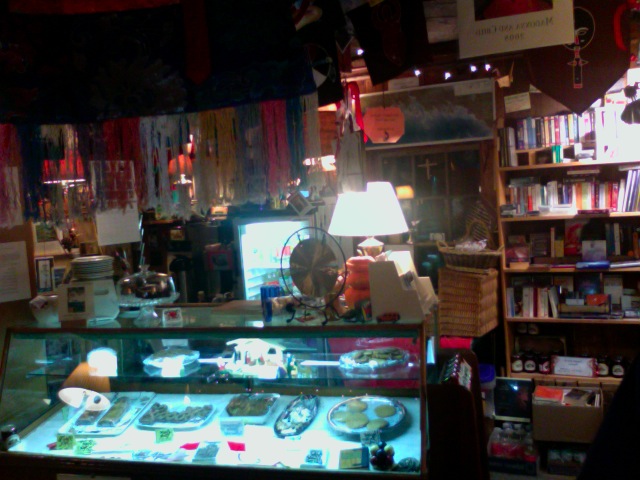
Maria sang the praise of mind and thought. Loren composed a strophe of counter-balance. And the bookshop became a concert hall of something seen.

Saskia makes burgers and salad. She says she can't think of what she'd said from behind the bakery case where she stood with Delia. I'd asked her in the kitchen what she'd said earlier.

Nineteen folks attended Thursday Evening Conversation.

"Something about distractions," she says.

Then, just like that, she says: "I'm dishing out."

A lovely thought!

Wednesday, January 09, 2008

"History," Chris said at the shop after playing a classical piece on the piano, "history is the hope," Think Soviet Union, Rome, Hitler's horror. Now our folly. History remedies. Insanity collapses and goes away. Blood, sorrow, and drought of justice. Still -- the self-assured offenders go away. However cemented in their resolve, whatever the looting, they go away.
Listening to Snow

Cold night, no wind, bamboo making noises,
Noises far apart, now bunched together,
Filtering the pine-flanked lattice.
Listening with ears is less fine
Than listening with the mind.
Beside the lamp I lay
Aside the half scroll of sutra

- Daito
We listen to snow and to 6.77 billion human paths to the One We Call God. (Not to mention however many sentient beings and instances of consciousness there are on this planet alone -- can anyone count that high?)


Practice, for me, is listening. There's no one way. Way is as we are -- many.

Every way is one to follow.

It's not what we think.

Tuesday, January 08, 2008

January turns warm. Snow and ice from last week drip in sunlight. Impermanence takes a bow, turns corner, and disappears.

New moon with new moon energy falls into its own emptiness and we are mute as monks whose prayer has gone missing.

The Way is vast and without favor.
The all-empty Tao is profound.
With an empty heart,
Its nature is easily learned,
Though its power encompasses the cosmos.
With its wisdom one may discern
Life’s great mysteries,
So that the heart may become pure
As the throne of the immortals.

- Loy Ching-Yuen (1873-1960)
Richard's daughter writes to say there are two four year old Siamese cats looking for a home. I say I'll keep a look out. Anyone? Richard's death leaves them wanting.

Candidates for presidency run hard at each other. We choose leaders with the roughshod panache of stock car demolition derby.

Watching film about GDR and Stasi gloom of mistrust. Awkward to imagine something similar here. The cost of security is very very dear. Alan Watts wrote a book entitled The Wisdom of Insecurity.

Sometimes the deepest prayer is the empty silence that surrounds nothing to say.

Nothing other than what is itself.

Our koan: Embodying the dwelling-place of the Alone; Stepping aside to make room for Another.

Is gratitude ever exhausted?

Monday, January 07, 2008

Lobster boat enters harbor. Two seagulls fly low tide cavern southeast. Dripping water from rooftop falls through four bells from Baptist steeple. Red flash from northeast channel marker. Mini-tug Barbi D is postage stamp below covered yachts on the hard above her. Day descends to dusk.
The wind is the breath of heaven and earth.
Into every corner it unfolds and reaches;
Without choosing between high or low,
Exalted or humble, it touches everywhere.
- Song Yu (290-223 BCE)

Winter is its own harbor. Forty three degree overcast melts white into grey and shadow. The kings have come and gone. Whatever it was they saw at end of their search they keep to themselves. As they must. As, too, we.
Imagine a very poor man living in a decrepit little shanty, the only thing he owns in the world. What he does not know is that just beneath his shanty, but hidden in the dirt, is an inexhaustible vein of gold. As long as he remains ignorant of his hidden wealth, this pauper remains in poverty; but when he attends more closely to his own dwelling, he is bound to discover his own fathomless wealth. Similarly, all we need to do is unveil our own nature, and we will find an inexhaustible source of wisdom, compassion, and power. It is nothing we need to acquire, from anywhere or anything. It has always been there. Seen in this light, the Buddha-nature requires no additions. One does not have to memorize sutras, recite prayers or accumulate virtues to create it. All one needs to do is unveil it. (--B. Alan Wallace, Tibetan Buddhism from the Ground Up) from Everyday Mind, edited by Jean Smith, a Tricycle book
The Gospels say the Magi arrive with gifts and leave with mystery. What had they found? We can only imagine. Authors have, composers and painters too. Today, we are left to our own narrative. Scripture doesn't belong to the past. Each narrative is contemporaneous revelation. What is under our feet? What unveiling now?

In conversation the other day I noted a situation that felt unusual. I find my faith is without content. There is no satisfaction of moral statements, dogmatic tenets, or theological beliefs. Yet, there is faith -- if you will -- profound faith. It is a faith that resides on its own.

I suspect everything resides on its own. This is not to infer an absence of community or sangha. I reside on my own. You do. And, (if you will), God resides on God's own. Everything resides on one's own in the same way everything belongs to itself. "Itself" is that which is without separation.

Prayer is the inquiry toward finding one's place within the longing and belonging of each being in existence as itself.

One's own.

Sleeping loon. Dusking day. Deceasing individuals. Melting snow.

To be on one's own -- for today -- is to reside in the reality of no-other.

Attending.

More closely.

One's own dwelling.

Sunday, January 06, 2008

For a year at Friday Evening Conversation we've been reading, enjoying, and conversing afterwards inspired by the writings of John O'Donohue. First Anam Cara, then Eternal Echoes -- which we finished the last Friday of 2007. John O'Donohue died at 53 in his sleep three days ago in France.
A BLESSING FOR EQUILIBRIUM.

Like the joy of the sea coming home to shore,
May the music of laughter break through your soul.

As the wind wants to make everything dance,
May your gravity be lightened by grace.

Like the freedom of the monastery bell,
May clarity of mind make your eyes smile.

As water takes whatever shape it is in,
So free may you be about who you become.

As silence smiles on the other side of what’s said,
May a sense of irony give you perspective.

As time remains free of all that it frames,
May fear or worry never put you in chains.

May your prayer of listening deepen enough
To hear in the distance the laughter of God.

(--By John O’Donohue, from Benedictus or, To Bless the Space Between Us – A Book of Blessings’)
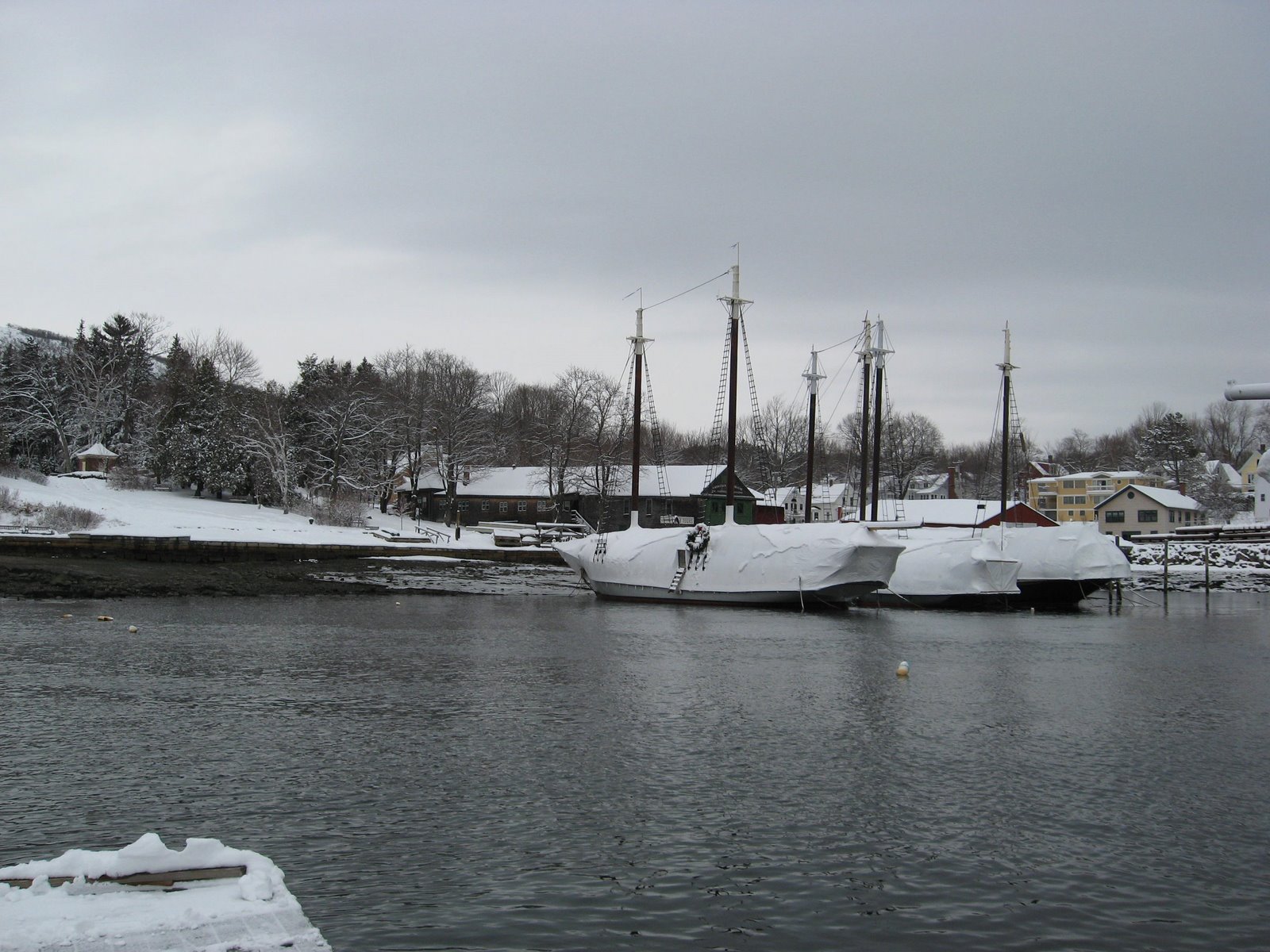
Schooners at head of harbor hibernate. It's like that with death. Passengers are gone. Decks are wrapped and sealed. It is season of rising and lowering tide. A sort of inward and outward breath belonging to the breathing cosmos. Then a gap. Hiatus. A pause with no promise of anything else.

Meister Eckhart called it "Leben ohne warum," or, Life without the question why. No "What now?" No "He's happier elsewhere."

It has been surprising of late to consider that this is it. No need for anything else -- an afterlife, or whatever language is put on an "over there" or "eternal reward." No more. For now, just this life as sufficient. Nothing else. Just the joy of being here, and for so long a time. Just the joy.

At church today, hearing the "now and forever" at end of the Our Father, the realization that these are not contrasting words. "Now" and "forever" are the same reality.

I'm happy with nothing else.

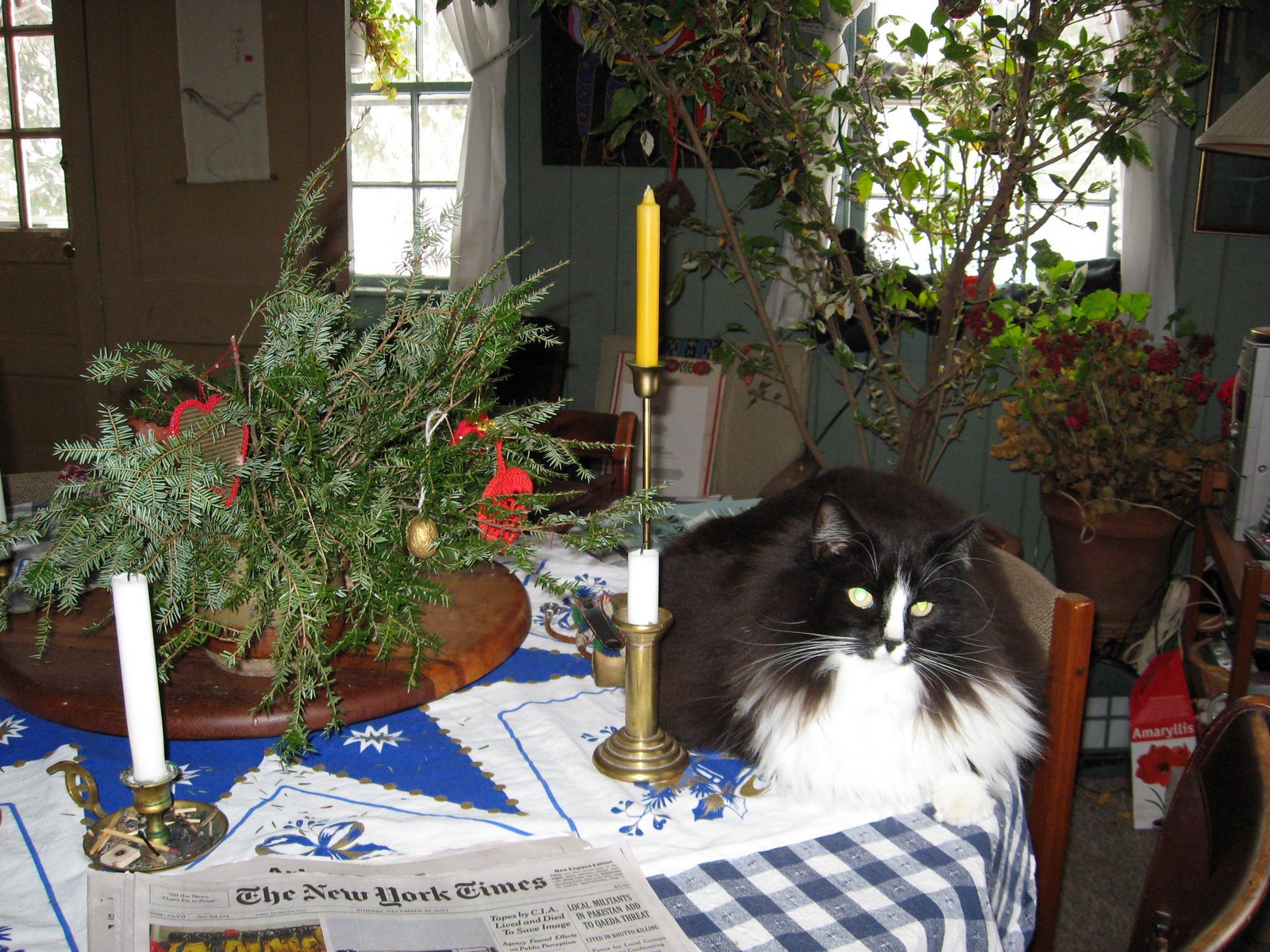
Cat flicks tail on cushion as Saskia crunches numbers. Sunday Evening Practice is done, dishes washed, and cars gone from dooryard.

We're grateful for the gifted words John gave us.

May he rest well. In peace. Where all is wonderfully caring in itself.

A gentle gratitude of laughter.

Saturday, January 05, 2008

Why live as miser?

I ask this when misery seems what I cultivate.

As a mean, grasping person I remain enclosed in small notion of self.

Conditioning, without benefit of awareness, isolates and clings.
Patch-robed monks make
Their thinking dry and cool
And rest from the remnants of
Conditioning.
Persistently brush up and sharpen
This bit of the field.
Spiritual and bright,
Vast and lustrous,
Illuminating fully what is
Before you, directly attain
The shining light and clarity
That cannot attach to a single defilement.
- Hongzhi Zhengjue (1091-1157)
When conditioned, be aware of conditioning. Then, perhaps, conditioning no longer rules from hiding.


Curtis Island keeps to itself in outer harbor. From outside edge, there is no harbor, but open bay. Swells lengthen. Depth plummets. There's a sense of basic trust called for, humbly relied upon. Seal and loon eye and vigil the stranger passing. Bell buoy tolls uncounted lifts, alteration, and sway of clappers clanging tide and wind in cathedral sea.

How many ashes of deceased have taken final entry here? Sacred sound invokes stirring solitude. This is why we row alone. This also why even on land the monastic church is home and sanctuary.
But when the kindness and love of God our saviour for mankind were revealed, it was not because he was concerned with any righteous actions we might have done ourselves: it was for no reason except his own compassion that he saved us, by means of the cleansing water of rebirth and by renewing us with the Holy Spirit...
(--Titus 3:4-5)
In a poem recalled at Saturday afternoon's Poetry, Tea, and Literature, a line once written: "We are orphans and children of orphans."

Tonight, John 14:18 is recalled: "I will not leave you orphans."

It's not that we're not alone, not that we're not orphans, but it's the appearance or non-appearance of a comma.

We might be alone. We might be orphans.
(Here insert comma.)
"I will not leave you, alone." "I will not leave you, orphans."

Like nearing bell buoy in vast openness of water, we are surrounded by Presence-Itself too profound for our ability to grasp.

No meaning. No grasping.

Presence.

Itself.

Friday, January 04, 2008

Reading opening pages of Pilgrim at Tinker Creek at shop. Two women come in. They buy the book. We'll have to order more for next week.
A solitary winter lantern
Casts a feeble shadow
Wind blows through
My flimsy hut and
Covers me with snow
I remember sitting
Cross legged on Wutai;
A makeshift door amid
The thousand year old ice.
- Han-shan Te-ch’ing (1546-1623)
Prison this morning conversing about theater and drama -- the acting of everyday, staging dialogue that emanates from...where? What playwright? Who is fashioning the scenes?

The shop is a warm hearth. Former students, the irregulars, some drop-ins, and wondering conversation about the water bug and the deflating frog. When you no longer call nature violent, how speak about the withining of one species and another? After intellectualizing about 'survival' or 'food chain' how do we come merely to see the inner exchange of essence and essence without hardening into objectification?
Never say or do anything except in the name of the Lord Jesus, giving thanks to God the Father through him. (--Colossians 3:17)
What is name but presence?

Irene steps in to say hello. Mark and friend from New York bring back Chinese food. FedEx loads ipod from shipping origin in China (for destination Camden) to the surprise of almost everyone.

In the prison Buddhist gathering, the notion of our own nature as sacred -- the practice everyday of someone asking you (menacingly or dismissively) "Who are you?" and the opportunity to meditate on the invitatory question.

On the board of the scrabble game in art room was the potential of 'pye.'

We are half-wild.

The ice holds.

Thursday, January 03, 2008

What's the difference between 'being here' and 'listening'?
6 Again the LORD called, "Samuel!" And Samuel got up and went to Eli and said, "Here I am; you called me."
"My son," Eli said, "I did not call; go back and lie down."

7 Now Samuel did not yet know the LORD : The word of the LORD had not yet been revealed to him.

8 The LORD called Samuel a third time, and Samuel got up and went to Eli and said, "Here I am; you called me."
Then Eli realized that the LORD was calling the boy.

9 So Eli told Samuel, "Go and lie down, and if he calls you, say, 'Speak, LORD, for your servant is listening.' " So Samuel went and lay down in his place.

10 The LORD came and stood there, calling as at the other times, "Samuel! Samuel!"
Then Samuel said, "Speak, for your servant is listening."

(1 Samuel 3)
We do not yet understand what 'here' means. Nor what it means to be here. These days I am taken by the curious loss of elasticity in my energy. There's a sense of solitude, a hermit-like resting in the near and nigh.

Listening belongs to eyes. Trees on snowy hill. Their very stillness.


Some teachers spend their lives looking at what is listening.
# How does one be a buddha?
There is a simple way to become a buddha: When you refrain from unwholesome action, are not attached to birth and death, and are compassionate toward all sentient beings, respectful to seniors and kind to juniors, not excluding or desiring anything, with no designing thoughts or worries, you will be called a buddha. Do not seek anything else.

(- Zen Master Dogen, Moon in a Dewdrop, edited by Kazuaki Tanahashi from Everyday Mind, a Tricycle book edited by Jean Smith)
What else is there? Only dusk quietly lowering itself to ground. Silver silence, empty branch and twig, nestling snow.

Even in the midst of this lucid silence, one zen master held: You have to say something.

Is 'knowing the Lord' -- life itself listening?

What-is, in itself, listens with what-is surrounding itself.

Twilight.

Wednesday, January 02, 2008

Two days, two storms, two feet of snow. New Year's Eve and New Year's Day are filled with snow and snow.


Maine winter returns. Everything softened by snow. I climb ladder to roof with rake and hatchet, chopping ice dams, removing laden snow. Arms give up, hurting glad to be tired from useful pounding.
It’s about to snow;
Clouds fill the lake.
Tall buildings and terraces
Shimmer and disappear.
Now there are mountains;
Now there are not.
From the rocks flows water clear;
You can count the fish.
In the deep woods there aren’t any people;
Birds call back and forth.

- Su Shih (1036 – 1101)
It is easy to pretend to know the mind of God. Theologies are filled with data mined from that source.

It is harder to assent to the will of God. There's all that paradox and non-sequitor.

Blaise Pascal in his Pensees (#565) writes:
We understand nothing of the works of God, if we do not take as a principle that He has willed to blind some, and enlighten others.
All we can do is muddle along, doing this and that, expecting nothing and not disappointed by anything. Watching comings and goings from the vantage point of whoever we are wherever we are there.

Noting. Merely noting. This eighth day of Christmas.

Nietzsche wrote that : "'Faith' means not wanting to know what is true."

What does it mean to say: We are what is true!

It doesn't mean anything.

It is merely true.

Tuesday, January 01, 2008

Begin with mothering God. Mary did. So must we. Wisdom mothers. So we must.
Hagia Sophia
I. Dawn. The Hour of Lauds.

There is in all visible things an invisible fecundity, a
dimmed light, a meek namelessness, a hidden whole-
ness. This mysterious Unity and Integrity is Wisdom,
the Mother of all, Natura naturans. There is in all
things an inexhaustible sweetness and purity, a silence
that is a fount of action and joy. It rises up in word-
less gentleness and flows out to me from the unseen
roots of all created being, welcoming me tenderly,
saluting me with indescribable humility. This is at
once my own being, my own nature, and the Gift of
my Creator's Thought and Art within me, speaking
as Hagia Sophia, speaking as my sister, Wisdom.

I am awakened, I am born again at the voice of this
my Sister, sent to me from the depths of the divine
fecundity.

(--opening lines from poem, Hagia Sophia, by Thomas Merton, - Written in 1963)


"For him, to live was Christ. And to die, gain." (Thomas Merton, talk on John Cassian to novices, Prayer and the Active Life, at Gethsemane Abbey, early 1960s.)

The nothingness of the world, the emptiness of the world. Once seen, cannot but be looked at. And yet, it is nothing, zero. Merton is undaunted. It is why there are monasteries, why monastics keep looking, why this seeing-through is vocation and practice.
Clear, fresh Lu-yi sake
Warms on my little stove.
This evening sky may bring snow.
Come enjoy a cup with me.

- Po Chu-I (772-846)
We watch Ernesto Cardenal read his poem Psalm 5 on YouTube.
Psalm 5

Give ear to my words, O Lord
Hearken unto my moaning
Pay heed to my protest
For you are not a God friendly to dictators
neither are you a partisan of their politics
Nor are you influenced by their propaganda
Neither are you in league with the gangster

There is no sincerity in their speeches
nor in their press releases

They speak of peace in their speeches
while they increase their war production
They speak of peace at Peace Conferences
and secretly prepare for war
Their lying radios roar into the night
Their desks are strewn with criminal intentions and
sinister reports
But you will deliver me from their plans
They speak through the mouth of the submachine gun
Their flashing tongues are bayonets …

Punish them, O Lord,
thwart them in their policies
confuse their memorandums
obstruct their programs
at the hour of Alarm
you shall be with me
you shall be my refuge on the day of Bomb
To him who believes not in the lies of their commercial messages
nor in their publicity campaigns nor in their political campaigns
You will give your blessing
With love do you encompass him
As with armor-plated tanks.

(--Poem originally written in 1967 by Ernesto Cardenal, Nicaraguan poet, translated by Robert Marquez. It is a re-write of the Hebrew Scripture psalm.)
The 81-year old Roman Catholic priest, sculptor and revolutionary, once remonstrated by the visiting Pope for his work for justice in Nicaragua, carries on his work and art in a way Merton would smile at.

We need both smiles and silence as we enter this new year. When things look bleak both help.

And so we begin again. Last night into new day and new year we chanted the Heart Sutra followed by Salve Regina at midnight after silent sitting.

Wisdom and compassion are loving mothers of God.

We have come here to be alone.

We've come to look through.

We approach the altar.

Attending wisdom.

Monday, December 31, 2007

It's just a numerical progression. Going from 2007 to 2008. Passing from 11:59:59 to 12:00:00. A mere bagatelle.
Another year about to end
In my empty mountain abode;
Rivers and clouds,
Their trails indistinct;
Pines and cedars,
Their nature’s the same.
I arise from my nap
To find the taro roots done;
As the incense fades out,
I finish a scripture.
Who knows that real pleasure
Lies within stillness and silence?

- Wen-siang (1210-1280).
Of course old (auld) acquaintances shouldn't be forgotten. And, yes, it very well could be a happy new year. These things are beneficial musings.

We're with e.e.cummings in his six nonlectures. He said something like: Better worlds, I suggest, are born, not made - and begin with the birthdays of individuals. Let us pray, therefore, not for better worlds, but for individuals.

That's our prayer tonight.

In stillness and silence.

For each one.

Of us.

All.

Sunday, December 30, 2007

Cook (Francis Dojun), writing about Dogen, says that "drinking tea and eating rice" means not killing the ordinary, not saying things are not good enough.
A soaring endlessly curving path,
Every few miles we have to rest.
I look around for my friends.
They’ve vanished in the wooded hills.
Rain floods the pine trees
And flows hushed among the rocks.
There are silent words deep in hill water,
A long whistle over the summits.
When I look at South Mountain
The sun floats white through the mist.
A blue marsh is luminous and clear.
Green trees are heavy shadows, drifting.
When I am tired of being closed in,
Suddenly a clearing and I’m at peace.

- Wang Wei (699-759
Let's not kill. Let's see things as they are and practice allowance.

Robert Creeley's: "Things come and things go -- then, let them," is a koan worth carrying with us.

Eight of us (nine, counting Mu-ge) did silent sitting in front room this evening.

We walked, chanted, bowed, rang bell, and left for middle room -- with reading, silent eating, then round-table shared observations.

Allowing one to be one, two two, and three to be three is a gracious act.

Life is a gracious act.

So are you.