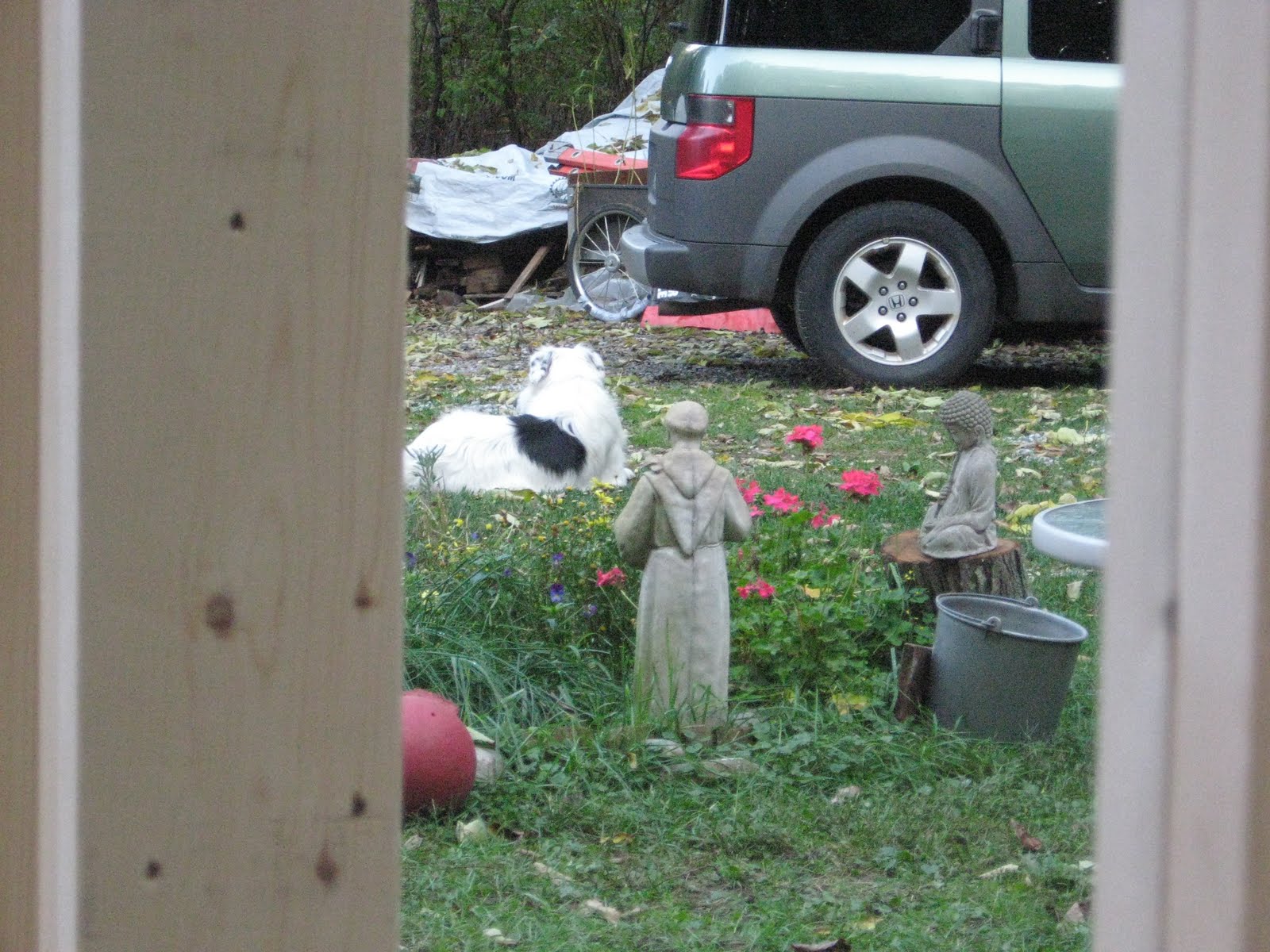
Thursday, November 05, 2009

Too many words about God. Let's keep still. And silent.
On Going to see a Taoist Master

A dog barking and the sound of water;
Peach blossoms heavy with dew.
In these deep woods, deer can be seen;
At noon along the stream, I hear no bell.
Wild bamboo divides gray clouds;
Waterfalls hang from blue peaks.
No one knows where you’ve gone;
Disheartened, I lean against a second,
Now a third pine.

- Li Po
Like the weather: falling cold rain, darkness too soon, an empty landscape.

Maybe up is down. Or, no up, no down. Maybe, up is up, down, down. However said, there is no opposite.
Living is joy, but death can only weep. You see in death escape from what you made. But this you do not see; that you made death, and it is but illusion of an end. Death cannot be escape, because it is not life in which the problem lies. Life has no opposite, for it is God. Life and death seem to be opposites because you have decided death ends life. Forgive the world, and you will understand that everything that God created cannot have an end, and nothing He did not create is real. In this one sentence is our course explained. In this one sentence is our practicing given its one direction. And in this one sentence is the Holy Spirit's whole curriculum specified exactly as it is.

What is the peace of God? No more than this; the simple understanding that His Will is wholly without opposite. There is no thought that contradicts His Will, yet can be true. The contrast between His Will and yours but seemed to be reality. In truth there was no conflict, for His Will is yours. Now is the mighty Will of God Himself His gift to you. He does not seek to keep it for Himself. Why would you seek to keep your tiny frail imaginings apart from Him? The Will of God is one and all there is. This is your heritage. The universe beyond the sun and stars, and all the thoughts of which you can conceive, belong to you. God's peace is the condition for His Will. Attain His peace, and you remember Him.

(--from ACIM, Manual for Teachers, http://courseinmiracles.com/teachers_manual/what_is_the_peace_of_god20.htm/
God's will is wholly without opposite.

What must it be like to be all alone?

All.

Alone.

Tuesday, November 03, 2009

Election Day.

We like to think each vote counts. It does.
Evening mountains veiled in somber mist;
One path entering the wooded hill:
The monk has gone off locking his pine door.
From a bamboo pipe a lonely trickle of water flows

- Ishikawa Jozan (1583-1672)
Cedar shingling north wall of book shop/shed.

Just that.

And hopes for equality and compassion.

Monday, November 02, 2009

Men and women in harm's way in war zones deserve our support. They live in hell.

Those who start wars deserve that hell, not those they send to fight.
What is the test of truth? The Buddha offers a simple formula: Test things in terms of cause and effect. Whatever is unskillful, leading to harm and ill, should be abandoned; whatever is skillful, leading to happiness and peace, should be pursued. Apply the test of skillfulness to all teachings in all your actions. Where is this teaching taking you? Is it moving you in a direction that is wise and kind? One quick test isn’t enough, you know.

You have to keep at it, so that your sensitivity to the results of your actions grows more and more refined with practice. When you’ve done the hard work of asking these questions, then you can decide for yourself whether a teaching, or a teacher, is worth following. And at the same time, you’ve also taught yourself how to live—a learning that can bring with it joy and the energy to go even deeper.

- Larry Rosenberg, from “The Right to Ask Questions,” Tricycle, Fall 2003
Watched "Operation Homecoming" and was touched by the reality they described. Watch this film. It sobers.

It is All Soul's Day.

About war...

Apophasis!

Sunday, November 01, 2009

Bright full moon. Older Canadian Buddhist cardiologist stumbles in to dimly lighted cabin after sitting under weigh. He plops cushion down just shy of dog center circle rug. Moonlight gave shape through shadow soon.
Right among the people coming and going
I have a place t
o stay
I shut the gate even in the daytime
And feel as though I had bought
Wo-chu the great mountain
And had it with me in town.
Never since I was born have I
Liked to argue, mouth full of blood.
My mouth is made fast to heaven and earth
So the universe is still.

- Muso Soseki (1275-1351)
At table he tells us of Catholic Bishop in Antigonish resigning then arrested for bringing child pornography into Canada. When interviewed on television the elder Buddhist said the man was probably in hell these days and there was probably a need for compassion.

The Dalai Lama said his religion is simple -- his religion is kindness.

We should drop everything and forget everything but kindness.

i would opt for religious life with such a rule.

Saturday, October 31, 2009

When someone sparks and sees through the veil, that person sources and is called a founder of something
By myself I remember
Not to seek mind;
The green lamp has already illumined
My lone lamp heart.
Whether in clamor or silence,
I have a clear mirror:
It thoroughly discerns
Pure hearts among humans.
It is not something existing,
That anyone can see and know,
Nor does it not exist:
Such is the lamp of truth.
- Shiba Sonome (1664 – 1726)
We say: They're not from around here, are they?"

They are, indeed, from around here.

"Around here" is exactly where they are.

So are they known as 'saints.'

Friday, October 30, 2009

Enough about us. What can we say about life itself?
Vast and spacious, like sky and water
Merging during autumn, like snow and moon
having the same color
this field is without boundary,
beyond direction,
magnificently one entity
without edge or seam.

- Hongzhi (1091-1157)
Clocks will change. There's worry about Seasonal Affective Disorder. That and H1N1. Not to mention ordinary flu. Then there's the Yankees. So much to fret over!
Despair is marked by a desire to get rid of the self, an unwillingness to become who you fundamentally are.
Called “the Fork” as a child because of his uncanny ability to find a person’s weaknesses and stick it to them, Kierkegaard’s lapidary “Sickness Unto Death” is a study of despair, which in the Danish derives from the notion of intensified doubt. Almost as a challenge to keep out the less than earnest reader, Kierkegaard begins “Sickness” with this famous albeit slightly ironic bit of word play:
"A human being is a spirit. But what is spirit? Spirit is the self. But what is the self? The self is a relation that relates itself to itself or is the relation relating itself to itself in the relation."

(from October 28, 2009, 9:30 pm, Kierkegaard on the Couch, By Gordon Marino, New York Times, Opinion)
Who am I, fundamentally, if I am not a fundamentalist?

And I'm not.

Does that mean I am not?

Soren? Soren?

Now I am dispair-rest and depress-air.

That's the best thing about care.

Thursday, October 29, 2009

The first coming of Christ is the sudden awareness of one-mindedness as experienced by a particular individual -- any individual -- whether you, or me, or Jesus, or Francis, or Dogen, or your mother, or your brother.

The second coming of Christ will be the awareness on the part of each one of us that we have the awareness of one-mindedness -- everyone -- and that there is a choice to be made.

What choice? The choice will be whether to recognize, accept, and act on the awareness of unity-consciousness, or, to opt to remain in the clutches of the illusory ego-self and to fight against the communion of creation as a singular yet particular revelation of truth, love, and service.

It will be the mythic choice of Eden.

A man of the Way comes rapping
At my brushwood gate,
Wants to discuss the essentials of Zen experience.
Don't take it wrong if this mountain monk's
Too lazy to open his mouth:
Late spring warblers singing their heart out,
A village of drifting petals.

- Jakushitsu Genko (1290-1367)
I don't know why the notion continues that what we've called the Godhead, with Trinitarian or Unitarian expression, should be considered to be other than the corpus of human existence. Even in the metaphor of Gospel lore there was a birth into humankind of the very creator of the world. God becomes human.

GENESIS --POEM

The dust has no time to settle.

It is doing creation's work,

becoming all the air there is,

sucking itself into the vortex,

the universe filled with powder.

The light begins to flood fields,

to bring the flowers into focus

in the dusky air that with each moment's

clearing becomes more invisible.

But now the blues darken with rain,

the whites become emphatic,

the leaves' sharp outlines the dawn.

And Adam rises from the mud,

whole, moving his feet slowly

through the clay, as it sucks and

pulls him back, not yet ready to

give him up. His legs move

and then he stands as still as stone,

exhaling what God has breathed

into him, the mud drying on his arms

as he watches himself and wonders

where he was before these arms

were his, these legs, this mud, and each

finger's evidence of particularity.

Had he been there always stirring

the mind of God, waiting for the mandate

to rise from His mesh of images,

to conform to flesh? Adam stands,

warming, thinking his way into the world.

He is the only one, symmetrical,

sufficient, the crux of matter,

the focal point. What does breathing

have to do with it, he wants to know

as he begins to think fox, lynx, otter,

mistle thrush, marmoset. Words

without contexts, names he mouths

as fast they come to him: fairy

shrimp, lark, tamarin, sturgeon.

His respiration fills with utterance,

his mind with images of skunk,

pigeon, ibex, wallaby. Trapped

in the rhythm of naming, he seeks

the spaces between syllables,

desires respite from the phonics'

tumble. The words' roll unthroats

him, makes him listen for inflections

to meet his in more than an echo.

He leans back into the cumulus

of grass and dreams images of hair,

eyes, skin, thinks when he awakens

that his dreams have made her up.

Eve knows she has been there always,

kindling his mind, teasing the hairs

on his arm. She says skitter, punt,

hedge, fleece, speckle. That words

are acts had not occurred to him.

She says jostle, dice, pepper, twine.

When she says stick, pedal, march,

he is stirred to reciprocity, sensing

rationale, antecedent, cogitation. Eve

gazes at the fading sunlight and sees

God above and through. Adam sees

the dust on fire with twilight. His fingers

seek hers. She raises his palm and with

her finger spells her love inside it.

He moves close for her interpretation.

(Poem by Jill Pelaez Baumgaertner, in The Christian Century, C. 1996 The Christian Century Foundation, C.2004, Gale Group)
I'm not wed to belief. Beliefs come and go. The reality of holiness is not dependent on statements of intellectual holdings, but on the partnering middle way, that place where everything intersects and moves through one another in a creativity of wholeness.

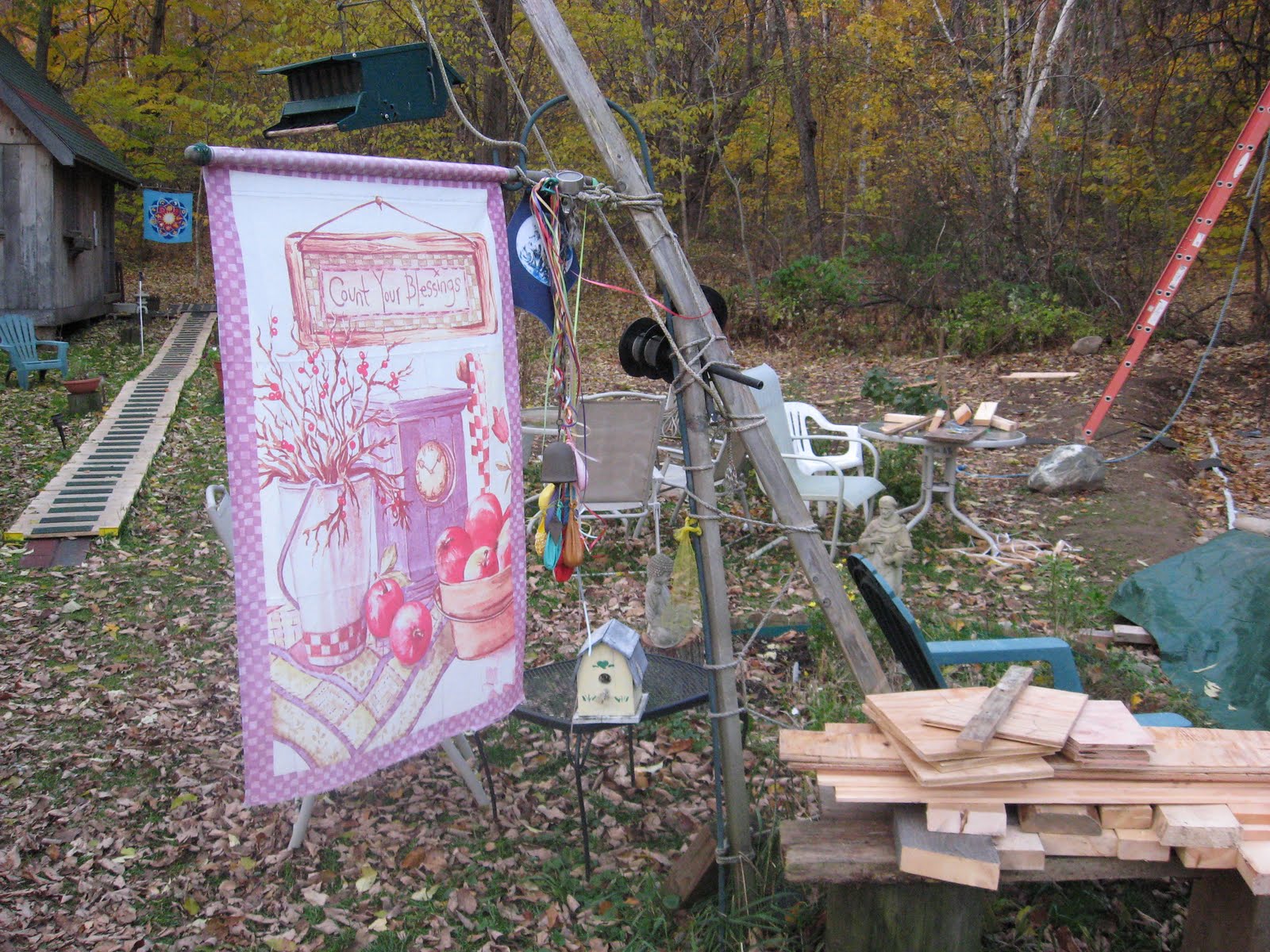
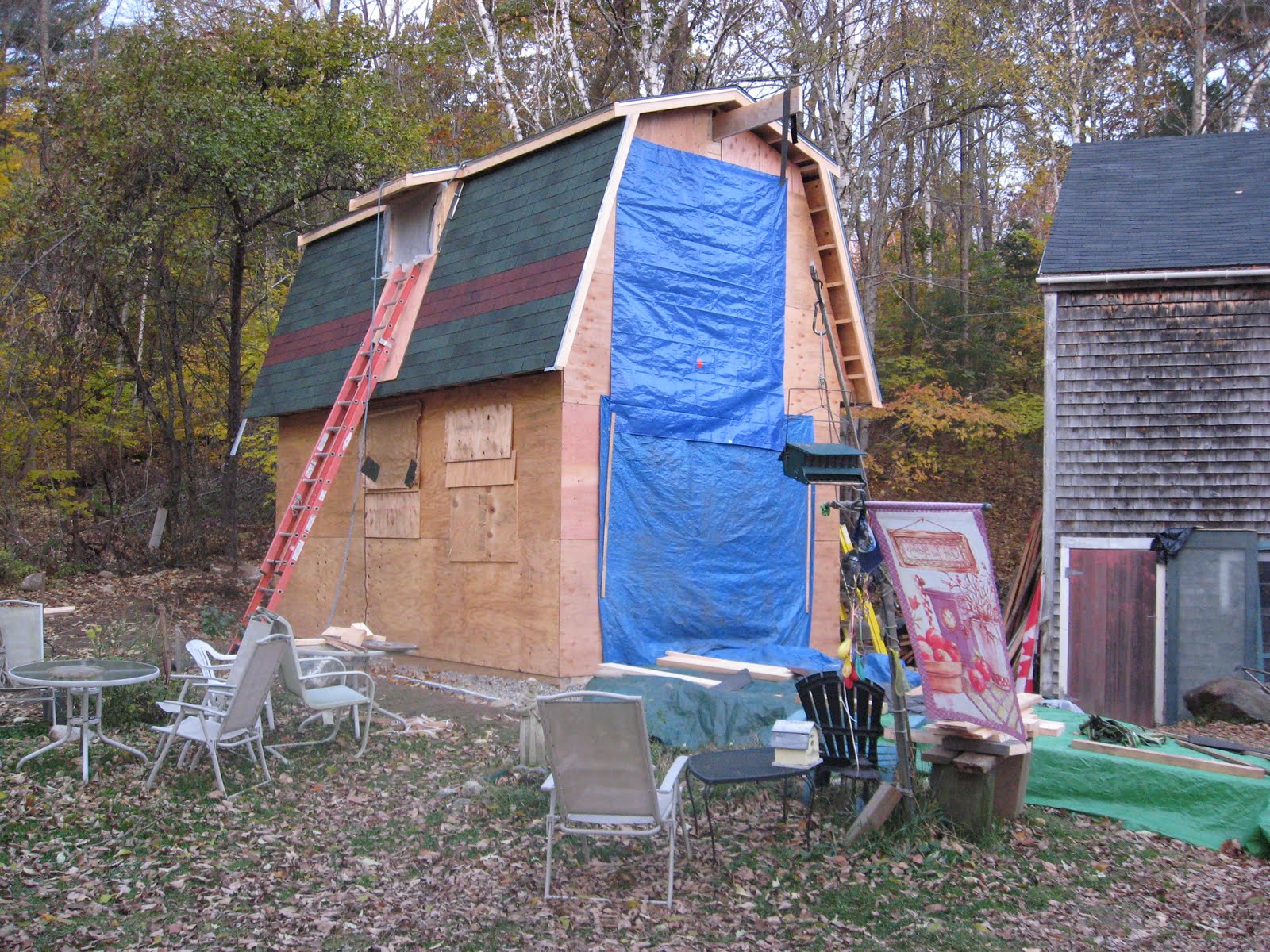
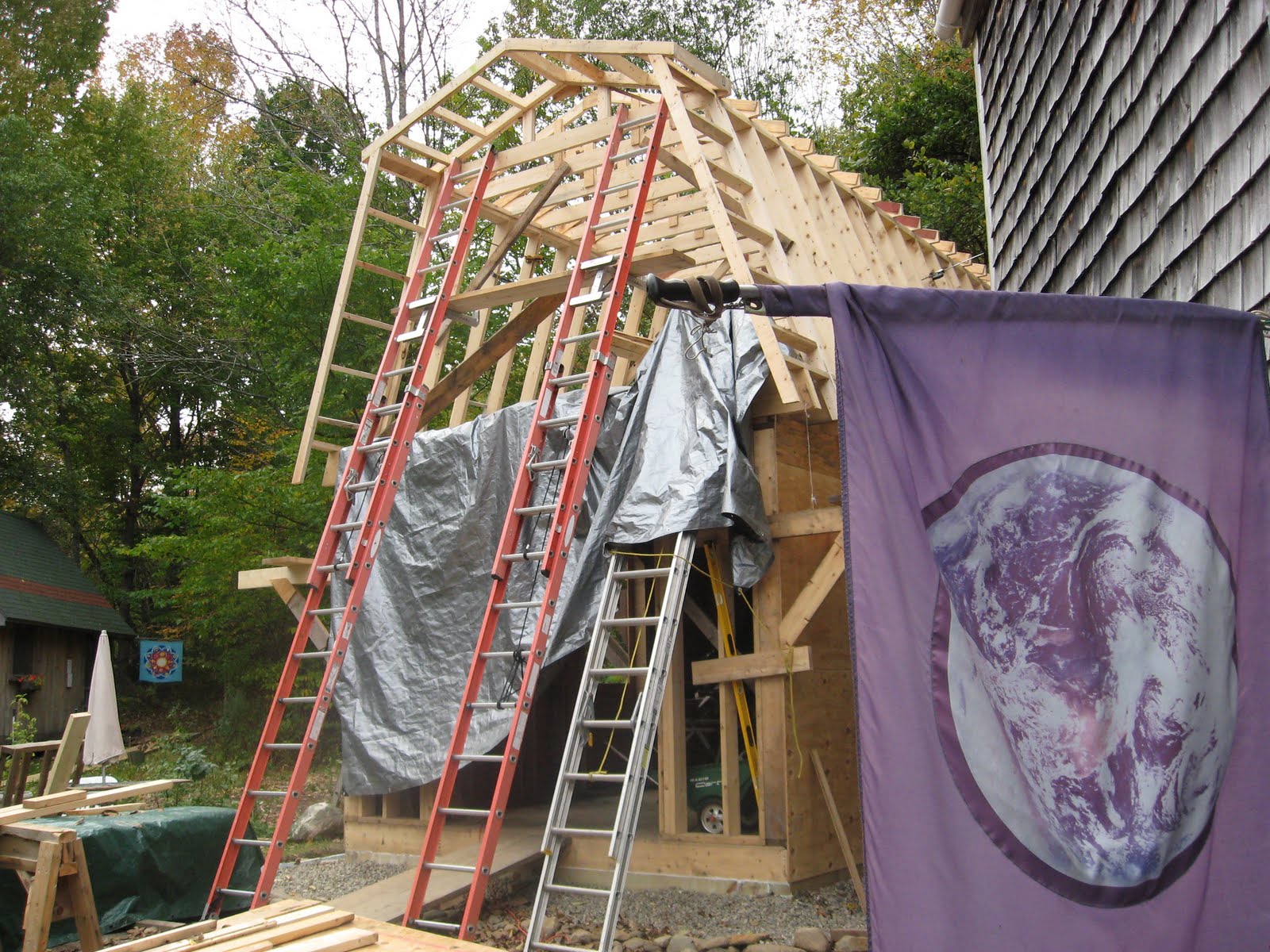
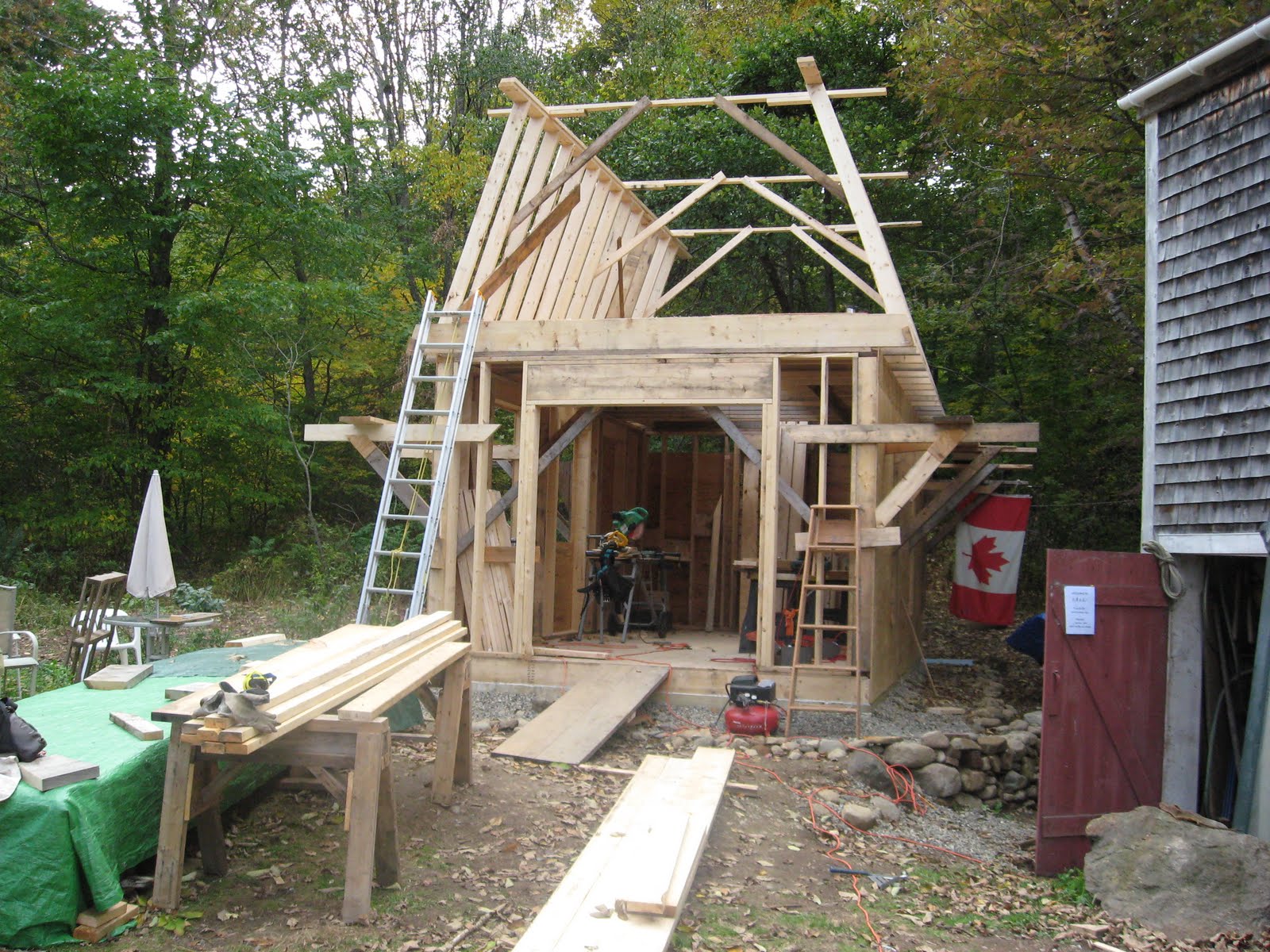
I hammer nails. I lay roofing tiles on boardwalk. I close up openings between roof and framing of the cabin completed (so we thought) six years ago.

Nearing midnight. Prison in AM. Saskia grounds hazelnuts for tomorrow's baking.

I would like to see, and be seen by, Christ. Christ-mind. Christ-reality.

It's only Zen that keeps faith from becoming anachronistic.

This seeing faith is unretrogressive faith.

Be perfect, (that is, make one's way through), as your heavenly Father is making 'itself' a way through.

Itself, being itself, is a way through.

Wednesday, October 28, 2009

Dinner/conversation with Tom and Maria last night. Read Nan Merrill's version of Psalm 71. Then from Steven Harrison's book "Being One."

We are, of course, not two.
It has been asked,
"How should those who enter the
path apply their minds?"
All things are originally uncreated
And presently undying.
Just let your mind be free;
You don't have to restrain it.
See directly and hear directly;
Come directly and go directly.
When you must go,
Then go.
When you must stay,
Then stay.
This is the true path.
A scripture says,
"Conditional existence is the site of enlightenment,
insofar as you know it as it really is."

- Niu-t'ou Hui-chung (683-769) Dailyzen
If you say, "I'm going to bed," it's best to do so.

Tuesday, October 27, 2009

The world isn't an illusion. What we think of and project on to the world is illusory.
While the world our mind projects is pure illusion, life itself is not.
We still must live.

(P.3, Being One, Finding Our Self in Relationship, by Steven Harrison c.1999)
You are real.

Be real.

Don't think about reality.

Be it.

Monday, October 26, 2009

Looking out from 2nd story of building-in-progress at Bald Mountain I think about the dwelling of hermits.
My hut isn't quite six feet across
Surrounded by pine, bamboos, and mountains,
An old monk hardly has room for himself
Much less for a visiting cloud.

- Shih-wu (1272-1352)

Being a hermit is a mask I wear. I speak from behind it.
Orpheus

When I wrote of the women in their dances and
wildness, it was a mask,
on their mountain, gold-hunting, singing, in orgy,
it was a mask; when I wrote of the god,
fragmented, exiled from himself, his life, the love gone
down with song,
it was myself, split open, unable to speak, in exile from
myself.

There is no mountain, there is no god, there is memory
of my torn life, myself split open in sleep, the rescued
child
beside me among the doctors, and a word
of rescue from the great eyes.

No more masks! No more mythologies!

Now, for the first time, the god lifts his hand,
the fragments join in me with their own music.

(Poem by Muriel Rukeyser)
We lay cut green shingles on boardwalk to cabin to counter morning frost sending morning feet sliding off their meditation.

Tom and Jay work the inner framing of book shed while Eric does roofing. Saskia and I pull nails, clean the cut pieces from ground, lay them on walkway to cabin. We get closer to something we cannot name.

It's not enough to be nobody. You also have to renounce being nobody. At Sunday Evening Practice we remember times in our lives when being nobody was more a chore than now. Now it is a great generosity.

Climbing Beech Hill in lovely autumn clarity this morning we decide along with silent sitting and open conversation we would continue to cultivate a cosmotheandric eco-spirituality.

Nature is the ground. God is the breath. All living beings and every moment of existence share the devotional ritual of deep respect and willing compassion.

In other words, there is no containing the mind and heart of being-in-this-world.

No church, temple, synagogue, mosque, or meeting hall can possibly approach that which is in itself the visiting cloud of ordinary life.

We are happy to be laypeople, non-experts, non-official, no-credentials, useless, outsider, nobodies.

We breathe in. We breathe out.

This breath is all there is.

This breath is all we need.

For now.

Sunday, October 25, 2009

It often strikes me I don't know how to pray. One of the students in prison during midterm mentioned atheism -- he said what others call prayer he calls surrounding what is there around you with attention.
The Spirit comes to help us in our weakness. For when we cannot choose words in order to pray properly, the Spirit himself expresses our plea in a way that could never be put into words.
('Noon reading (Sext) Romans 8:26 )
It sounds like a zen response to an incomplete koan asking, "If there is no God, what is prayer?" Derek might respond, "I am surrounded with what is; I ask no-God around me to permeate my attention with no barriers, no boundaries, and no other. I long to find what is truly there with compassionate, loving attention."
Stripped of reason my mind is blank
Emptied of being my nature is bare
At night my windows often breathe white
The moon and stream come right to the door.

- Shih-wu (1272-1352)
'God' is not some other being in some other place. God is no other being right here, attending with surrounding awareness what is revealing itself in our presence.

'God' has never been other than what God is. God ever-sounds, and if we hear, we hear: "I am and will be there as who I am shall I be there."

What is there and here, what we have tried to encapsulate with the word 'God,' is a reality surrounded by and beyond which nothing else can be said or understood.

God is not where I am. God is not where you are. (It might be rather that God is the 'where' you are, the 'where' I am. Someone said (I forget who): God is not in us, we are in God. When we exhaust trying to be where or as God is, when the effort to restrict, replicate, or replace God disintegrates -- all that remains is what is of itself as it is.

What is it of us that has to disappear? What are we cultivating that is in the way as an impediment because of which we cannot take a step? And yet, don't we want to step through?

There is nothing wrong with me or you. What impedes are the opinions, thoughts, beliefs, conditioned responses, patterned behavior, attachment to name, form, and press clippings, lack of appreciation for the ineffable metaphors of mind and heart, inability to penetrate and integrate the mystery of cohesion concretizing and constanting this very Kosmos and the beings dwelling therein.

We are not wrong. We're simply not here.

We get lost trying to control and manipulate what is being created in the surround of awareness.

There is what might be called Notyetness or Soontobeness that surrounds our being.

So as Derek wondered, and I conjoin: How to pray? Toward what direction? What for?

The Psalmist helps to begin:
Out of the depths I cry to You,... hear my voice.
Let Your ears be attentive to my voice in supplication. (Psalm 129 {130})
A moment of silence.

A beginning.

Ever-present.

Source.

Inspires.

Unknowingly.

Saturday, October 24, 2009

Rain throughout day as 350.org huddles indoors at Camden Snowbowl brief speeches and homemade treats as letters and petitions are signed and sent. Then the photograph. Soaking happily.
The great way of the buddhas is profound, wondrous, inconceivable; how could its practice be easy? Have you not seen how the ancients gave up their bodies and lives, abandoned their countries, cities, and families, looking upon them as shards of tile?

After that they passed eons living alone in the mountains and forests, bodies and minds like dead trees; only then did they unite with the way. Then they could use the mountains and rivers for words, raise the wind and rain for a tongue, and explain the great void, turning the incomparable wheel.

- Dogen (1200-1253)
To unite with the way is to let rain fall to ground.

How hard it that?

It is time to come to earth.

As rain through itself.

Thursday, October 22, 2009

We are here for dialogue.

We speak through one another.

To that between us, spoken with heart open and mind open.

That is the spiritual life. That, the corporeal life. It is the whole of life lived in the middle.

Green waters and verdant mountains
are the places to walk in meditation;
by the streams or under the trees
are places to clear the mind.
Observe impermanence,
never forget it;
this urges on the will to seek enlightenment.

- Keizan Jokin (1264-1325)
Watching A Mighty Heart, the story by Mariane Pearl about her husband Daniel's kidnapping. And murder. And the process of unveiling.

This kind of violence is what occurs when we forget we are between one another in encounter and conversation. We are not objects to be spoken at. Not things to be used to settle unhappiness. We are not where we think we are, nor what we think we are.

What are we? And where are we?

Lean in. Between us, there is revealed something not heard before. Not seen before.

Just this: for this instant we are what is taking place between us.

We are not, nor is God, anywhere else but in this ever-present and ever-changing place emerging and disappearing between us.

Look there. And if you do not see it, look again.

Wednesday, October 21, 2009

Climate change. That's what the focus is on.

Good for the effort.
If you place your body in the realm
Of equanimity and noncontention,
And let your mind roam in the
Territory of evenness and nondisturbance,
And water them every day with
Fair words and fine deeds of sage worthies,
Then you are sure to progress.

- Wu Yubi (1391-1469)
It's something to think about.

And that's not nothing.

Tuesday, October 20, 2009

Gone nowhere.

Some days solitude takes you.

A saturation takes place. All the personalities and opinions! The jostling in politics. The positions held and trumpeted. The wearying of words intended to carpet a flawed floor.
9
Throw away holiness and wisdom,
and people will be a hundred times happier.
Throw away morality and justice,
and people will do the right thing.
Throw away industry and profit,
and there won't be any thieves.

If these three aren't enough,
just stay at the center of the circle
and let all things take their course.

(--ch 19, Tao Te Ching, by Lao-tzu, from a translation by Stephen Mitchell)
There are days when you don't care. When the ordinary expectations fizzle into ash.

Kathleen Norris in her 2008 book Acedia & Me: A Marriage, Monks, and a Writer's Life, writes:
At its Greek root, the word acedia means the absence of care. The person afflicted by acedia refuses to care or is incapable of doing so. When life becomes too challenging and engagement with others too demanding, acedia offers a kind of spiritual morphine: you know the pain is there, yet can't rouse yourself to give a damn. That it hurts to care is borne out in etymology, for care derives from an Indo-European word meaning "to cry out," as in a lament. Caring is not passive, but an assertion that no matter how strained and messy our relationships can be, it is worth something to be present, with others, doing our small part. Care is also required for the daily routines that acedia would have us suppress or deny as meaningless repetition or too much bother.
(pp.3-4)
If care means 'to cry out,' and God is invocation, what is to be seen in an acedic lament? And what did the monk mean when he said to me: "Cheer up...things are only going to get worse!"?
A Buddhist Retreat Behind Broken-Mountain Temple

In the pure morning, near the old temple,
Where early sunlight points the tree-tops,
My path has wound, through a sheltered hollow
Of boughs and flowers, to a Buddhist retreat.
Here birds are alive with mountain-light,
And the mind touches peace in a pool,
And a thousand sounds are quieted
By the breathing of a temple-bell. - Ch'ang Chien
It seems everyone has a complaint. The left and the right, the orthodox and the heretics (hairesis, Greek for 'choice,' as in those with a different opinion), those in power and those without power.

Nowhere is there enough solitude.

Itself a poem. Itself as poem.

Amy Lowell wrote:
No one expects a man to make a chair without first learning how, but there is a popular impression that the poet is born, not made, and that his verses burst from his overflowing heart of themselves. As a matter of fact, the poet must learn his trade in the same manner, and with the same painstaking care, as the cabinet-maker. His heart may overflow with high thoughts and sparkling fancies, but if he cannot convey them to his reader by means of written word he has no claim to be considered a poet. A workman may be pardoned, therefore, for spending a few moments to explain and describe the technique of his trade. A work of beauty which cannot stand an intimate examination is a poor and jerry-built thing.

In the first place, I wish to state my firm belief that poetry should not try to teach, that it should exist simply because it is a created beauty, even if sometimes the beauty of a gothic grotesque. We do not ask the trees to teach us moral lessons, and only the Salvation Army feels it necessary to pin texts upon them. We know that these texts are ridiculous, but many of us do not yet see that to write an obvious moral all over a work of art, picture, statue, or poem, is not only ridiculous, but timid and vulgar. We distrust a beauty we only half understand, and rush in with our impertinent suggestions. How far are we from "admitting the Universe"! The Universe, which flings down its continents and seas, and leaves them without comment. Art is as much a function of the Universe as an Equinoctial gale, or the Law of Gravitation; and we insist upon considering it merely a little scroll-work, or no great importance unless it be studded with nails from which pretty and uplifting sentiments may be hung!
(--from The Poet's Trade, by Amy Lowell, at Poets.org, http://www.poets.org/viewmedia.php/prmMID/16037)
So it is today and yesterday both emit half understood beauty.

This jerry-built acausality.
Carl Jung, the Swiss psychiatrist, was fascinated by what he termed the process of synchronicity - seemingly random events which have a personally significant meaning. For example, you may start to think of a friend whom you haven't seen for a long time, only to receive an unexpected phone call from that friend the same day. Or, you are looking unsuccessfully for the source of a quotation when, almost unthinkingly, you pick up a book from your library, open it randomly, and there it is ! These type of things happen quite often.

Jung termed this process 'synchronicity' and he said that it is an
acausal principle in that there seems to be no cause-effect process at work. However, I believe that this process is still based on the law of cause and effect, but on a level which we are not perceptive enough to realise. Synchronicity takes place in the hidden depths of the psychic - that is, at the transpersonal and quantum levels of existence.

This said, there is indeed a level of Being which is truly acausal, untouched by the law of cause and effect. It does not, however, occur or arise in the world of matter-energy, nor on the level of mind and psyche, but in the realm of Pure Consciousness. In the extraordinary Yogic text called the 'Yoga Vashishta', written several thousand years ago, the story is told of the crow and the coconut.......

A crow alights on a coconut tree and at the very same moment, by chance, a ripe coconut falls. These two unrelated events seem to be related in time and space, though in fact there is no causal relation. A man sitting under the tree would think 'it is because of the crow that I am now eating this wonderfully ripe coconut.'

The meaning of this parable is profound. It does not apply to the daily life of 'sticks and stones', where cause and effect is quite evident. Nor does it refer to the mental and psychic levels where, though less evident, cause and effect still function. It alludes to the relationship between Purusha (Pure Consciousness) and Prakriti (Matter-Energy-Mind) and the 'Transcendental Point' (Skt. 'bindu') where these two principles 'touch' each other. This is acausal.

In the story, there seems to be a cause-effect relationship between the crow and the falling of the coconut, but this is only how it appears and is due to our lack of understanding. If we could see the wider picture, we would see that there is no relationship between the crow and the falling coconut. In the same way, there is no cause-effect relationship between Pure Consciousness and the world of form, matter, energy and mind. This is a paradox which defies our normal logic.

The Bhagawat Gita declares: "All this world is pervaded by Me (the acausal Consciousness) in My unmanifest aspect; all beings exist in Me, but I do not dwell in them." (verse 9:4)

By jumping beyond the world of cause and effect, we may be blessed with the Vision and Realisation of the
Acausal. Yoga and deep Meditation allow us to plunge into this ineffable experience
(--from, From the Causal to Acausal, by Swami Nishchalananda Saraswati, http://www.mandalayoga.net/index-newsletter-en-causal.html)
Nothing to flout. Nothing to flaunt.

A mere nothingness.

Ramana Maharshi looks at silence with different eyes:
A visitor asked: `What is mouna (silence)?'
M.:
Mouna is not closing the mouth. It is eternal speech.
D.: I do not understand.
M.: That state which transcends speech and thought is
mouna.
D.: How to achieve it?
M.: Hold some concept firmly and trace it back. By such concentration silence results. When practice becomes natural it will end in silence.
Meditation without mental activity is silence. Subjugation of the mind is meditation. Deep meditation is eternal speech.

D.: How will worldly transaction go on if one observes silence?
M.: When women walk with water pots on their heads and chat with their companions they remain very careful, their thoughts concentrated on the loads on their heads. Similarly when a sage engages in activities, these do not disturb him because his mind abides in Brahman.

(20th July, 1936, Talk 231, from Talks with Sri Ramana Maharshi,
http://bhagavan-ramana.org/ramana_maharshi/books/tw/tw231.html
Some days you take solitude.

Going nowhere.

Monday, October 19, 2009

A single candle hangs in center of chapel zendo tonight.
On Going to see a Taoist Master

A dog barking and the sound of water;
Peach blossoms heavy with dew.
In these deep woods, deer can be seen;
At noon along the stream, I hear no bell.
Wild bamboo divides gray clouds;
Waterfalls hang from blue peaks.
No one knows where you've gone;
Disheartened, I lean against a second,
Now a third pine.

- Li Po
All things of the night remember in silence things of the day.

Only silence suffices these times.
Older Love

His wife has asthma
so he only smokes outdoors
or late at night with head
and shoulders well into
the fireplace, the mesquite and oak
heat bright against his face.
Does it replace the heat
that has wandered from love
back into the natural world?
But then the shadow passion casts
is much longer than passion,
stretching with effort from year to year.
Outside tonight hard wind and sleet
from three bald mountains,
and on the hearth before his face
the ashes we’ll all become,
soft as the back of a woman’s knee.

(-Poem by Jim Harrison)
That soft.

And as quiet.

Sunday, October 18, 2009

Alan Watts called his book: Cloud-Hidden, Whereabouts Unknown: A Mountain Journal. The production editorial writeup says: 'Watts suggests a way of contemplative meditation in which we temporarily stop naming and classifying all that we experience, and simply feel it as it is."

A good pointer.
Seeking But Not Finding the Recluse

Under the pine
I ask the boy;
He says: "My Mistress is gone
To gather herbs.
I only know
She's in those mountains,
In those deep clouds,
But I don't know where."

- Chia Tao (http://www.dailyzen.com/)
Rain with snow. At table we read Chapter 2 of Tao Te Ching. How 'have' things and not feel you 'own' them? Do things without taking credit for their being done? Letting things come; letting things go?

Snow with rain.

This raw night
.
Following practice.

Saturday, October 17, 2009

It will rain after midnight. In meditation cabin, warm stove. Single candle, all three of them. One on porch. Early darkness.
Joshu's Dog
A monk asked Joshu, a Chinese Zen master: `Has a dog Buddha-nature or not?'
Joshu answered: `Mu.' [Mu is the negative symbol in Chinese, meaning `No-thing' or `Nay'.] http://www.ibiblio.org/zen/gateless-gate/1.html
It might be there is an entirely distinct universe just the other side of thought. Where thought ends. Comes mere seeing.
Cherry blossoms filling the ground,
Sunset filling my eyes:
Blossoms vanished, spring old,
I feel the passing years.
When blossoms were at their finest
I neglected to call.
The blossoms did not betray me.
I betrayed the blossoms.

- Ishikawa Jozan (1583-1672)
I have often betrayed the blossoms.

I must rely on their willingness to be overlooked by a distracted passing person.

I have not called.

No invocation, no knowing God.

I know now my mistake.

Friday, October 16, 2009

Surrender, Lola said, is allowing what comes at you in life to pass through.

We were at conversation after reading Tolle.
Evening mountains veiled in somber mist;
One path entering the wooded hill:
The monk has gone off locking his pine door.
From a bamboo pipe a lonely trickle of water flows.

- Ishikawa Jozan (1583-1672)
There could be a better definition of surrender...

But, I don't know.

Thursday, October 15, 2009

I know what to ask. Ask why nothing makes sense. Ask whether this world really, as some say, is illusion. Ask for an extra piece of cake. It doesn't hurt to ask.
Alone on my zazen mat
I forget the days as they pass
The wisteria has grown thick
Over the eaves of my hut
The subtle Way of Bodhidharma
I never give it a thought
Does anyone know the truth of Zen
Or what to ask about it?

- Muso Soseki (1275-1351)
Watch film "The Visitor." The hard currency of belonging yet not belonging.

Hammer my finger, strain my elbow. Just plain pain.

Here's the truth of zen: just show up and do what needs be done. No explanation. No goal. No hope of redemption or reward.

When tired, yawn. When sleeping, dream.

When awake, no dream.

Dreamless sleep; dreamless wakefulness.

There should be many questions about now!

Wednesday, October 14, 2009

There's a fetching line from the film tonight: ''Lust awakens the desire to possess,'' warns the old monk. ''And that awakens the intent to murder.' (From film, ''Spring, Summer, Fall, Winter...and Spring'', written, directed, and edited by Kim Ki-Duk).
Skillful Desires

All phenomena, the Buddha once said, are rooted in desire. Everything we think, say, or do—every experience—comes from desire. Even we come from desire. We were reborn into this life because of our desire to be. Consciously or not, our desires keep redefining our sense of who we are. Desire is how we take our place in the causal matrix of space and time. The only thing not rooted in desire is nirvana, for it’s the end of all phenomena and lies even beyond the Buddha’s use of the word “all.” But the path that takes you to nirvana is rooted in desire—in skillful desires. The path to liberation pushes the limits of skillful desires to see how far they can go.

(- Thanissaro Bhikkhu, Tricycle Fall 2005)
The Bodhisattva of Compassion is lifted to the summit of attentive and consoling awareness of what is taking place in the world.

In our lives.

As we repeat foolishness.

Again. And again.

Tuesday, October 13, 2009

Karen Armstrong et al present the video History of God. It is quite a story. Does God change? Or is our consciousness deepening?

If God is completely other, does that mean we are no other? If God is, are we?

If you forget your feelings
about things of the world,
they become enlightening teachings.
If you get emotional
about enlightening teaching,
it becomes a worldly thing.

- Muso Kokushi (1275-1351)
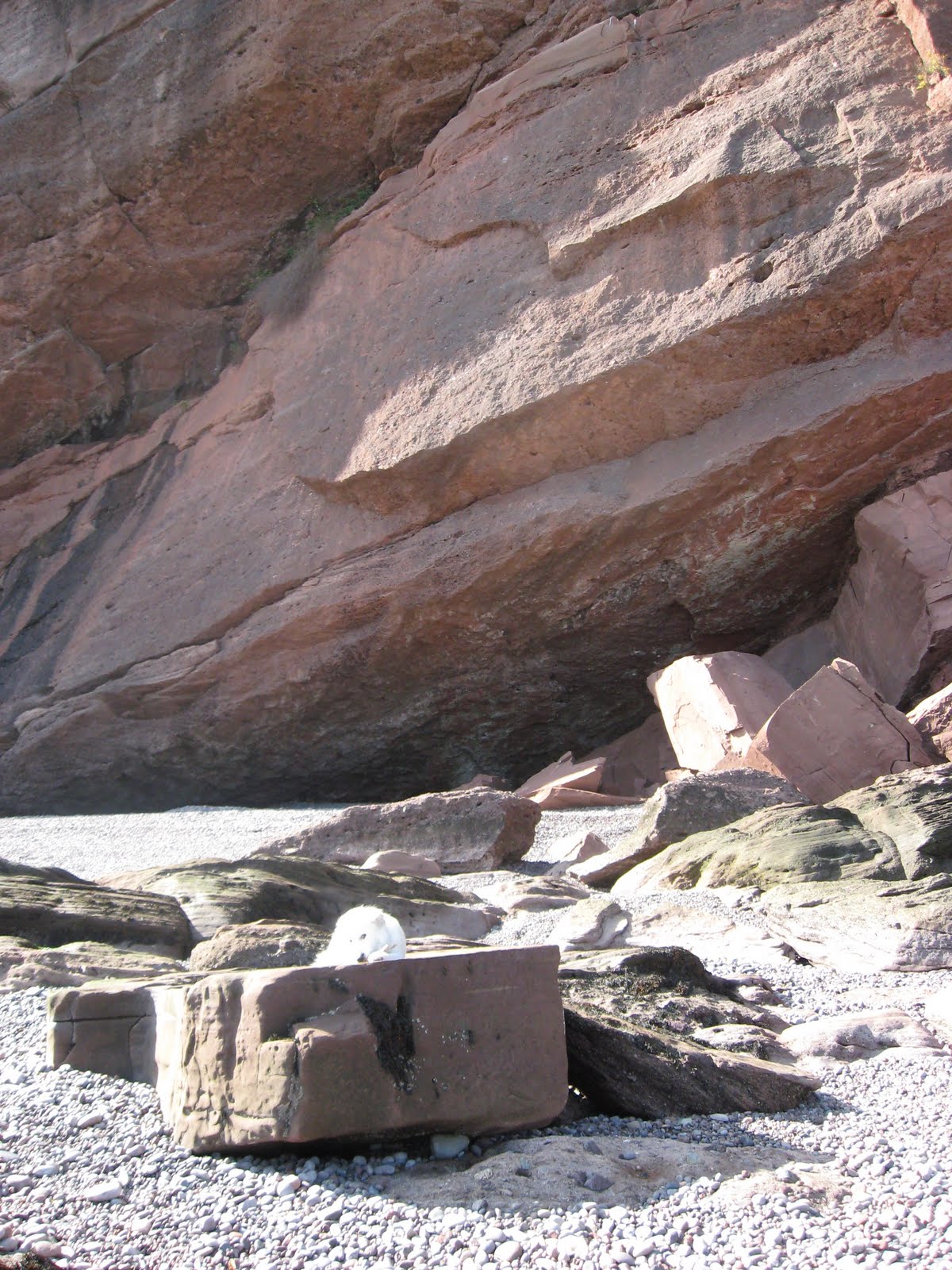
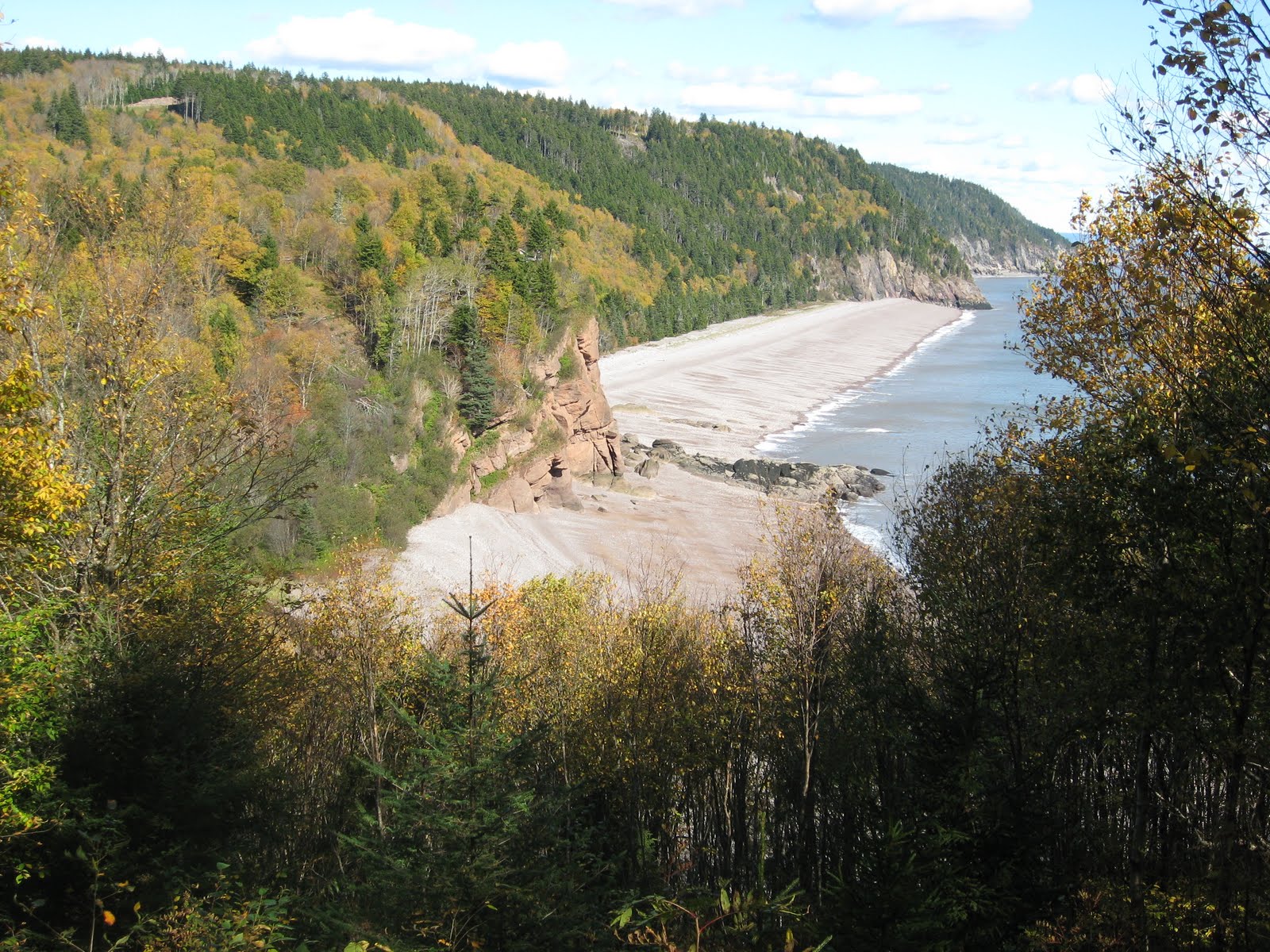
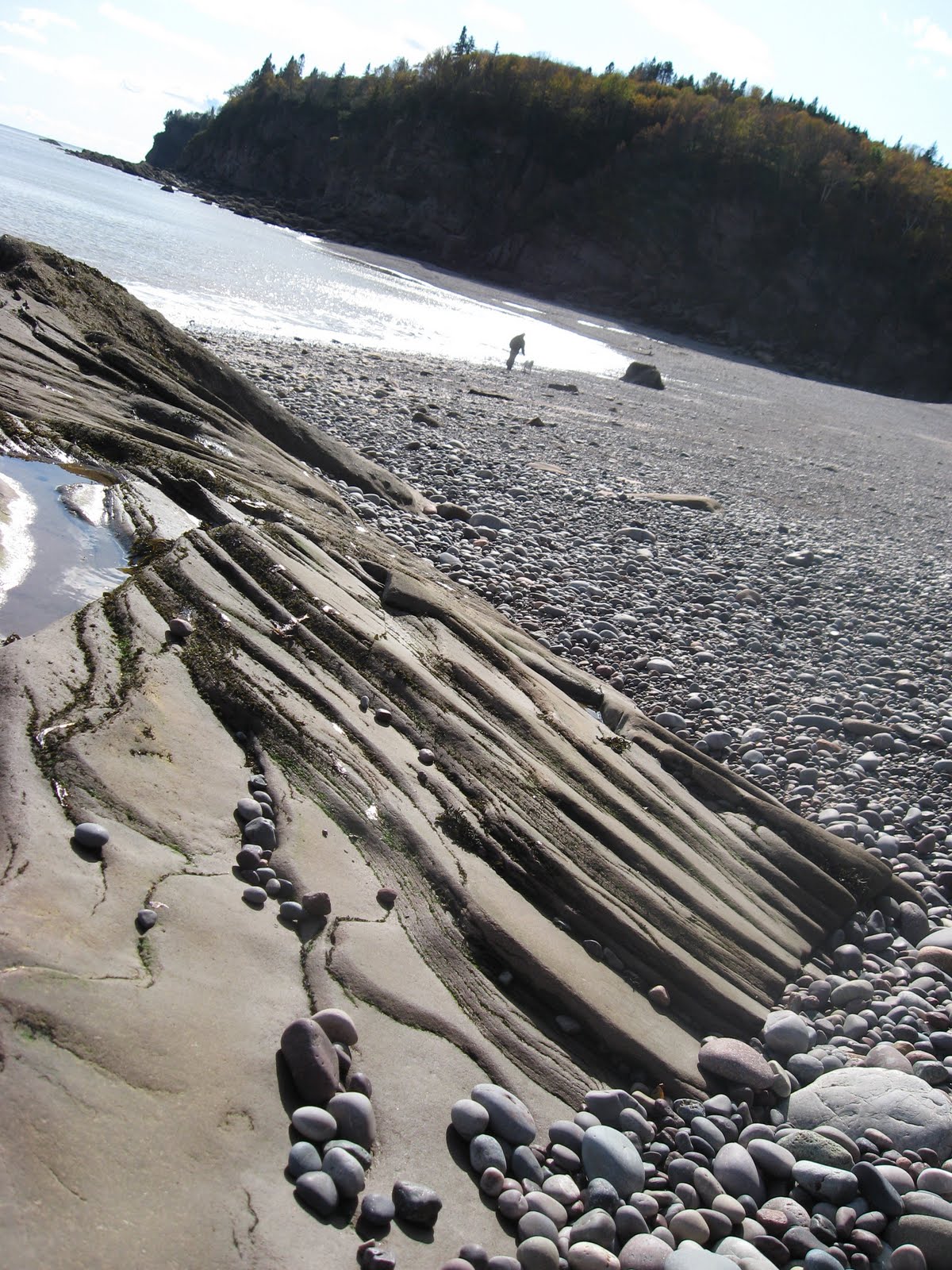
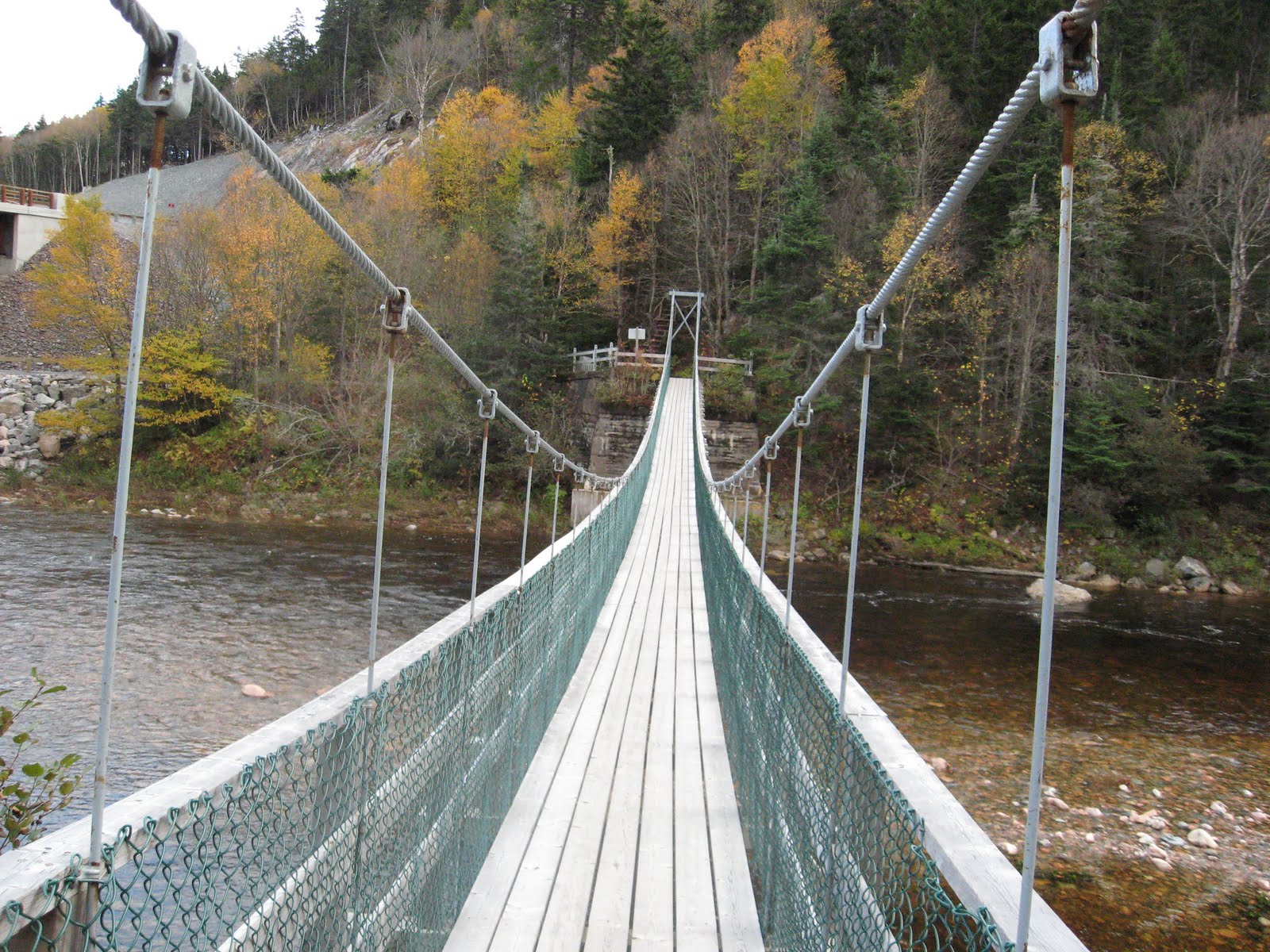
Canada was one walk after one hike after another walk and another hike. Mountain and cliff, stone beach and soggy marsh, sloshing shoes and majestic Fundy sandstone.

We come back exhausted and delighted.

Perhaps God will be merciful with us.

As we are merciful with one another.

The specificity of ineffability.

We cross over that which flows beyond.

Coming back through long snow squall outside Calais along Airline Drive.

Mark the date: 13th October.

Driving through snow!

Sunday, October 11, 2009

We're off to celebrate Thanksgiving with our Canadian neighbors. In Maine and the additional 49 states, Columbus Day is celebrated. Either way, we're pleased the US and Canada are taking a day to reflect on gratitude and neighborliness.
You must realize that what
is at stake here does not
reside in words and phrases:
it is like sparks from struck flint,
like the brilliance of flashing lightning.
However you mange to deal with this,
you cannot get around
losing your body and life.

- Yunmen (864-949)
We're pleased to have a country. We're pleased to have a neighboring country. Soon the borders we now so fervently protect will not be needed. We will lose the need to view ourselves so separately. Consequently -- this insight will ripple to neighborhood, states, countries, and ultimately every speck of awareness in the Cosmos. I suspect the Cosmos is waiting for us to catch up.

Until then, we visit. We build.

We bow to you in your journey.

Saturday, October 10, 2009

Raimon Panikkar writes: "God is an invocation."

Saskia says, "God is being called into being. God is not a static being."

The two of them call out something evocative this morning.

God is called into being as that which is the longing for true being, a being-true beyond any wish or conception, still replete and complete with what is taking place in the fullness of Becoming Itself.
Watch film "Southbounders" (2005). About hiking the Appalachian Trail, Maine to Georgia.

Wang Wei picks up the trail thread:
Creeks and summits are brilliant at sunset.
I laze in a boat, my way in the wind's hands.
Watching wild landscapes I forget distance
and come to the water's edge.

Gazing at lovely far woods and clouds
I guess I've lost my way.
How could I know this lucid stream
would turn, leading me into mountains?

I abandon my boat, pick up a light staff
and come upon something wonderful,
four or five old monks in contemplation,
enjoying the shade of pines and cypresses.

Before the forest dawns they read Sanskrit.
The monks' nightly meditation quiets the peaks.
Here even shepherd boys know the Tao.
Woodcutters bring in world news.

They sleep at night in the woods
with incense, on mats clean as jade.
Their robes are steeped in valley fragrances;
the stone cliffs shine under a mountain moon.

I fear I will lose this refuge forever
so at daybreak I fix it in my mind.
People of Peach Tree Spring, goodbye.
I'll be back when flowers turn red.
- Wang Wei (699-759)
We work on roof of Book Shed/Library. Visitors stop by for tea. We talk about prison. Then back up to scaffold and impact drill.

Later I walk mountain as dusk draws down light on yellow leaves illuminating mud. Rokie's white coat flashes to and fro.

Nature is the great teacher. The only measurement is wind loosening leaves scattering dooryard and mountain trail.

To call out God is what humankind does with voice.

With silence is God there before any calling.

An invocation for each and all!

Watching flowers.

And leaves turn.

Friday, October 09, 2009

President Barack Obama will be awarded the Nobel Peace Prize. Many are surprised. That's understandable. It's hard to comprehend what is nascent.

Peace is being-born. Mr Obama knows this.

And "this" is not an easy reality to understand.
When the mind is always as clear and bright
As ten suns shining together,
Detached from views and beyond feelings,
Cutting through ephemeral illusions
Of birth and death,
This is what is meant by the saying,
"Mind itself is Buddha."

- Yuanwu
We like Mr. Obama. He seems to be a decent man. And we wish him well. There are those who do not like him. They do not wish him well. But we do.
The clouds come and go,
providing a rest for all
the moon viewers

(-Haiku by Basho, 1644-1694)
Rain this Autumn night in Maine. The cat decides indoors. There are dangerous foes for Mu-ge in these mountain environs. He has to step carefully and quietly, looking over his shoulder.

There's a silver tarp on second floor of book shed being built.

Five of us worked well together today. Then Sylvia and Ed stopped by as O'a did too . We all had soup and bread, tea and coffee.

And peanut butter cookies.

..........

Earlier in the day, David wrote from Belfast about the ongoing hostilities in Afghanistan. He worries we are continuing a dangerous war. I write him:
In the film "Confession" (1999) one of the characters played by Ben Kingsley says, "It's not hard to do the right thing, it's hard to know what the right thing is." He goes on to say something like: But once you know what the right thing is, it's hard not to do it.

There's the expedient thing, the pragmatic thing, the political thing, and the popular thing; but what is the right thing to do?

There will not be any victory. There will be continuing deaths. The mind dithers and delays doing what is right.

What's right might be hidden just now in this question: There are ugly things in this world -- why do we think we are remotely capable of eliminating all that is ugly? The problem with the small mind is its belief that ugly and beautiful are opposites and one of them must be destroyed in order to conform to your version of the illusory opposites. Both the Taliban and the United States are stuck in that belief.

As the Zen Master says, "Put it down! Put it all down!" That belief is far too heavy, bloody, and cruel. 'Ugly' is what 'beautiful' is when it tries to destroy its illusory opposite.

Some suggest we hate ourselves in this illusion. We refuse to accept the whole of ourselves. Thus we try to destroy 'part' of ourselves. It is not a solution to call the ugly beautiful or the beautiful ugly -- for that only perpetuates the false dichotomy created by the judging mind. Rather, our task is to do something more radical, namely, to live compassionately with the whole of it -- not blaming and opposing, but acting in such a way that there is no other way but the way that is from the beginning 'itself,' 'whole,' and 'completely beyond' human reason. Some suggest that this means to 'Be kind!'

Pick up the rubble. Soothe the pain. Encourage peace. Teach truth. Bake eggs. Serve coffee. Learn to serve one another with a balanced mind. Walk the dog. Feed the cat. Love life. See death for what it is -- the unknown inevitability that transforms what we see. See love as trust in transformation.

As Thich Nhat Hanh might have written: I have blown up the Trade Towers, I have visited my grandmother, I have sipped tea and chewed peanut butter cookies, I have killed my brother, I have comforted a child who scraped his knee, I have done everything, I have done nothing, I am you, you are me. We are looking at this problem we have created. There are tears in our eyes.

I am ready to leave Afghanistan. I am leaving. I've left.

I look back.

I see.
It is a good time for the Nobel Laureate to bring to birth a new wisdom.

A vital time.

For all to see.

Thursday, October 08, 2009

Doubt is cream in coffee. It lightens things. Cloaks the bitter.

Doubt slips into inquiry.
When you are deluded and full of doubt,
Even a thousand books of scripture
Are still not enough.
When you have realized understanding,
Even one word is already too much.
Zen is communicated personally,
Through mental recognition.
It is not handed on directly by written words.
- Fenyang
Inquiry asks into what is there.

Of course we are not apart from what is there.

It's just that we think we are.

God alone knows. The Way is nameless.

Therefore, know the nameless. And do nothing.

The Makita drill sends screws though wood during framing.

Wednesday, October 07, 2009

Not to make opposite of anything is not easy. What's easy is having no opposite. There you are!
An old man perches on White Mountain,
living among clouds and smoke and peaks.
Down below, Sanskrit prayer floods the valley.
It's raining. Petals cover the mountain.
The monk is concealed, his heart without desire,
but his name survives in his teachings.
Birds visit him, return speaking Buddhist law.
Guests depart with the habit of meditation.
All day I walk paths among the blue pines.
At twilight I seek lodging in a chamber
in the cave hidden deep in bamboos,
and hear waters plashing in the transparent dusk.
Sitting on my mat and pillow I am involved
in rose clouds of the sunset.
Am I merely a transient guest?
I will practice meditation until I cease.

- Wang Wei (699-759)
Thanks for visiting.

Don't come back.

Once here, there's nowhere to go.

Cease who?

Tuesday, October 06, 2009

The film 'Samsara" (2001, directed by Pan Nalin). A sensual and spiritual reminder just how difficult the turning-around is in the quest for enlightenment.
There are a few conundrums in the film which are left open to interpretation. One is the aphorism by the old monk, "Which is better? To satisfy one thousand desires or to conquer just one?" According to me, the one desire (for religions affirming transmigration and reincarnation, i.e. Samsara, the cycle of birth and death) is the sexual instinct, the desire which leads to further and further entanglements. Sex is the primary instinct, the central act in the propagation of life.

The second is the question and the answer written on the rock by the roadside. The question is: "How does one prevent a drop of water from drying up?" And the answer, on the back of the rock, is: "By throwing it into the sea." One possible interpretation of the analogy is: The drop of water is the individual soul. Its "drying up" is its death as a separate entity. The "sea" is the worldly life, in which it finds sustenance and mixes up with other selves.

(--from blog 'Remains of the Day,' http://harmanjit.blogspot.com/search?q=samsara)
We live in the world. This is where we work out our karma and salvation -- not in some crypt where the near-dead and really dead decompose their belief in a maze of desire.
If you memorize slogans, you are unable to make subtle adaptations according to the situation. It is not that there is no way to teach insight to learners, but once you have learned a way, it is essential that you get it to work completely. If you just stick to your teacher's school and memorize slogans, this is not enlightenment, it is a part of intellectual knowledge.
- Fayan
To work completely is to not second-guess.

My life has been lived waiting for the tossed coin to descend from the nadir of its upward flip. So much I've not done looking over my shoulder at something passing into dryness.

Maybe I won't get a sore throat.

Maybe I'll get to bed before three tonight.

Maybe the real meaning of a dizzy twirl is the falling to ground -- stopping for a while.

Monday, October 05, 2009


Sin isn't what it used to be. First of all, it doesn't arrive with pink and blue blankets. Secondly, it doesn't go away by nailing someone to a cross. Lastly, who benefits by the concept of sin?
How mysterious!
The lotus remains unstained
By its muddy roots,
Delivering shimmering
Bright jewels from common dew.
(- The Monk Henjo)
What is called 'sin' is the illusory belief in separate, isolated, and alienated existence -- the false claim that someone is better than another, that we're not equal, that our task is to subdue and dominate nature, women, animals, and those who fall into what we conveniently call 'sin.'

I'm having none of it. Not the concept. Not the belief. Not the organized congregations that pray for what is already our ground and true situation. God is not coming for us. God is emerging through the very inchoate being/reality we embody. God, if that word retains anything of the vibrance true being/reality originates, is coming through and with us.

That's just well-water talking.
'As. . . a dewdrop, a bubble, a cloud, a flash of lightning, view all created things.' Thus ends the Diamond Sutra, reminding us of irreducible impermanence. Sustainability cannot mean some kind of permanence. A waggish commentary says ‘Sustainability is a physical impossibility. But it is a very nice sentiment.’ The quest for permanence has always let us astray—whether in building stone castles, Great Walls, pyramids and tombs for pharaohs, great navies, giant cathedrals to ease us toward heaven, or cold war-scale weapons systems guaranteeing mutually assured destruction. We must live with change, like a bird on the wing, and doing so—let all the other beings live on too. Not permanence, but living in harmony with the Way.
(--Gary Snyder, Back on the Fire (Counterpoint, 2007), 70)
We persevere. We make sacrifices. We take what the tide brings in and make use of it. We thank the moon for its light.

We marvel at the fact of things. The Way of things. The Way of it all.

The quietness.

Without trying.

The stillness.

With ease.

Sunday, October 04, 2009

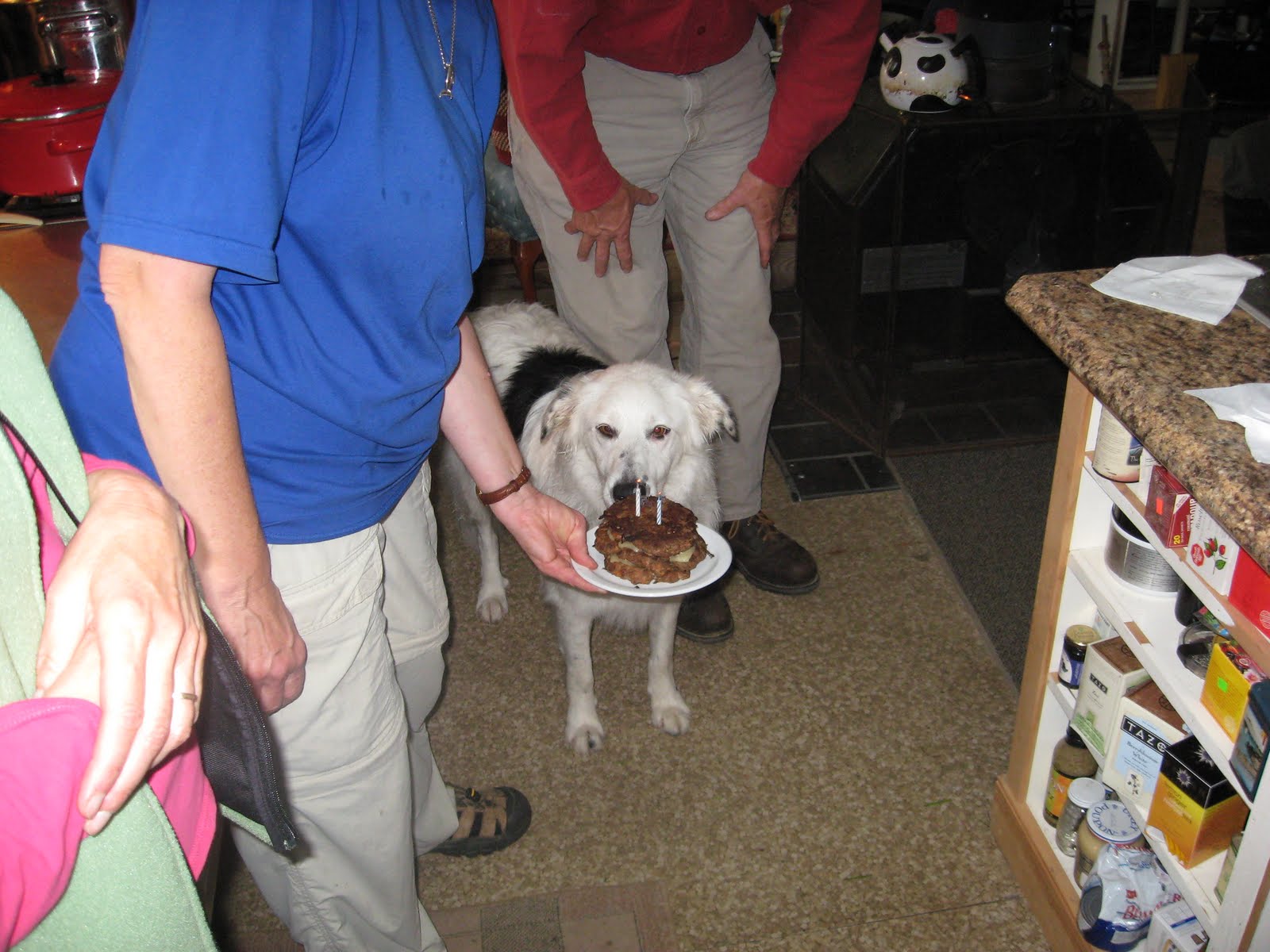
Rokpa's 2nd birthday and St. Francis of Assisi feastday. The 6th anniversary of the dedication of the chapel/zendo.

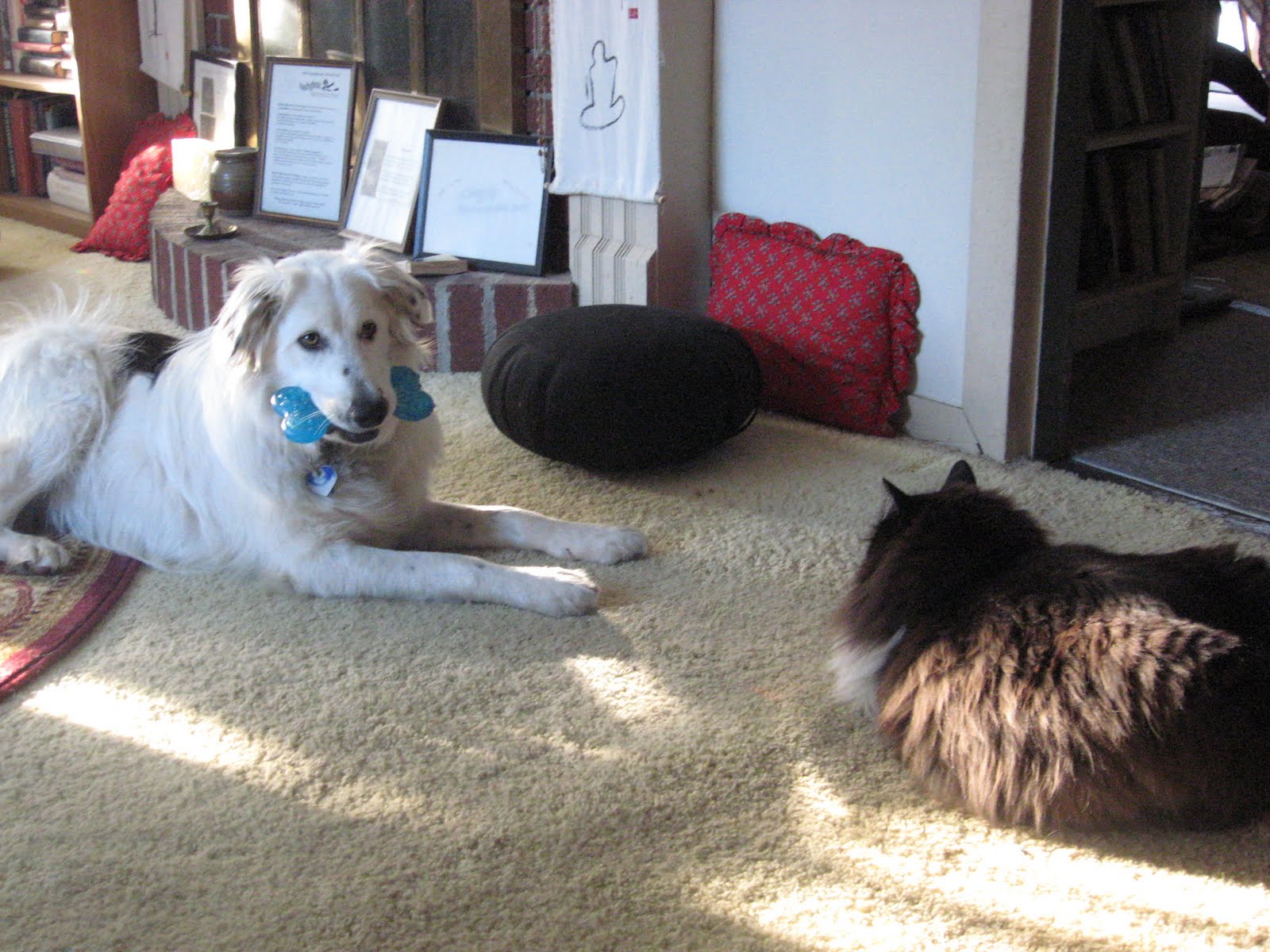
(His birthday "cake" consisted of: triple-level ground turkey, graded carrot, graded celery, spelt-flower, garlic and parsley, cheddar cheese between layers. We had to fight off the humans. Although Sam had his own special version.)


A perfect rag-tag meetingbrook ceremony in cabin celebration feast of Francis. Dean sang, Gene and Margaret sang, Cheryl played harp and sang, Sam played harmonica, Saskia flute. O'a, Bill, Linda, Susan, and Tom there in the cabin, appreciating. Michael and Jayan, Hughie and Hugh held down the Wohnkuche. Max snoozed in car.
A soaring endlessly curving path,
every few miles we have to rest.
I look around for my friends.
They've vanished in the wooded hills.
Rain floods the pine trees
and flows hushed among the rocks.
There are silent words deep in hill water,
a long whistle over the summits.
When I look at South Mountain
the sun floats white through the mist.
A blue marsh is luminous and clear.
Green trees are heavy shadows, drifting.
When I am tired of being closed in,
suddenly I come upon a clearing,
and the mind is at peace.

- Wang Wei (699-759)
The simplicity of earth, nature, God, and humankind held and seen as one.
"Oh grant that I may feel you always in everything." (From song 'Mystery' Missa Gaia)
A good prayer!

A good day!

Saturday, October 03, 2009

In his transitus, where did Francis go?
At Zen centers they say
There is a Way to be practiced
And a religious truth to be realized.
Tell me, what religious truth is realized,
What way is practiced?
In your present functioning, what do you lack?
What would you fix?
Younger newcomers, not understanding this,
Immediately believe these mesmerists and
Let them talk about things that tie people up.

- Linji (d. 867)
He is in the rain.

He is in these words.

He has found nature to be home.

A joy, if not perfect, at least complete.

Friday, October 02, 2009

No matter where I look, all I see is what is looking by itself as itself within itself. All that is heard is the sound of what is being said.

And it sees nothing, says nothing. Nothing worth mentioning. Nothing special.
The Dharma is without living beings, because it is free of the dust of living beings. It is selfless, because it is free of the dust of desire. It is lifeless, because it is free from birth and death. It is without personalities, because it dispenses with past origins and future destinies.
( - The Buddha in Vimalakirti Sutra)
Prison conversation and Assisted Living Center conversation both lend cheer to the day. It's just listening and speaking. Nothing else.
First He Looked Confused

I could not lie anymore so I started to call my dog "God."
First he looked
confused,

then he started smiling, then he even

danced.
I kept at it: now he doesn't even
bite.

I am wondering if this might work on
people?

(Poem by Tukaram {c. 1608 - 1649}, India. From “Love Poems From God” trans. by Daniel Ladinsky. c.1999)

Let's not kid ourselves. There is no God beyond what God is saying to each one of us.

Each.

One.

Of us.

Here. Right here.

Can you feel what you are within the name of God?

Being pronounced ?

Thursday, October 01, 2009

In the film "Phoebe in Wonderland" (2009), Miss Dodger tells Phoebe that one day she will realize all the things that make her different and say, "This is what I am."
One of the things that most nourishes true compassion is clarity—when we know what we are thinking and know what we are feeling. This clarity differentiates compassion from shallow martyrdom, when we are only thinking of others and we are never caring about ourselves. This clarity differentiates compassion from what might be thought of as a conventional kind of self-preoccupation, when we care only about ourselves and not about others. The Buddha said at one point that if we truly loved ourselves we would never harm another, because if we harm another it is in some way diminishing who we are; it is taking away from rather than adding to our lives.
(- Sharon Salzberg from "A Quiver of the Heart," Tricycle Spring 2009)
A woman left conversation tonight early. Thirty minutes later she was still in the dooryard trying to get into the locked car with a hanger while using a solar powered garden light to see what she was doing. When she got it open, still unable to find her keys, the security alarm continuously blared and honked. It was a drama that unfolded with solitary determination. She too was an articulation of "This is what I am."
but if a living dance upon dead minds

but if a living dance upon dead minds
why,it is love;but at the earliest spear
of sun perfectly should disappear
moon's utmost magic,or stones speak or one
name control more incredible splendor than
our merely universe, love's also there:
and being here imprisoned,tortured here
love everywhere exploding maims and blinds
(but surely does not forget,perish, sleep
cannot be photographed,measured;disdains
the trivial labelling of punctual brains...
-Who wields a poem huger than the grave?
from only Whom shall time no refuge keep
though all the weird worlds must be opened?
)Love

(--Poem by e.e. cummings)
Of the three "Toms" visiting here today: one wants to buy the house across from the lake; one stops for coffee after visit to V.A. at Togus; and one passes at final circle feeling tired and weak and shaky waiting for a diagnosis other than just being shy of 84.

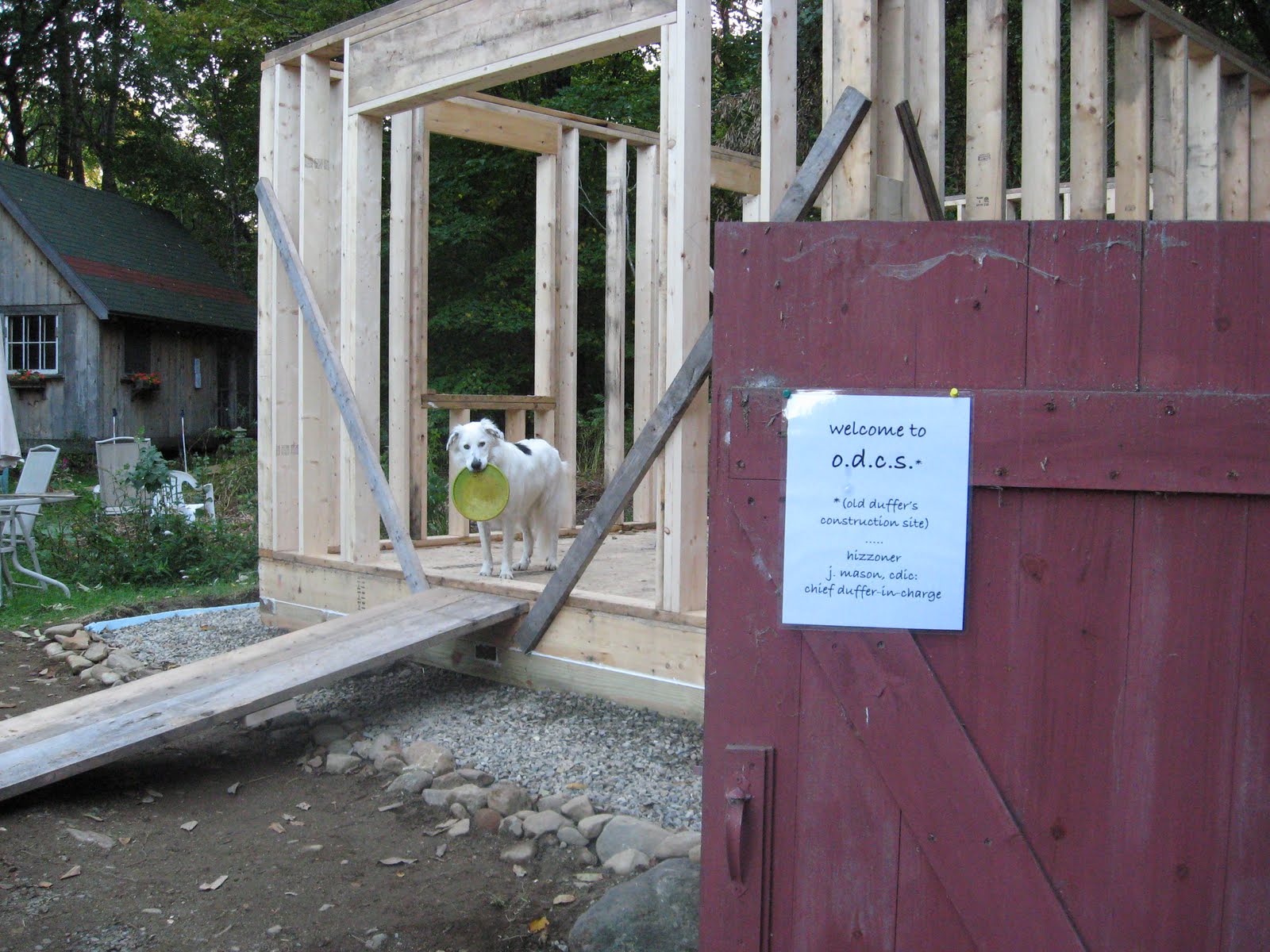
The hammering and building of book shed continues. Six of us plus two dogs and a cat sat in garden chairs with coffee after clean-up inside the space trying to determine where the wood stove will go and how the stairs will ascend to the not yet begun second story.

We look at one another -- look around at mountains and brook and pond -- and say, "This is what I am."

Wednesday, September 30, 2009

Returning to the Way by going through the opposite. The Tao:
...flows through all things,
inside and outside, and returns
to the origin of all things.

(-from Chapter 25, trans. by Stephen Mitchell)
September leaving. October in a minute or two.

We are what Greatness is.
The realm of non-thinking
Can hardly be fathomed by cognition;
In the sphere of genuine suchness
There is neither "I" nor "other."
- Yunmen (864-949)
How is it we once thought ourselves not what we are?

Tuesday, September 29, 2009

Thinking of angels, specifically, archangels today.

Maybe the history of religion and theology is the unfolding of consciousness. The narratives we relate are the specific insights consciousness unveils..

Someday we will know the true nature of reality.
There is ultimately no means
of safeguarding anything in this world;
anything you gain can be
lost, destroyed, or taken away.
For this reason if you make
the acquisition and retention
of goods or status your aim in life,
this is a way to anxiety and sorrow.
- Muso Kokushi (1275-1351
)
What is this reality?
Well, now,
if little by little you stop loving me
I shall stop loving you little by little.

If suddenly
you forget me
do not look for me,
for I shall already have forgotten you.

(from: If You Forget Me, by Pablo Neruda)
My right elbow suffers from hammering large nails.

I think "God" has disappeared into the center of creation.

Monday, September 28, 2009

Watched "The Devil Came on Horseback" (2007) -- the story of Darfur as witnessed and told by Brian Steidle. Murder, rape, and pillaging.

The terribleness of it.
We're All in the Same Boat

We’re all in the same boat. Born as we are in this human body, we can’t escape the blessings and tortures of the human brain. From our first breath, we yearn for love and understanding in the most complicated ways imaginable. We find it most satisfying as we learn to give it. The ability to do this comes from acceptance of our frailties. By understanding the conditions of our own lives, we accept the conditions of others. Compassion is not condescension, but a leveling of the playing field, a recognition of yourself in others and an acceptance that their stress is your stress, that their happiness is your own. The gulf between us all is imaginary, born of insecurity and fear.

(- Stephen Schettini, from “What to Expect When You’re Reflecting,” Tricycle, Fall 2008)
I can only wonder why I am so willing to murder my brothers and sisters. Aside from someone paying me to do the killing, why do I do it?
Skull Trees, South Sudan

Arok, hiding from the Arabs in the branches of a tree,
two weeks surviving on leaves,
legs numb, mouth dry.
When the mosquitoes swarmed
and the bodies settled limp as petals under the trees,
he shinnied down, scooping out a mud pit with his hands
sliding into it like a snake,
his whole body covered except his mouth.
Perhaps others were near him,
lying in gloves of mud, sucking bits of air through the swamp holes,
mosquitoes biting their lips,
but he dared not look.

What did he know of the rest of South Sudan, pockmarked with bombs,
skull trees with their necklaces of bones,
packs of bony Lost Boys
roving like hyenas towards Ethiopia,
tongues, big as toads, swelling in their mouths,

the sky pouring its relentless bombs of fire. Of course they were
tempted to lie down for a moment,

under the lone tree, with its barely shade,
to rest just a little while before moving on,

the days passing slyly, hallucinations
floating like kites above them
until the blanched bones lay scattered in a ring around the tree,
tiny ribs, skulls, hip bones—a tea set overturned,
as the hot winds whistled through them
as they would anything, really,

and the sky, finally exhausted,
moving on.
( Poem by Adrie Kusserow, Published in Best American Poetry 2008; originally published in The Kenyon Review)
I will begin again: Who am I? Why am I here? What is life? How should I live? Who are you in my life?

I will look to the source, the ground, of my and all being.

I will stop murdering my family.

I cease being false.

Stop looking for me.

I am no longer where you think I am.

Sunday, September 27, 2009

Heavy rain.

Good sitting practice.
Wanting nothing,
With all your heart stop the stream.
When the world dissolves,
Everything becomes clear.
Go beyond this way or that way
To the farther shore where the world dissolves,
And everything becomes clear.
Beyond this shore and the farther shore,
Beyond the beyond,
Where there is no beginning, no end,
Without fear, go.

- Buddha in the Dhammapada
It's an odd time to be an American. It feels like everyone is accusing everyone else of being un-American. No more debate and dissent. No more arguing and reasoning.

Rather, yell. Accuse. Rage and hate.

It's an odd time.
In the Absence of Bliss

Museum of the Diaspora, Tel Aviv

The roasting alive of rabbis
in the ardor of the Crusades
went unremarked in Europe from
the Holy Roman Empire to 1918,
open without prerequisite
when I was an undergraduate.

While reciting the Sh’ma in full
expectation that their souls
would waft up to the bosom
of the Almighty the rabbis burned,
pious past the humming extremes
of pain. And their loved ones with them.
Whole communities tortured and set aflame
in Christ’s name
while chanting Hear, O Israel.

Why?
Why couldn’t the rabbis recant,
kiss the Cross, pretend?
Is God so simple that He can’t
sort out real from sham?
Did He want
these fanatic autos-da-fé, admire
the eyeballs popping,
the corpses shrinking in the fire?

We live in an orderly
universe of discoverable laws,
writes an intelligent alumna
in Harvard Magazine.
Bliss is belief,
agnostics always say
a little condescendingly
as befits mandarins who function
on a higher moral plane.

Consider our contemporary
Muslim kamikazes
hurling their explosives-
packed trucks through barriers.
Isn’t it all the same?
They too die cherishing the fond
certitude of a better life beyond.

We walk away from twenty-two
graphic centuries of kill-the-jew
and hail, of all things, a Mercedes
taxi. The driver is Yemeni,
loves rock music and hangs
each son’s picture—three so far—
on tassels from his rearview mirror.

I do not tell him that in Yemen
Jewish men, like women, were forbidden
to ride their donkeys astride,
having just seen this humiliation
illustrated on the Museum screen.

When his parents came
to the Promised Land, they entered
the belly of an enormous
silver bird, not knowing whether
they would live or die.
No matter. As it was written,
the Messiah had drawn nigh.

I do not ask, who tied
the leaping ram inside the thicket?
Who polished, then blighted the apple?
Who loosed pigs in the Temple,
set tribe against tribe
and nailed man in His pocket?

But ask myself, what would
I die for and reciting what?
Not for Yahweh, Allah, Christ,
those patriarchal fists
in the face. But would
I die to save a child?
Rescue my lover? Would
I run into the fiery barn
to release animals,
singed and panicked, from their stalls?

Bliss is belief, but where’s
the higher moral plane I roost on?
This narrow plank given to splinters.
No answers. Only questions.

(Poem by Maxine W. Kumin)
I remember a question from Brooklyn asked so often: "Who do you think you are?"

Lets remember to ask.

Let's urge honest responses.

Like the rain.

Down to earth.

Blessed Yom Kippur!