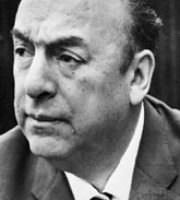
The poet Conrad Aiken’s (1889-1973) father shot Conrad’s mother, and then he shot himself. Both dead, a murder/suicide, as young Conrad, age 11, discovered, afterward writing of it:
[A]fter the desultory early morning quarrel, came the half stifled scream, and then the sound of his father’s voice counting three, and the two loud pistol-shots; and he had tiptoed into the dark room, where the two bodies lay motionless and apart, and, finding them dead, found himself possessed of them forever.
(-Aiken, C. (1952). Ushant: An essay. New York: Duell, Sloan & Pearce.) (cf. Cosmos Mariner)
Who is experiencing what? And what the relationship between what we call dream and what we call reality? Is the butterfly being dreamt? Or the world?
Are we the active or passive agents in the dreaming?
I'm curious, because I want to know whether I am dreaming this chaotic world, or, am I being dreamt by it?
V
The locust tree spills sequins of pale gold
in spiral nebulae, borne on the Invisible
earthward and deathward, but in change to find
the cycles to new birth, new life. Li Po
allowed his autumn thoughts like these to flow,
and, from the Gorge, sends word of Chouang's dream.
Did Chouang dream he was a butterfly?
Or did the butterfly dream Chouang? If so,
why then all things can change, and change again,
the sea to brook, the brook to sea, and we
from man to butterfly; and back to man.
This 'I,' this moving ‘I,' this focal ‘I,'
which changes, when it dreams the butterfly,
into the thing it dreams of; liquid eye
in which the thing takes shape, but from within
as well as from without: this liquid ‘I':
how many guises, and disguises, this
nimblest of actors takes, how many names
puts on and off, the costumes worn but once,
the player queen, the lover, or the dunce,
hero or poet, father or friend,
suiting the eloquence to the moment's end;
childlike, or bestial; the language of the kiss
sensual or simple; and the gestures, too,
as slight as that with which an empire falls,
or a great love's abjured; these feignings, sleights,
savants, or saints, or fly-by-nights,
the novice in her cell, or wearing tights
on the high wire above a hell of lights:
what's true in these, or false? which is the ‘I'
of 'I's'? Is it the master of the cadence, who
transforms all things to a hoop of flame, where through
tigers of meaning leap? And are these true,
the language never old and never new,
such as the world wears on its wedding day,
the something borrowed with something chicory blue?
In every part we play, we play ourselves;
even the secret doubt to which we come
beneath the changing shapes of self and thing,
yes, even this, at last, if we should call
and dare to name it, we would find
the only voice that answers is our own.
We are once more defrauded by the mind.
Defrauded? No. It is the alchemy by which we grow.
It is the self becoming word, the word
becoming world. And with each part we play
we add to cosmic Sum and cosmic sum.
Who knows but one day we shall find,
hidden in the prism at the rainbow's foot,
the square root of the eccentric absolute,
and the concentric absolute to come.
(—from poem, A Letter From Li Po, by Conrad Aiken)
"In every part we play, we play ourselves," says Mr. Aiken.
If so, then, who am I now?
What dream is this, this going forward, this change from this to this, arriving at a change of scene, on a road that feels familiar, a trail I feel I've walked, perhaps someone I think I knew turning to say something I can't completely make out?
but from within
as well as from without: this liquid ‘I':
how many guises, and disguises, this
nimblest of actors takes,
Am I dreaming this life? Or, am I not?
It might be so, however unfathomably so. Nor does that make it any less real.
I look at you. What do I see?
You look at me. What do you see?
This dream is a mirror. Look into it.
More than that -- step into it.
Where seeming two converge as one, remaining distinct so as to permit the dream to wander on its way into itself, emerging through and through the thin place where everything is felt and nothing known.
And so . . . we practice . . . living . . . here.